Economic role and structure of working capital of agricultural enterprises
5 min read
An enterprise as a production complex cannot function with only fixed assets. It is necessary to possess and actively use working capital, which is an indispensable condition of the production process. Along with reserves of working capital, called circulating assets, an enterprise must have circulation funds.
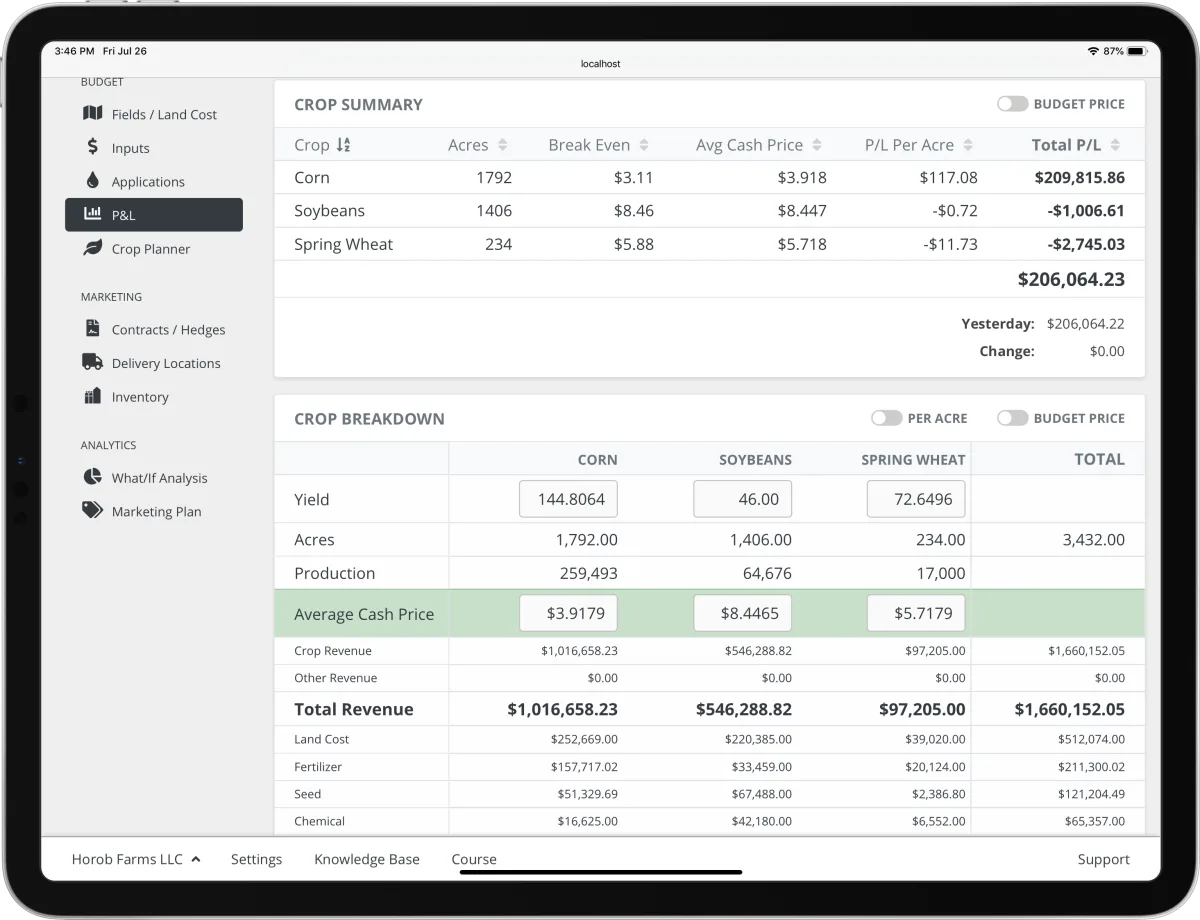
Circulation funds in an agricultural enterprise are products ready for sale, cash in the cash register and in bank accounts, and funds in settlements (accounts receivable). Therefore, an enterprise strives to have (and must have) at its disposal sufficient funds to cover current expenses for seed and planting material, feed and feed additives, fertilizer, plant protection products for plants and livestock, spare parts, petroleum products, etc. Yield and productivity, as well as the efficiency of the entire reproduction cycle, depend on the timely payment of these expenses.
To ensure a continuous production process, an enterprise periodically replenishes production reserves, completes work in progress, and fulfills labor payment calculations and other settlements. All this requires significant funds in the sphere of circulation. However, the accumulation of inventories resulting from the fact that the growth rates of stocks and expenses are higher than the growth rates of revenue from the sale of products may indicate problems with the realization of finished products. If the rates of revenue increase are higher than the growth rates of inventories, this indicates favorable trends in the use of working capital.
Working capital as a whole represents the totality of circulating assets and circulation funds:
In accordance with the specifics of the industry, the composition of working capital includes seed and planting material, fertilizer and pesticides, livestock for fattening, raw materials, liquid and solid fuel, building materials, low-value and short-lived materials worth up to 100 minimums
Working capital received its name because of its continuous turnover: cash — supply — production — realization of products — receipt of cash.
Symbolically, this chain is depicted as follows:
C— P— Pr— P1— C1 consists of several stages of turnover: 1) an enterprise purchases raw materials and supplies on the relevant market for money (C— P); 2) the acquired reserves are consumed in production (P—Pr) and transition into the form of production costs (Pr— P1), a new product is obtained; 3) realization of the produced product takes place (P1— C1).
Realization is the sphere of circulation, which is becoming increasingly important for the development of production and its economic efficiency. Production time and circulation time
Sources of working capital formation are divided into two main groups:
- borrowed sources — credits, loans, and other attracted funds. The principle of credit cost is realized through a specific price — the interest rate (loan interest). Interest on borrowed capital is an expense of the enterprise, included in the cost price, and reduces profit. In addition to credits, subsidy payments are a source of working capital;
- own sources — profit of the current year, accumulation funds, including those in kind. In the process of distributing the gross output of agriculture, a part of it is allocated for the production process instead of the consumed working capital (seed, feed, planting material). Own material working capital is included in the created product at the cost of its production, purchased materials — at the purchase price, including delivery costs.
The financial stability and solvency of an enterprise depend on the availability of own and borrowed sources of working capital formation.
Working capital of agriculture differs from the working capital of other sectors of the economy due to its specifics and is characterized by:
- a longer turnover period due to the duration of the production process in the industry;
- uneven expenses and seasonality of use: in winter there are large reserves of seed and feed, in summer there is a large contribution to work in progress;
- significant internal farm turnover: a part of working capital in kind re-enters the production process;
- large work in progress, which is included in the composition of working capital and exists in all branches of an agricultural enterprise, with a significant part of it accounted for by costs for the future harvest;
- dependence of the structure of the enterprise's working capital on zonal features, production direction (specialization), and the combination of branches.
An enterprise establishes rational levels of working capital using consumption rates of working capital per unit of production or work. Thus, based on the consumption rates of feed units and digestible protein per 1 c of milk, live weight gain of cattle, pigs, poultry, and other livestock products, the necessary quantity of feed is determined, which, taking into account the diet structure, is calculated by type and distributed by periods. Working capital rates for seed and planting material are determined per 1 ha of sown area and planting area, respectively, taking into account insurance reserves. Thus, the rates allow for determining reserves of working capital for uninterrupted production management.
The company's specialists calculate the necessary requirements:
To ensure that sowing and harvesting campaigns proceed without disruptions, the farm must calculate its working capital requirements in advance. Any error in calculations threatens to stall machinery in the middle of field operations or result in harvest losses due to a shortage of preparations. All resources are planned strictly according to the production program and target yield.
The structure of mandatory working capital includes:
- seed for the sowing of all crops cultivated on the farm;
- feed for livestock animals, taking into account the planned level of their productivity;
- fertilizer, taking into account predecessors and the removal of nutrients from the soil by the expected harvest;
- fuel, lubricants, and spare parts for the uninterrupted operation of tractors and vehicles;
- pesticides and herbicides for the control of crop pests.
For the timely sale of produce and the prevention of losses, it is important to calculate the need for packaging and auxiliary materials in advance.
Sources of financing under seasonal risks
Not every agricultural enterprise possesses a sufficient volume of its own working capital to cover all needs. The seasonal nature of agricultural production requires large one-time expenditures that are only recouped after the harvest is sold. Furthermore, adverse weather conditions often necessitate unplanned field work. To compensate for these peak loads and ensure uninterrupted operation, the enterprise must attract borrowed funds in a timely manner.
Read next
Economics For students
Economic performance indicators of the use of working capital in an agricultural enterprise

Economics For students