
State regulation of prices in the agro-industrial complex and its instruments
5 min read
The Necessity of State Price Regulation in the Agro-Industrial Complex
State price regulation is undoubtedly necessary for agriculture. This is due to the distinctive features of the industry, the peculiarity of the manifestation of market relations, and its exclusive role in providing the population with food and many types of raw materials, as well as other important circumstances:
- a large part of the country's retail trade turnover is formed by the agro-industrial complex, including agriculture; moreover, agricultural produce is a specific commodity, the production of which must be stable, guaranteed at the level of necessary requirements, and ensure the production of goods at an affordable price;
- agriculture is characterized by a significantly greater role of natural factors than in other industries, the adverse effects of which reduce the return on investment and lead to a shortfall in production and income;
- it is impossible to shift the global problem of meeting the growing needs of the population with limited resources onto a single industry — agriculture. This requires large investments, partial reimbursement of which by agriculture itself is possible only with significant income derived from high prices;
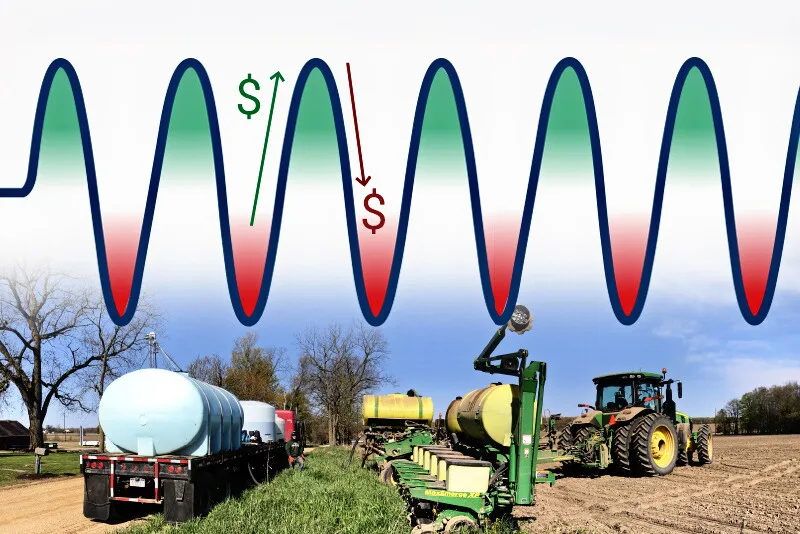
- agriculture is characterized by a specificity of pricing, caused by low price elasticity of demand, the need to maintain price parity, seasonal price fluctuations, etc. Due to the inelasticity of demand for agricultural products, an increase in production volumes during years favorable for yield and productivity can lead to a drop in prices and a decrease in the income of agricultural enterprises.
Tools and Mechanisms of State Price Influence
Through state price regulation, it is possible to prevent production decline, inflation, unemployment, food instability, and support the living wage. Market self-regulation, including of prices, cannot solve all economic issues, let alone social ones. Using the pricing mechanism, the state provides support to producers and adapts them to the market, creates a competitive environment, stimulates product quality and scientific and technological progress, and improves welfare.
The state has various opportunities to obtain information about prices and regulate them:
- price monitoring, in the process of which changes in the cost of necessary vital goods for the consumer are identified;
- indirect price regulation by influencing wages and taxation;
- direct state influence on prices (administrative establishment of prices and their upper limits for increase).
The main directions for improving prices and price relations are as follows:
- optimal combination of market price self-regulation and state regulation;
- price control over monopoly enterprises and the use of anti-monopoly measures;
- consideration of foreign experience in pricing, price support for agricultural producers, and price regulation;
- development of a system of contractual relations and agreements at all levels;
- training in the theory and practice of pricing;
- consideration of the specific impact of pricing and key price-forming factors (production and sales costs, sales channels, population income, etc.) on agricultural products.
For many decades, the governments of all economically developed countries have been developing and implementing programs for the development of agriculture, its state regulation and support, including prices and pricing. Significant budget funds from the state and consumers of agricultural products themselves are spent on implementing the policy of supporting national agriculture in these countries due to higher prices for it. Various countries use different economic measures of a specific nature, however, they all restrict imports of food and agricultural raw materials and use a complex of measures to support agricultural production (subsidies, preferential targeted lending, export promotion, market regulation, allocating funds for personnel training, etc.). Among these forms, mechanisms for supporting agricultural prices stand out: 75% of the total "producer support estimate" in EU countries, 87% in Japan; about 50% in the USA and Canada; 45-55% in Australia and New Zealand. In Japan, about 20% of consumer prices are regulated, including those for rice, wheat, meat, and dairy products, as well as many tariffs and service prices. In France, direct price regulation for agricultural products is carried out. In the USA, indirect regulation is primarily used.
Thus, even in countries with developed market economies, the state controls a large part of food prices, applying such classic, practice-tested methods as price fixing, i.e., "freezing" them at a certain level; control over the prices of monopolies and large entrepreneurs; setting boundaries for price changes; creating conditions for price reduction; and improving pricing methodology.
What approaches to price exist in economic theory? 2. What factors, along with costs and utility, are reflected in the price? 3. Which economic categories is price related to? 4. By what formula is the price determined? 5. What explains the multitude of prices in a market economy? 6. What are purchasing prices? 7. How are retail prices formed? 8. How is the equilibrium price depicted graphically? 9. How do the stimulating and balancing functions of price manifest in agriculture? 10. What elements does the price mechanism include? 11. Why is pricing the most important part of the price mechanism? 12. What are the main objectives of pricing? 13. Graphically illustrate the influence of price and non-price factors on demand. 14. How is pricing carried out in a perfect competition market?
How are prices set in a monopolistic competition market? In an oligopolistic market? 16. Characterize the pricing policy in a pure monopoly market. 17. What rules must a producer follow when setting prices? 18. What is the essence of the "cost-plus" pricing method? 19. How is the price calculated based on industry break-even and target profit? 20. What is the essence of the main market pricing methods? 21. How is the price of land determined? 22. What is the price of labor equal to? 23. What is the price of capital? 24. Why is state price regulation objectively necessary for agriculture? 25. What methods of price control and regulation are used in countries
E I E ENTERPRISE AND ITS EVALUATION
Read next
Economics For students
Features of market competition in the field of agricultural production
Economics For students