
Classification of natural honey by botanical origin and commercial properties
9 min read
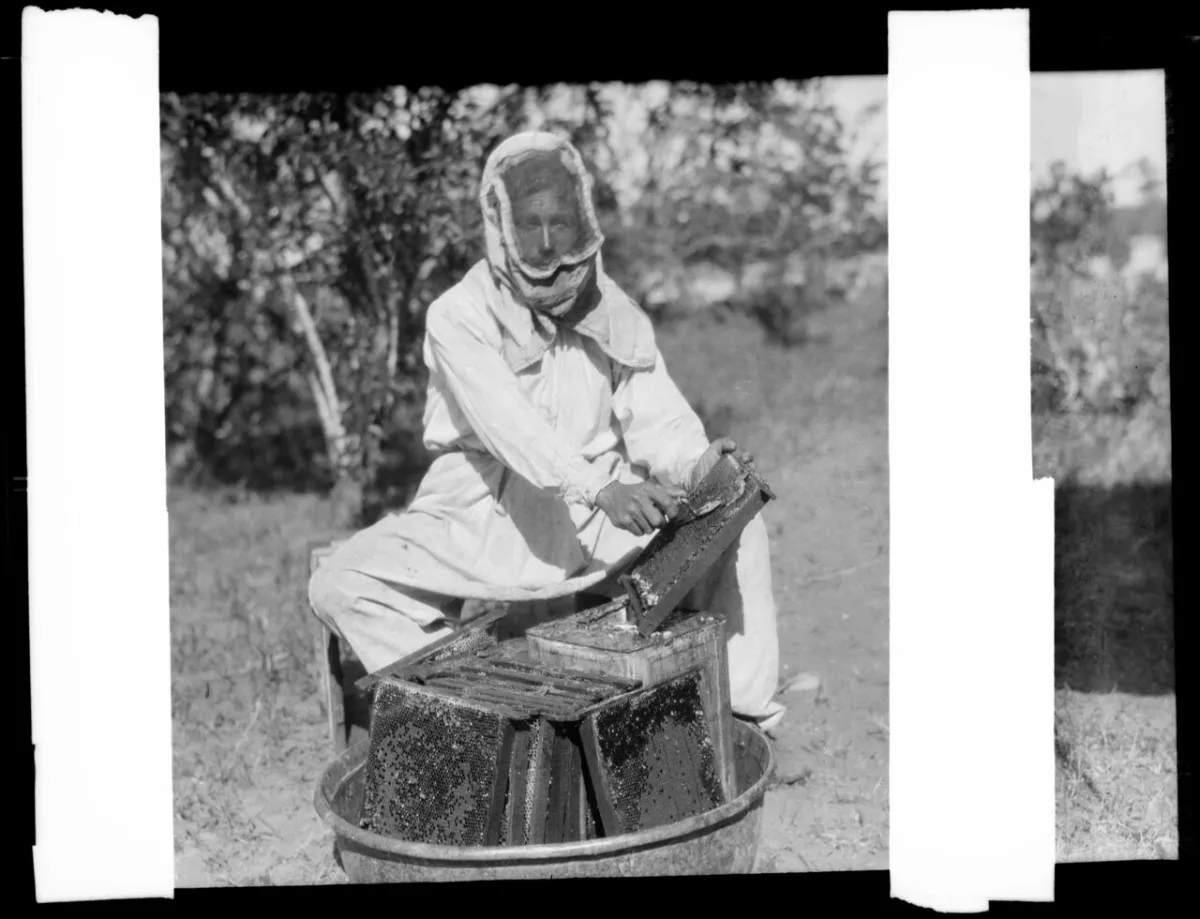
Natural honey is a complex biological structure that bees produce from plant nectar, honeydew, or secretions. No products derived from sugar syrup processing have the right to be called natural honey. For the beekeeper, the botanical origin of the collected honey determines its commercial properties, storage conditions, and suitability for wintering honey bee colonies. Based on its origin, honey is divided into floral (monofloral and polyfloral), honeydew, and mixed.
Characteristics of monofloral and polyfloral honeys
Each type of monofloral honey possesses unique organoleptic and physicochemical properties:
- Linden: has a sharp, specific taste and a light yellow or light amber color. In its liquid state, it is transparent and watery; upon crystallization, it forms a lard-like, fine-grained, or coarse-grained structure.
- Fireweed: distinguished by its delicate taste and aroma. Liquid honey is transparent, and after rapid crystallization directly in the combs, it becomes white with a lard-like or fine-grained structure.
- Buckwheat: dark red or brown in its liquid state, becoming dark yellow or brown after crystallization. It contains iron within its mineral nutrients. Crystallization varies from fine-grained to coarse-grained.
- Sunflower: has a light golden color, a specific pleasant taste, and a faint aroma. It crystallizes rapidly into large grains, including within the cells of the combs.
- Heather: a dark amber honey with a strong aroma and pleasant taste, sometimes with a reddish tint. It is characterized by high viscosity, which makes it difficult or impossible to extract using a honey extractor.
- Acacia (from black locust): prized for its light transparent color, delicate aroma, and pleasant taste.
- Chestnut and tobacco: have a bitter taste, which is why they are used primarily in the food industry. The color varies from light to dark.
- Cotton: almost colorless in its liquid state. After rapid crystallization in the combs, it becomes white with a coarse-grained structure.
- "Drunken" (poisonous): bees collect it in the Caucasus Mountains from azalea, rhododendron, and other plants. In humans, it causes signs of intoxication, nausea, dizziness, and fever. With long-term storage, its toxicity disappears completely.
Be careful when preparing feed supplies for bees for the winter. Sunflower, fireweed, and cotton honeys crystallize rapidly directly in the combs, and heather honey is poorly suited for wintering due to its physicochemical properties. The use of such feed can lead to the loss of bee colonies.
Polyfloral floral honey is named after the place of collection: mountain, meadow, forest, or steppe honey. Its characteristics are inconsistent, and its color, taste, and crystallization structure fluctuate significantly. Such honey often contains a natural admixture of honeydew.
Honeydew honey is divided according to the source of raw material. Deciduous honey is the name given if the honeydew is collected from linden, aspen, oak, and other deciduous tree species. Coniferous honey is brought by bees from fir, spruce, pine, and larch.
Technological properties and commercial assessment
The collection technology determines the final form and market value of the product. Extracted honey is obtained by centrifugal separation in honey extractors, which allows for the full preservation of its taste and aroma. If extracting the honey is impossible (for example, with viscous heather honey), pressing is used; however, this method damages the drawn comb. Comb honey in shallow or deep frames without brood is especially highly valued, as well as section honey in special frames made of plywood or plastic.
To improve the commercial appearance, blending is carried out at honey packaging plants. This is the mixing of different batches to even out the color, aroma, and taste. For example, adding a small amount of dark buckwheat honey to light fireweed honey produces a product with a pleasant tint and taste. Mixing honeys of different cultivars during blending is strictly prohibited.
The quality of any commercial honey is evaluated according to the requirements of GOST 19792-87. Key indicators are humidity and viscosity, which depend on the time of collection, weather, and product maturity. The more moisture honey contains, the lower its specific gravity.
- Basic standard — GOST 19792-87
- Humidity of floral honey — about 18%
- Humidity of honeydew honey — 1-2% lower than floral
- Weight of one commercial section — 400–500 g
| Type of honey | Moisture content |
|---|---|
| Floral | about 18% |
| Honeydew | 1–2% lower than floral |
The viscosity of honey directly depends on its humidity, ambient temperature, and chemical composition. These parameters determine the speed of the natural ripening of the product. The nature of crystallization during storage also depends on them.
Physical properties of honey and crystallization control
The viscosity of honey is evaluated immediately after extraction. To quickly check the maturity of the product, scoop it up with a spoon and turn it over: mature honey will hold and wrap around it, while immature honey will flow off immediately. Based on this trait, all natural honeys are divided into five technological groups:
- very liquid (clover, acacia);
- liquid (linden, buckwheat);
- thick (dandelion, sainfoin);
- sticky (honeydew);
- gelatinous (heather).
During storage, it is important to consider the product's high hygroscopicity — its ability to absorb moisture from the air. If honey is left in a room with an air humidity of 81%, its own moisture content will rise from 18% to 32% over three months, which can trigger fermentation. In a dry warehouse with a humidity of 52%, the water content in the honey will decrease to a safe 16%.
Most commercial honeys crystallize within two months after extraction due to an excess of glucose. This is a natural "setting" process that begins at the surface and does not degrade quality. Based on the size of the crystals formed, there are three types of sedimentation:
- coarse-crystalline — crystals larger than 0.5 mm (typical for sunflower honey);
- fine-crystalline — crystal size less than 0.5 mm (typical for cotton honey);
- lard-like — a homogeneous mass without visible crystals.
The quality of a batch can be easily determined by the nature of its crystallization. Mature, high-quality honey "sets" as a dense, uniform mass throughout the height of the container. If a liquid, syrupy layer forms on top, it means the product contains too much moisture or fructose, and the crystallization will be loose.
- Optimal temperature for crystallization — 13–14 °C
- Temperature of crystallization cessation — 22–23 °C
- Melting point of set honey — 40–45 °C
- Maximum heating without loss of properties — 45–55 °C
Do not allow honey to overheat during melting (liquefaction) or filtration. Temperatures above 45–55 °C irreversibly destroy biologically active enzymes and the beneficial properties of the product. If honey does not crystallize at all under favorable temperature conditions, this indicates adulteration or low quality.
Assessing Purity and Compliance with Quality Standards
Honey mass may contain natural impurities (pollen, wax particles) and foreign debris (bee carcasses, straw, dust, pieces of honeycomb). Natural components do not spoil the product and preserve its properties, so they do not need to be removed. Foreign debris significantly reduces the grade, so the batch must be strained through cloth bags or metal sieves, and also allowed to settle.
To control the purity of a batch, a filtration test is conducted. The procedure for testing is as follows:
- Heat an average sample of honey to a temperature of 55 °C.
- Pass the heated product through a metal sieve with a density of 9–10 holes per 1 cm².
- Ensure that no traces of foreign impurities remain on the filtering surface.
The main marker of the naturalness and preservation of honey is its diastase number. It shows the activity of the enzyme diastase and is expressed in milliliters of 1% starch solution that the diastase contained in 1 g of honey can break down in 1 hour. This enzyme is extremely sensitive to temperature: it is destroyed when heated above 60–80 °C or when honey is stored longer than a year in a warm warehouse. For a high-quality product, a value in the range of 12–16 units is considered good, although it varies from 1 to 50 units for different types of honey.
When assessing a commercial batch, always monitor for signs of fermentation. These include active foaming on the surface or within the volume of the container, gas release, and the appearance of a characteristic sour odor and taste.
Physical and chemical parameters of commercial honey are regulated by the requirements of GOST 19792-2001. The main standards for different types of products are shown in the table:
| Quality indicator and standard | All types of honey (except white acacia and cotton) | White acacia honey | Cotton honey |
|---|---|---|---|
| Aroma | Pleasant, from weak to strong, characteristic of honey, without foreign odor | ||
| Taste | Sweet, pleasant, without foreign aftertaste (bitterish is acceptable for chestnut and tobacco honey) | ||
| Presence of pollen grains | Not regulated | Presence of white acacia pollen grains | Presence of cotton pollen grains |
| Mass fraction of water, %, no more than | 21 | 21 | 19 |
| Mass fraction of reducing sugars, %, no less than | 82 | 76 | 86 |
| Mass fraction of sucrose, %, no more than | 6 | 10 | 5 |
| Diastase number, Gothe units, no less than | 7 | 5 | 7 |
| Hydroxymethylfurfural (HMF), mg/kg, no more than | 25 | 25 | 25 |
| Qualitative reaction to hydroxymethylfurfural | Negative | ||
| Mechanical impurities | Not allowed | ||
| Signs of fermentation | Not allowed | ||
| Mass fraction of tin, %, no more than | 0.01 | 0.01 | 0.01 |
| Total acidity, cm³, no more than | 4.0 | 4.0 | 4.0 |
Pay attention to the type of container during long-term storage. If honey is packaged in tinned metal vessels, be sure to monitor the mass fraction of tin (limit — no more than 0.01%). Laboratory analysis for tin is conducted no earlier than 6 months after the batch is stored, or immediately upon detection of signs of corrosion on the inner surface of the packaging.
Read next
Beekeeping For students
Biology of honey bees and technology of honeycomb construction in the hive
Beekeeping For students
Standards for the use of honeybee colonies for effective pollination of crops
Beekeeping For students