
Using sewage sludge as an organic fertilizer for fields
6 min read
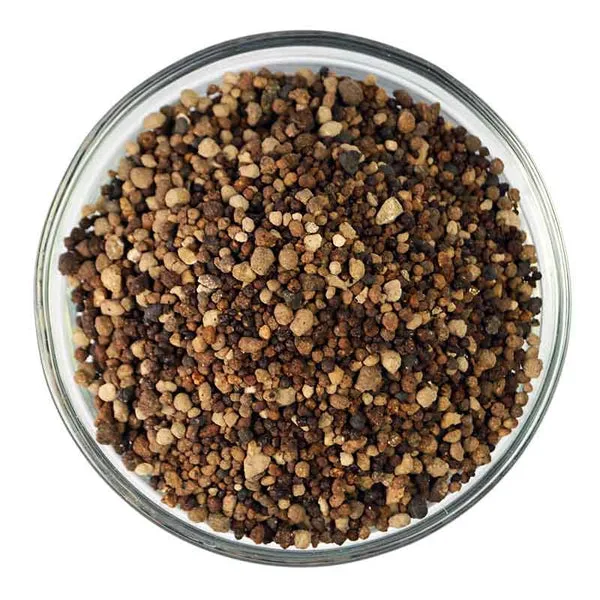
Sewage sludge (SS) is a valuable and renewable source of organic matter for fields. The volumes of this raw material are increasing annually: in developed countries, there are 19–25 kg of dry sludge per inhabitant per year (about 52 g per day). In Russia, with a population of 141 million (of which 101 million is urban), about 2.5 million tons of dry sludge are generated annually. However, only 5–7% of this volume is used as fertilizer in our country, while abroad this indicator reaches an average of 32.4%.
How sludge is prepared and disinfected for fields
Fresh sludge after primary clarifiers makes up 0.5–1.0% of the volume of treated wastewater. Such raw material has a humidity of 92–95% and high bacterial contamination. It cannot be used without preliminary preparation: first, the mass is disinfected and dewatered.
Several mechanical dewatering methods are used at treatment facilities:
- natural drying on sludge drying beds;
- reagent and non-reagent centrifugation;
- reagent vacuum filtration;
- filter pressing.
For the complete destruction of helminth eggs on sludge drying beds, the sludge must be kept for at least 3 years from the moment of the last supply of raw material.
To accelerate the process, thermal or chemical disinfection is applied. Thermal treatment is carried out by fermenting a mixture of primary sludge and excess activated sludge (in a 1:1 ratio) in methane tanks at a temperature of 56–58 °C. At small treatment plants with a capacity of up to 30 thousand m³/day, dehelminthization chambers are used, where mechanically dewatered sludge is heated by gas infrared burners to 60 °C.
During chemical disinfection with fungicides, the humidity of the finished product is about 60%. It is extremely difficult to evenly distribute such a dense mass over the field area using conventional spreaders.
Depending on the technology adopted at the treatment plant, agronomists can purchase fertilizer in three forms:
- liquid sludge (humidity 92–97%);
- dried or dewatered (humidity 60–80%);
- thermally dried sludge (TDS) (humidity 10–40%).
Thermally dried sludge (TDS) is the most convenient to work with. After methane fermentation or drying, it is completely cleared of fly larvae and eggs, helminths, and non-spore-forming microorganisms. This is a dry, free-flowing product that does not cake during storage and is easily applied to the soil.
Nutrient value and chemical composition of SS
Chemical composition of the fertilizer is unstable and depends on the composition of the wastewater and the technology of its treatment. The content of organic matter in raw sludge reaches 75% calculated on dry matter. It consists mainly of proteins, carbohydrates, fats, and lignin.
- SS usage in the Russian Federation — 5–7%
- SS usage in developed countries — 32.4%
- Organic matter in dry residue — up to 75%
- Treatment temperature in methane tanks — 56–58 °С
Sewage sludge is rich in nitrogen, phosphorus, and calcium, but poor in potassium. This feature must be taken into account when calculating the nutrition system: when using SS, the potassium deficiency in the fields will have to be compensated with mineral fertilizers.
Below is the statistics on the production and disposal of sewage sludge in various countries:
| Country | Population, million people | Production of dry matter, thousand t/year | Agriculture, % | Disposal in dumps, % | Incineration, % | Discharge into the ocean, % | Specific use, % |
|---|---|---|---|---|---|---|---|
| Sweden | 8.3 | 210 | 60 | 30 | — | — | 10 |
| Finland | 4.8 | 130 | 40 | 45 | — | — | 15 |
| Denmark | 5.1 | 130 | 45 | 45 | 10 | — | 15 |
| Germany | 59.7 | 1950 | 38 | 50 | 8 | 2 | 2 |
| France | 54.2 | 510 | 23 | 46 | 31 | — | — |
| Belgium | 9.8 | 22 | 10 | 80 | 10 | — | — |
| Luxembourg | 0.4 | 11 | 90 | 10 | — | — | — |
| Netherlands | 1.4 | 201 | 53 | 32 | 3 | 13 | 2 |
| Ireland | 3.5 | 197 | 4 | 51 | — | 45 | — |
| Great Britain | 56.1 | 1240 | 45 | 29 | 3 | 23 | — |
| Switzerland | 6.5 | 120 | 70 | 30 | — | — | — |
| Italy | 57.2 | 800 | 20 | 60 | — | — | 20 |
| USA | 232.6 | 3200 | 25 | * | * | * | * |
* — data not available.
The content of nutrients in sludge varies significantly depending on the method of their processing at treatment facilities:
| Type of sludge | Total nitrogen, % | Mobile nitrogen, % | P₂O₅, % | K₂O, % | CaO, % | MgO, % |
|---|---|---|---|---|---|---|
| Fermented | 3.07 | 0.27 | 2.33 | 0.210 | 3.48 | — |
| Fermented with activated sludge | 3.93 | 0.70 | 3.70 | 0.180 | 3.29 | 0.95 |
| Thermally dried | 1.96 | — | 3.92 | 0.007 | 5.21 | 5.81 |
All indicators of the chemical composition of sludge are given in terms of absolutely dry matter.
Regarding the content of heavy metals, a significant part of sewage sludge (SS) fully meets international agro-ecological requirements. At the same time, the chemical and ash composition of sludge is always specific, as it directly depends on the composition of industrial effluents arriving for treatment.
| Heavy metal | Content in sludge |
|---|---|
| Manganese | 500–2000 |
| Copper | 1000–5000 |
| Zinc | 1200–6000 |
Before using raw sludge as fertilizer, it is necessary to check it for compliance with basic quality standards. A batch of raw material is allowed for use with the following indicators:
- Organic matter — no less than 40%
- Humidity — no more than 82%
- Nitrogen (N) — 1.6%
- Phosphorus (P2O5) — 0.6%
- Potassium (K2O) — 0.2%
Technology of SS composting and rules for application in fields
To accelerate the process of dehelminthization of sludge, composts are prepared based on them. Solid household waste, sawdust, or peat are used as fillers. When mixed with sawdust or household waste, the proportions depend on the season:
- in summer, the ratio of filler to sludge ranges from 0.5:1 to 1–1.5:1;
- in winter, the proportion of filler is increased — from 1:1 to 2–3:1.
Sludge can be mixed with peat at any time of the year, and all types of peat are suitable for this purpose. Proportions depend on the quality of the peat and the season of composting. In the winter period, the proportion of peat is increased to ensure better self-heating of the mixture, maintaining a ratio of 2–1.5:1. During spring and summer composting, this ratio is 1.5–1:1. To improve the quality of peat-based compost, lime is added to the mixture at a rate of 15–20 kg per ton of finished mass.
The maturation period for composts is 1.5–2 months in summer, while in winter the process extends to 3–4 months.
The end of the composting process and the readiness of the fertilizer are determined by laboratory testing: compost samples taken from a depth of 0.5 m must be completely free of helminth eggs.
Properly prepared mature compost without the addition of mineral fertilizers (at pH 6.7–7.0) should contain, on a dry matter basis:
- organic matter — not less than 50 %;
- total nitrogen (Ntotal) — 1.8–2.0 %;
- total phosphorus (P2O5 total) — 1.0–1.2 %;
- potassium (K2O) — 0.2–0.5 %.
It is most beneficial to use sludge and composts in suburban farms located near treatment plants, while mandatory monitoring of toxic substance content is required. The optimal time for application during tillage is autumn. Summer application is also allowed when preparing bare fallows and on fields cleared at the beginning of the season. Autumn rains and spring snowmelt effectively leach highly soluble compounds contained in sewage sludge, primarily chlorine, from the root zone.
The fertilizer application rates are calculated based on dry matter, taking into account the soil type and cultivation level of the specific site.
| Soil type and cultivation level | Recommended application rate based on dry matter, t/ha |
|---|---|
| Low- and medium-cultivated sod-podzolic soils | 10–15 |
| Cultivated sod-podzolic sandy loam soils and chernozems | 5–10 |
Sewage sludge is usually applied in fields in combination with mineral fertilizers.
When using sludge pre-disinfected with ammonia, nitrogen fertilizers should not be applied to the crop. Phosphate fertilizers in this case are applied locally in rows directly during sowing or planting.
The use of sewage sludge requires strict adherence to environmental regulations. Fertilizers are permitted to be distributed only on level areas not subject to water erosion. The groundwater level in the field must be no higher than 40 cm from the soil surface. If operations are carried out on reclaimed lands, protective strips at least 30 m wide must be left along main drainage channels.
Read next
Ecology For students
Methods and means of water quality control for natural and waste water
Ecology For students