
Classification of the main sources of anthropogenic pollution of natural water bodies
11 min read
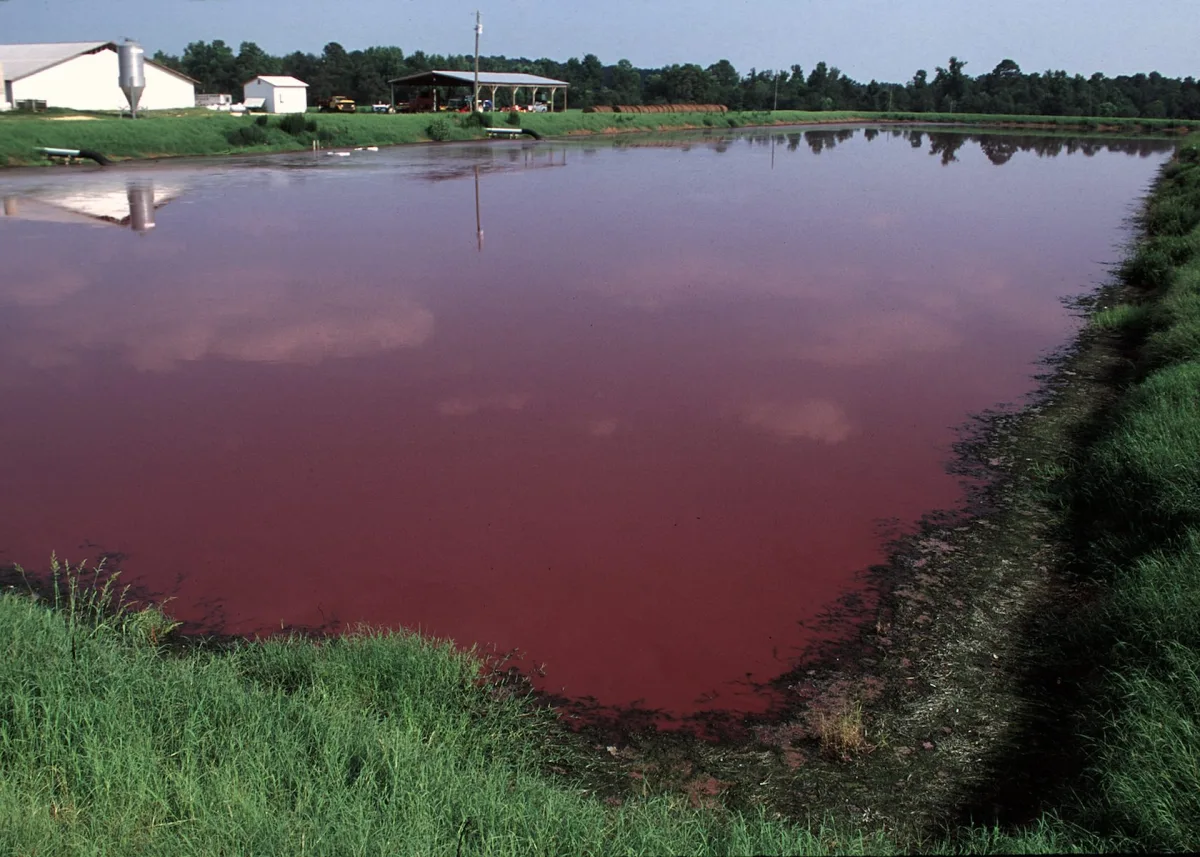
According to the recommendations of the World Health Organization (WHO), water in a water body (watercourse) is considered polluted if, as a result of changes in its composition or state, the water becomes less suitable for any type of water use, whereas in its natural state it met the required standards. The definition applies to physical, chemical, and biological properties, as well as the presence in the water of extraneous liquid, gaseous, solid, and dissolved substances.
Currently, all sources of hydrosphere pollution are generally divided into four major groups. 1. Atmospheric waters. Firstly, they bring a mass of industrial pollutants into the hydrosphere. For example, atmospheric waters wash sulfur and nitrogen oxides out of the air, forming the aforementioned (see section 2.6.4.) acid rain. When flowing down slopes, atmospheric and melt waters carry along masses of substances from city streets and industrial enterprises: waste, petroleum products, acids, phenols, etc. 2. Urban wastewater, which primarily includes domestic sewage containing feces, detergents, microorganisms, including pathogens. 3. Industrial wastewater, formed in a wide variety of industries, among which those that most actively consume (and pollute) water are: ferrous metallurgy, chemical, wood chemistry, oil refining, energy, etc.
Within enterprises, wastewater is generally categorized into highly polluted effluents, slightly polluted waters, conditionally clean waters (cooling waters), specific extremely concentrated effluents (e.g., still residues and mother solutions), and domestic and municipal sewage sent for biological treatment. It is obvious that industrial effluents are the most diverse in terms of chemical composition, as it is here that almost all substances known today are produced or used. 4. Agricultural runoff, containing soil particles washed away during erosion, nutrients found in fertilizers, pesticides (chemical agents for plant protection and livestock animal protection from weeds, parasites, and insects respectively), manure from livestock animals and associated bacteria, etc.
All these forms of pollution are, in one way or another, entirely or primarily a byproduct of human activity, the entire human population. Let us recall that every organism and every population in a natural ecosystem produces waste that potentially pollutes the biosphere. However, in natural ecosystems, the waste of some organisms becomes food or "raw material" for others and does not accumulate to a level that causes adverse environmental changes; it decomposes and is recycled.
Throughout history, humans disposed of waste through these same natural processes. The population explosion and the increasing consumption of raw materials and energy have led to the discharge into the biosphere (including the hydrosphere) of such large quantities of waste that natural ecosystems are no longer capable of assimilating and recycling them. Moreover, more and more non-biodegradable materials are being produced, which exacerbates the problem.
Currently, there is no single classification of wastewater legalized by rules or standards. A number of classifications of wastewater and its impurities are provided in works on wastewater treatment. The nature of the impact of impurities on water bodies is also used as a criterion. Thus, a widely used classification of wastewater is based on the difference in the nature of impurities from the point of view of their physicochemical composition. According to this classification, impurities in wastewater are divided into two groups.
The first represents impurities that form heterogeneous systems with the wastewater. This includes, firstly, water-insoluble impurities with a particle size of 100 nm or more (coarsely dispersed impurities). Coarsely dispersed particles are distributed in water mechanically and are practically incapable of diffusion. Depending on the difference in density between the substance particles and water (Δρ), particles can be sinking (Δρ > 0), suspended (Δρ = 0), or floating (Δρ < 0). Such a heterogeneous system forms an emulsion if the coarsely dispersed impurity is a liquid, or a suspension if the impurity is a solid. In the lower range of the disperse spectrum (closer to 100 nm), coarsely dispersed impurities are separated from water with great difficulty and may remain in it for a significant time, causing turbidity. A widely used term for these impurities is: suspended solids.
The first group also includes colloidally dispersed impurities with a colloidal particle size from 1 to 100 nm. These particles participate in Brownian motion (they are capable of diffusion). Colloidal impurities possess high sedimentation stability (uniform distribution throughout the volume of water), as well as aggregative stability (constancy of the disperse composition over a long period of time). The latter is facilitated by the fact that colloidal particles have identical (negative) electrical charges, and the electric field of the particle charges hinders their coagulation (enlargement) and sedimentation (settling).
Impurities of the second group belong to truly dissolved impurities, which are individual ions, molecules, or complexes consisting of several molecules. Particles of such impurities have sizes of less than 1 nm. They do not have an interface, so together with water, they form a homogeneous system.
By their chemical nature, impurities are divided into gaseous, mineral, and organic.
Table 7.3 presents the classification of wastewater according to its effect on water bodies.
Classification of wastewater according to its effect on water bodies of impurities on water bodies Source of wastewater -pa of impurities and aquatic organisms 1 Inorganic Alteration of organo- Chemical production fish, etc. 2 Inorganic Contain suspended Ceramic production, etc. 3 Organic with Poison the water Chemical and oil-refining quality, create oxygen deficiency properties, thermal power plants, etc. 4 Organic Create deficiency Food industry, power plants, etc.
Aquatic ecosystems and mechanisms of maintaining equilibrium
As follows from Chapter 2, water bodies are complex ecosystems where a community (biocenosis) of living organisms (hydrobionts) exists: plants, animals, and microorganisms. Ecosystems were formed over a long period of evolution. In them, processes of maintaining ecosystem homeostasis are constantly occurring, that is, processes of biocenosis adaptation to changing living conditions, including processes of changing the composition of impurities, aimed at achieving equilibrium in the ecosystem. The state of equilibrium can be disturbed for many reasons, but especially as a result of wastewater discharge.
The deviation of an ecosystem from an equilibrium state, caused by the discharge of wastewater, can lead to the poisoning and death of certain hydrobiont populations, which leads to the suppression of the entire biocenosis. Deviation from equilibrium intensifies processes that bring the water body to its optimal (equilibrium) state, which are called processes of self-purification of a water body. The most important of them are:
- sedimentation of coarse-dispersed and coagulation of colloidal impurities;
- oxidation (mineralization) of organic impurities;
- oxidation of mineral impurities by oxygen;
- neutralization of acids and bases;
- hydrolysis of heavy metal ions, leading to the formation of their sparingly soluble hydroxides and their removal from the water.
The processes of self-purification depend on water temperature, composition of impurities, oxygen concentration, water pH, and the concentration of harmful impurities that prevent or hinder the processes of self-purification of water bodies.
Oxygen regime and the influence of nutrients on water bodies
The oxygen regime of water bodies is particularly significant in self-purification processes. The consumption of oxygen for the mineralization of organic substances is determined through the biochemical oxygen demand (BOD), which is expressed by the amount of O2 used in biochemical (with the help of bacteria) oxidation processes of organic substances during a certain incubation time of a sample (mg O2/day).
To assess the state of water, the following indicators are used:
| BOD type | Description |
| BOD5 | Five-day biochemical oxygen demand |
| BODfull | Total biochemical oxygen demand |
With a large discharge of organic substances, an oxygen deficit occurs, the biocenosis is destabilized, and anaerobic (oxygen-free) mineralization of organic substances develops, which causes a significant deterioration in water quality.
Note that, in this way, the disturbance and even destruction of the biocenosis in a water body is possible with a significant discharge into it of organic substances that do not belong to harmful substances at all. Equally severe environmental consequences occur in a water body when other substances are discharged into it that are not classified as harmful or toxic – nutrients, that is, substances necessary for the existence of living organisms: compounds (salts) of phosphorus, nitrogen, potassium, calcium, sulfur, magnesium. Nutrients in ever-increasing volumes enter the hydrosphere from all the above-mentioned sources, especially from agricultural runoff and municipal sewage. Getting into water bodies and streams that are oligotrophic in their natural state, that is, poor in nutrients, nutrients cause rapid growth of phytoplankton – many species of algae, which are individual cells, their clusters, or "threads" that stay near the surface (on the surface) of the water, are not connected to the bottom, and receive nutrients from the water.
Mechanisms of eutrophication and the influence of soil erosion
Together with soil particles carried into water bodies due to soil erosion, phytoplankton prevents sunlight from passing into the water column, as a result of which the photosynthesis processes of aquatic plants submerged in water (benthos) and rooted in the bottom of the water body, from where they receive nutrients, are disrupted. As a result, the supply of oxygen produced by benthic plants during photosynthesis decreases sharply.
Oxygen released by phytoplankton during photosynthesis supersaturates the upper layer of water and escapes from its surface. Phytoplankton has a short life cycle; it dies quickly, which leads to the accumulation of a large mass of dead phytoplankton – detritus. Feeding on detritus, reducers, mainly bacteria, consume oxygen, reducing its content in the water. As a result, benthic plants are displaced by phytoplankton, and fish and other inhabitants of water bodies suffocate and die. These processes, which are intensifying all over the world, are called eutrophication.
Suspended particles that enter water bodies as a result of soil erosion also contribute to eutrophication. The material of these particles is not classified as chemically harmful. However, they:
- reduce the penetration of light into the water column;
- clog gills and food-gathering organs;
- coat the eggs of fish and other aquatic organisms.
Eutrophication is accompanied by sedimentation, which alters the benthic landscape of water bodies, thereby degrading the habitat for fish and mollusks. Water bodies become shallower, leading to the need for constant dredging and the problem of disposing of the extracted bottom material.
| Source of damage | Amount of damage (USA) |
| Sedimentation | 6-7 billion dollars |
Which of these sources of hydrosphere pollution are most significant in this regard is clearly determined by the ratio of settlements to agricultural enterprises (farms). For example, it is estimated for the Chesapeake Bay watershed (east coast of the USA) that farms, urban areas, and water treatment facilities contribute approximately equal amounts of nutrients to the hydrosphere (water treatment systems existing in most cities worldwide are not designed to remove nutrients).
Biological threats and water sanitary control
Domestic and agricultural runoff causes not only eutrophication and oxygen depletion in water but also creates a threat of infectious diseases. Humans and livestock animals infected with pathogenic bacteria, viruses, and other parasites can release large quantities of such pathogens or their eggs into runoff. It is precisely for this reason that devastating epidemics of cholera and typhoid fever occurred in the 19th and even 20th centuries, until sanitary and hygienic rules preventing the spread of pathogens were adopted worldwide. This primarily involves the disinfection of water supplies for the population by chlorination or other methods.
The effect of toxic compounds on hydrobionts depends on their concentration. At high concentrations, the death of hydrobionts occurs; at lower concentrations, there are changes in metabolism, development rate, mutagenesis, loss of reproductive ability, etc. Note that hydrobionts at the initial stages of their development, such as eggs, are particularly sensitive to harmful substances. For instance, at a pH of 5.7 or lower, salmon, trout, and roach fry cease to hatch from eggs, even though adult individuals of these fish can survive in such water for a long time. The most favorable pH values (for hydrobionts) are 6.5 – 8.5. Certain populations, such as zooplankton, are extremely sensitive to harmful substances. Even low concentrations of harmful substances cause their death, which affects the biocenosis as a whole.
Chemical pesticides pose a particular danger to the hydrosphere, contaminating both groundwater and water bodies. The most common pesticides are based on heavy metal compounds (lead, tin, arsenic, cadmium, mercury, chromium, copper, zinc) and synthetic organic compounds. When heavy metal ions enter an organism, they suppress the activity of various enzymes, which leads to extremely severe physiological and neurological consequences, for example, mental retardation in cases of lead poisoning, and psychiatric anomalies and congenital deformities in mercury poisoning. Synthetic organic compounds, primarily halogenated and, in particular, chlorinated hydrocarbons (used for the production of plastics, synthetic fibers, artificial rubber, paints and coatings, solvents, pesticides, etc.), disrupt the functioning of the organism when ingested. Even small doses lead to extremely severe effects, such as carcinogenic (cancer development), mutagenic (mutation emergence), and teratogenic (birth defects in children) effects. At certain doses, acute poisoning and death are possible. Pesticides are particularly dangerous due to their ability to accumulate in organisms (bioaccumulation) and the potential for bioconcentration. In the latter case, animals at higher trophic levels, by feeding on organisms that have accumulated the pesticide, receive initially higher concentrations. As a result, at the top of a given food chain, the concentration of the chemical in an organism can become 10^5 times higher than in the surrounding aquatic environment. A classic example of bioaccumulation and bioconcentration, known as Minamata disease, occurred in the 1950s in the fishing village of Minamata, Japan. A chemical plant located nearby discharged mercury-containing waste into a river flowing into the bay where the residents of Minamata fished. Mercury was first absorbed by bacteria and other decomposers breaking down detritus, then it concentrated in the food chain, reaching humans through fish. To this day, the misshapen bodies and mental retardation of some Minamata residents serve as a reminder of the tragedy.
Read next
Ecology For students
Methods and means of water quality control for natural and waste water
Agrochemistry For students
The use of wastewater as organic fertilizer in agronomy
Ecology For students