
The use of wastewater as organic fertilizer in agronomy
6 min read
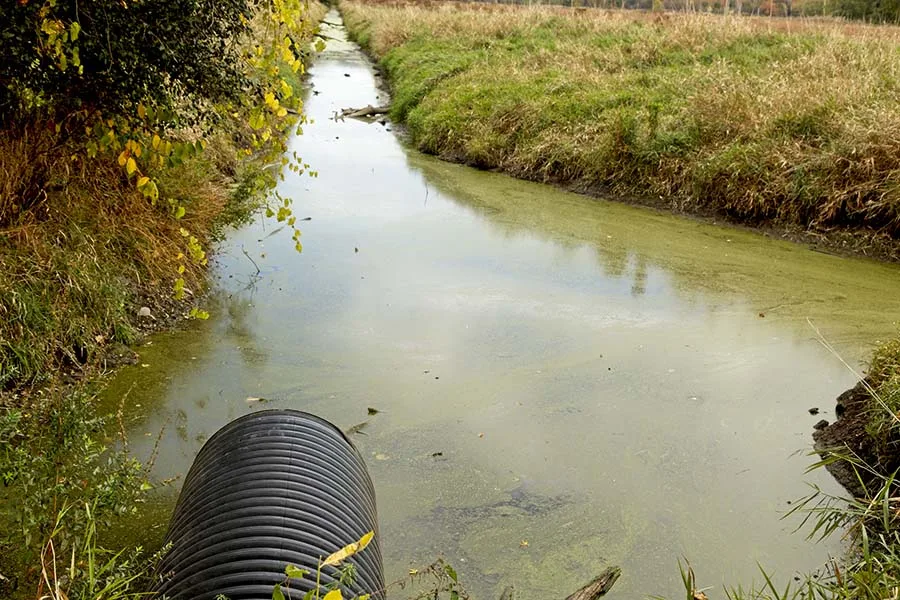
Wastewater is an accessible source of moisture and nutrients capable of significantly reducing expenditures on mineral fertilizers. The annual volume of such discharge in the country reaches 20–21 billion m³. However, its composition is heterogeneous: it contains mineral, organic, and biological impurities in solid, suspended, and dissolved states. For irrigation to be beneficial, an agronomist must accurately assess the composition and origin of the incoming water.
The use of wastewater allows for both the disposal of industrial waste and the supply of fields with nitrogen, calcium, and organic matter.
All contaminants in wastewater are divided into three groups:
- Mineral: sand, slag, solutions of salts, acids, and alkalis.
- Organic: plant residues, fatty films, physiological waste from humans and animals.
- Biological: bacteria, viruses, and other infectious agents.
Types of wastewater and their agronomic properties
Depending on their origin, wastewater is divided into three groups: domestic, livestock, and industrial. Domestic wastewater is generated in the residential sector; its volume depends on water consumption (about 200–300 l/day per person). In most cases, it is completely suitable for irrigation. Livestock wastewater is obtained through the hydraulic removal of manure at cattle complexes and pig farms; it is most rational to direct it toward growing forage for these same enterprises.
The properties of industrial wastewater depend on the technology of a specific facility. The main characteristics of industrial effluents from various sectors are shown in the table. They determine the feasibility of using the water safely for irrigation.
| Source of wastewater | Reaction (pH) and composition | Dissolved substances | Sodium (Na) and calcium (Ca) content | Agronomic features |
|---|---|---|---|---|
| Cloth mills, fine cloth factories, carpet mills | Neutral or slightly alkaline; bicarbonate-sulfate or bicarbonate-chloride | 550–350 mg/l | No more than 40–70 mg/l | Low fertilizing value. Requires the combined application of high rates of mineral fertilizers. |
| Starch plants | Acidic | Increased concentration of suspended and dissolved substances | Potato wastewater is richer in nutrients than corn wastewater | Neutralization or liming is required. Due to low phosphorus content, additional phosphorus fertilizer application is necessary. |
| Sugar refineries | Slightly alkaline (pH 7.5–8.0); bicarbonate composition | 1.5–2.5 g/l | Ca: 100–350 mg/l; Na: no more than 70–100 mg/l | Low chloride and sulfate content. Relatively low fertilizing value. |
| Hydrolysis plants | Slightly acidic; sulfate character | 2.5–3 g/l | Calcium and sodium salts predominate | High fertilizing value, especially for nitrogen. |
Since all wastewater contains pathogenic biological contaminants, it is necessary to provide for its disinfection before irrigation or to strictly control application rates.
| Water quality indicator | Essence of the indicator |
|---|---|
| BOD5 (Biochemical Oxygen Demand) | The amount of oxygen (mg) required for the oxidation of carbon and hydrogen compounds of organic substances contained in 1 liter of wastewater over a specific number of days. |
Calculation of irrigation rates and irrigation technology
The volume of wastewater supplied to the field must strictly correspond to the crop’s requirements for water and nutrients. In practice, two types of irrigation are used: moisture-supplying and fertilizing. Each method solves specific agronomic tasks in the field.
- Moisture-supplying irrigation. Rates are calculated based on plant water consumption. The salt concentration in the water should be close to hydroponic solutions. Regular irrigation should not inhibit crop growth or impair harvest quality.
- Fertilizing irrigation. Used for the direct supply of nutrients to plants. In this case, wastewater acts as a liquid organic fertilizer.
- Nitrogen in 1000 m³ of wastewater — equivalent to 10–12 tons of manure
- Mineral equivalent of 1000 m³ of wastewater — 150–200 kg of fertilizers
- Daily irrigation rate — 5–20 m³/ha
Daily irrigation at a volume of 5–20 m³/ha is not only optimal for plant development but also creates the best conditions for their growth. Simultaneously, natural processes of self-purification and disinfection of wastewater are initiated in the soil.
| Irrigation parameter | Value |
|---|---|
| Average irrigation rate | 4000 m³/ha |
| Equivalent of manure application at average rate | 40–50 t/ha |
The non-growing season is the most suitable time for conducting fertilizing irrigation with wastewater having a high content of organic matter and nutrients. For such dormant-period irrigation, it is advisable to use high-concentration wastewater from livestock complexes and food processing plants. It is applied at low rates, as diluting such water to standard conditions is technically difficult and economically disadvantageous. During the summer period, however, the rules change: fields can be irrigated either with clean water or with wastewater diluted to safe concentrations.
High-concentration wastewater can be used exclusively for non-growing season dormant-period irrigation. During the growing season of crops, it is necessary to switch to irrigation with clean water or diluted wastewater to avoid plant burns and soil profile salinization.
Before entering irrigated fields, wastewater must undergo a full treatment cycle at specialized facilities. This prevents clogging of irrigation equipment, soil silting, and the spread of parasitic infections.
- Mechanical treatment. Wastewater is cleared of large floating objects using screens. Mineral impurities settle in grit chambers, and coarse dispersed particles settle in sedimentation tanks. To trap light fractions (fats, resins, and petroleum products), fat, oil, and resin traps are used.
- Physicochemical treatment. Special reagents are introduced into the water being treated. They adjust the pH and convert dissolved impurities into an insoluble precipitate.
- Biological treatment. This occurs through the vital activity of microorganisms, which ensure the mineralization of organic matter and oxidative processes. At this stage, the water is cleared of suspended solids, mechanical impurities, and helminth eggs.
- Disinfection. Wastewater is treated with chlorine to destroy pathogenic microflora.
After completing all treatment stages, the effluent is discharged into a storage pond. Here, during prolonged storage, additional settling and natural self-purification of the water take place.
- Treatment efficiency for domestic sewage — 67–87%
- Volume of the storage pond for sedimentation — 5.7 million m³
Agromeliorative requirements for wastewater quality
Before designing an irrigation system, it is necessary to assess the suitability of wastewater for a specific site. The composition of irrigation water is strictly limited depending on the soil type. Exceeding permissible rates can lead to salinization, solonetzization, or toxicity of the topsoil.
| Agromeliorative indicator | Sod-podzolic | Peat-gley | Grey forest | Chernozem | Chestnut | Highly saline and solonetz |
|---|---|---|---|---|---|---|
| Dry residue, g/l | <4.5 | <3.5 | <3.5 | <2.5 | <2.0 | <0.6 |
| Mineral substances, mg/l | <3.0 | <2.0 | <2.5 | <1.5 | <1.2 | <0.3 |
| pH level | 6.0–8.5 | 5.0–7.5 | 5.5–8.5 | 5.5–7.5 | 6.0–7.5 | 5.0–7.0 |
| Sodium, mg/l | <500 | <400 | <450 | <300 | <200 | <50 |
| Calcium, mg/l | <750 | <600 | <650 | <500 | <450 | <200 |
| Potassium, mg/l | <150 | <150 | <125 | <100 | <75 | <100 |
| Chlorine, mg/l | <500 | <400 | <400 | <350 | <300 | <150 |
| Sulfates, mg/l | <550 | <450 | <500 | <400 | <350 | <150 |
| Total alkalinity*, mg/l | <1750 | <1600 | <1650 | <1300 | <1200 | <500 |
| Nitrogen: total, mg/l | <250 | <200 | <200 | <150 | <150 | <150 |
| Nitrogen: ammonium, mg/l | <150 | <100 | <150 | <100 | <100 | <100 |
| Phosphorus, mg/l | <100 | <75 | <75 | <75 | <75 | <75 |
| Dichromate oxidizability, mg O2/l | <2000 | <1500 | <1800 | <1500 | <1350 | <1100 |
| BOD, mg O2/l | <1600 | <1200 | <1300 | <1250 | <850 | <550 |
| Specific organic substances, mg/l | <250 | <100 | <200 | <300 | <200 | <150 |
| Suspended solids, mg/l | <3000 | <3000 | <3000 | <3000 | <3000 | <3000 |
| Na:Ca ratio, mmol-eq | <3:1 | <2.5:1 | <3:1 | <2:1 | <1:1 | <0.5 |
Wastewater irrigation is not just watering, but an effective way to improve soil fertility and provide top dressing to plants. With long-term use of such water on low-fertility soils, their humus status improves, excess acidity is neutralized, and the adsorption capacity and base saturation degree increase. This creates a favorable environment for crop growth, but requires precise calculation of the nutrients being applied.
- Irrigation rates — 1200–5000 m³/ha
- Nitrogen application with wastewater — 10–39 kg/ha
- Phosphorus application with wastewater — 4–16 kg/ha
- Potassium application with wastewater — 10–42 kg/ha
Application rules and toxicity control of wastewater
To unlock the potential of wastewater without harming the harvest, follow the rules for balanced plant nutrition. Wastewater alone does not cover the full nutrient requirements of crops. To achieve the planned yield, it is necessary to combine irrigation with traditional agrochemical methods.
- Apply additional mineral and organic fertilizers.
- Calculate application rates for the missing amount of fertilizer based on nutrient removal with the planned harvest.
Violation of the irrigation regime or the use of wastewater with harmful impurity concentrations above the permissible limit can lead to soil degradation and crop failure. Before starting irrigation, always compare the chemical composition of the wastewater with the maximum permissible concentration (MPC) standards.
| Ingredient | Maximum Permissible Concentration (MPC), mg/l |
|---|---|
| Total concentration for light soils | 5000.0 |
| Total concentration for medium soils | 3000.0 |
| Total concentration for heavy soils | 1500.0 |
| Nitrogenous substances | 250.0 kg per growing season |
| Acetone | 40.0 |
| Barium | 4.0 |
| Boron | 0.5 |
| Vanadium | 10.0 |
| Tungsten | 10.0 |
| Detergents | 30.0 |
| Iron | 2.0 |
| Caprolactam | 200.0 |
| Cobalt | 1.0 |
| Magnesium | 300.0 |
| Manganese | 1.0 |
| Copper | 200.0 |
| Methanol | 200.0 |
| Methyl methacrylate | 50.0 |
| Arsenic | 0.2 |
| Sodium carbonate for the humid zone | 200.0 |
| Sodium carbonate for the arid zone | 100.0 |
| Nickel | 0.5 |
| Nitrites | 0.5 |
| Acrylic acid nigrol | 100.0 |
| Rhodanides | 2.0 |
| Lead | 0.2–2.0 |
| Plant resins | 5.0 |
| Cobalt sulfate | 2.0 |
| Copper sulfate | 7.0 |
| Phenol | 40.0 |
| Formaldehyde | 50.0 |
| Chlorides | 300.0 |
| Cyanide compounds | 10.0 |
| Potassium cyanide | 0.2 |
| Zinc | 2.0 |
Read next
Ecology For students
Methods and means of water quality control for natural and waste water
Agrochemistry For students
Using sewage sludge as an organic fertilizer for fields
Ecology For students