
The role and chemical composition of the liquid phase of the soil solution
14 min read
therefore, the water regime should be given top priority in soil formation.
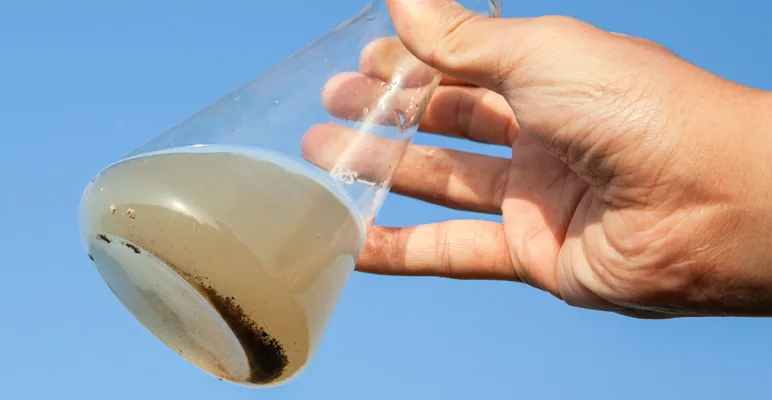
The liquid phase of the soil is the soil solution, which is formed from water entering the soil via precipitation, groundwater, and water vapor condensation. During irrigation, irrigation water becomes an additional moisture reserve for soil solutions. The liquid phase of the soil is its most mobile, dynamic, and at the same time active part. The soil solution plays such an important role in soil formation and plant nutrition that G.N. Vysotsky figuratively called it the "blood" of the soil, and V.I. Vernadsky considered it one of the most important categories of water, "the basic substrate of life," and "the fundamental element of the biosphere mechanism." Processes of destruction and synthesis of humus substances, formation of secondary minerals, and creation of organo-mineral compounds take place in the soil solution. From the soil solution, plants obtain the necessary nutrients and water. Due to the fact that some soil substances can be absorbed by plants, microorganisms, and colloids, while others may remain in the soil solution, a dynamic adsorption equilibrium is established between the liquid and solid phases of the soil. In the soil solution, mineral and organic substances are in molecular, colloidal, and ionic states. In addition, oxygen, carbon dioxide, and other dissolved gases are present here.
Organic compounds of the soil solution are represented by humic acids and their salts (in neutral soils – calcium and magnesium fulvates; in strongly acidic soils – aluminum and iron fulvates; in alkaline soils – sodium humates), tartaric, oxalic, and other organic acids and their salts, as well as sugars, amino acids, alcohols, enzymes, and tannins extracted from plant residues or formed as a result of biochemical processes. Mineral compounds in the soil solution are represented predominantly by anions HCO3, CO32, NO3, NO2, SO 24, Cl, H 2PO 4, HPO 2, PO34 and ca-
tions H, Na, K, Li, NH 4, Ca 2, Mg 2, Fe 2, Fe3, Al3.
In extremely small amounts, ions of
2 2 2 2 Co, Mn, Cu, Zn, and other micronutrients are present in the soil solution. Aluminum, iron, as well as copper, vanadium, nickel, chromium, and other micronutrients are contained in the soil solution primarily in the form of complex organo-mineral compounds, where the organic part of the complexes is represented by humic and low-molecular-weight organic acids, polyphenols, and other organic substances.
The qualitative and quantitative composition of the solution varies in different soils. Even in the same soil, its composition changes across genetic horizons. The soil solution of bog and virgin sod-podzolic soils is richest in organic compounds, and within a single soil profile, the organogenic and humus horizons are the richest. Down the soil profile, the amount of organic compounds in the soil solution decreases sharply as a result of their fixation and mineralization in the upper horizons. In chestnut soils, chernozems, sierozems, and solonetzes, the content of mineral compounds – carbonates, gypsum, and readily soluble salts – increases in the soil solutions of the lower horizons.
Substances in the soil solution determine its osmotic pressure, the value of which increases with an increase in the concentration of dissolved compounds. The osmotic pressure of the solution is not the same in different soils and ranges from 1.01–3.03∙105 to 10.1–20.2·105 Pa (1.01·105 Pa = 1 atm). The osmotic pressure of the cell sap of the root system of most crop plants does not exceed 5.05–8.08·105 Pa. Normal water and nutrient uptake by plants occurs only if the osmotic pressure of the soil solution is lower than the osmotic pressure of the root system cell sap. Therefore, all agronomic practices performed should not lead to an increase in the osmotic pressure of the soil solution above the osmotic pressure of the cell sap of the cultivated crops. Otherwise, this entails a number of adverse consequences for plant growth and development.
Depending on the concentration of the soil solution, all soils are divided into two groups – non-saline and saline. Non-saline soils are those in which the concentration of the soil solution does not exceed a few grams per 1 liter with a readily soluble salt content of less than 0.25%. The osmotic pressure of their solution does not exceed 1.01–8.08·105 Pa, which is favorable for the cultivation of most agricultural crops. The composition of the soil solution in non-saline soils is determined by the nature and intensity of biological processes and the composition of the solid phase of the soil. Among mineral compounds in the solution of these soils, calcium and magnesium bicarbonates are the most common, while KHCO3 and NaHCO3, calcium, magnesium, and sodium sulfates, and nitrates and phosphates of these same cations are found to a lesser extent.
In saline soils, the concentration of the soil solution can reach several tens of grams per 1 liter, and the content of readily soluble salts can exceed 0.25%. The osmotic pressure of these solutions exceeds 10.13–15.20∙105 Pa, which excludes the possibility of cultivating most crops on them without preliminary implementation of special amelioration measures. Among the mineral compounds in the soil solution of saline soils, the following predominate: chlorides – NaCl, MgCl2, CaCl2, and KCl; sulfates – Na2SO4, MgSO4, K2SO4, CaSO4; carbonates – Na2CO3 and MgCO3; bicarbonates – NaHCO3, Mg(HCO3)2, and Ca(HCO3)2.
The soil solution is in constant and close interaction with the solid, gaseous, and living phases of the soil, and as a consequence, its composition and concentration are the result of biological, physicochemical, and physical processes that underlie this interaction. The rate and direction of these processes are subject to significant changes, therefore the composition of the soil solution is extremely dynamic. After rainfall and snowmelt, the concentration of the soil solution decreases, while in dry weather it increases, as a result of which some dissolved substances may precipitate. Changes in the composition of the soil solution are largely related to the fact that part of the dissolved substances is assimilated by plants and microorganisms, a certain amount is leached into deeper horizons, and part passes into an adsorbed state. A change in the water regime leads to the transformation of the concentration and composition of the soil solution and the conditions of mineral nutrition of plants, which, naturally, directly affects their vital activity.
An important property of the soil solution is its reaction, which directly depends on the salt composition of the solution, the absorption capacity, and the presence of free acids in the soils. Based on the reaction of the soil solution, soils are divided into strongly acidic (pH<4.0), acidic (pH 4.0–5.5), weakly acidic (pH 5.5–6.5), neutral (pH 6.5–7.0), alkaline (pH 7.0–8.0), and strongly alkaline (pH>8.0). Strongly acidic and acidic reactions are characteristic of red soils (krasnozems), podzolic, sod-podzolic, and peat soils. A weakly acidic and near-neutral reaction of the soil solution is characteristic of chernozems and grey forest soils, whereas chestnut soils, sierozems, and solonetz have an alkaline reaction. An acidic reaction is determined by the presence of organic and mineral acids and acidic salts in the solution; an alkaline reaction is determined by carbonates and bicarbonates of sodium and magnesium.
The soil solution practically never contains strong acids or strong alkalis. This is because soil solutions have the ability to resist, to oppose changes in their reaction, i.e., they possess buffering capacity. Soil solutions contain a widely represented buffer system consisting of carbonic acid and its calcium salt – calcium bicarbonate: Н2СО3 + Са(НСО3)2. These two compounds are present in the soil solution of soils with a weakly acidic, neutral, and weakly alkaline reaction. In soils with a strongly acidic reaction, organic acids and their salts with calcium, and in some cases with ammonium and other bases, play a decisive role. In addition, phosphates can exert a known buffer effect if they are present in the solution in several degrees of substitution. The buffer effect of phosphates is explained by the different degrees of dissociation of orthophosphoric acid H2PO4–, HPO42–, PO43–. It should be noted that the buffering capacity of the soil solution, when taken separately, is usually very insignificant compared to the buffering capacity of the soil as a whole.
The significance of the soil solution in the life of the soil, vegetation, and microorganisms is great. All processes of mobilization of nutrients in the soil, including those resulting from the application of fertilizers, occur through the soil solution. This is why the composition and concentration of the soil solution should be purposefully regulated with the help of special agrotechnical practices. The concentration of the soil solution is reduced by flushing the soil with fresh water. Its composition is changed by fertilizer application, and its reaction is altered by liming or gypsum application to the soil.
The forms of water and their ratio in the soil depend on its particle-size distribution and mineralogical composition, on the soil structure which determines the size and configuration of soil porosity, and, of course, on the degree of its humidity at a given moment. Water in the soil is under the influence of three types of forces: gravity, molecular attraction of mineral and organic soil particles, and mutual attraction of the water molecules themselves. The following forms of water are distinguished, differing from each other in the strength of their bond with the solid phase, their degree of mobility, and their availability to plants: 1) chemically bound; 2) solid; 3) vaporous; 4) adsorbed; 5) capillary; 6) gravitational.
Chemically bound water is characterized by immobility, high bond strength, and an inability to dissolve. It includes constitutional (hydration) and crystallization (crystal hydrate) water and is part of the solid phase of the soil.
Types of chemically bound water:
- Constitutional water – the hydroxyl group (OH) of substances in the soil: hydroxides of iron, aluminum, manganese, titanium, colloidally dispersed clay minerals, organic and organo-mineral compounds.
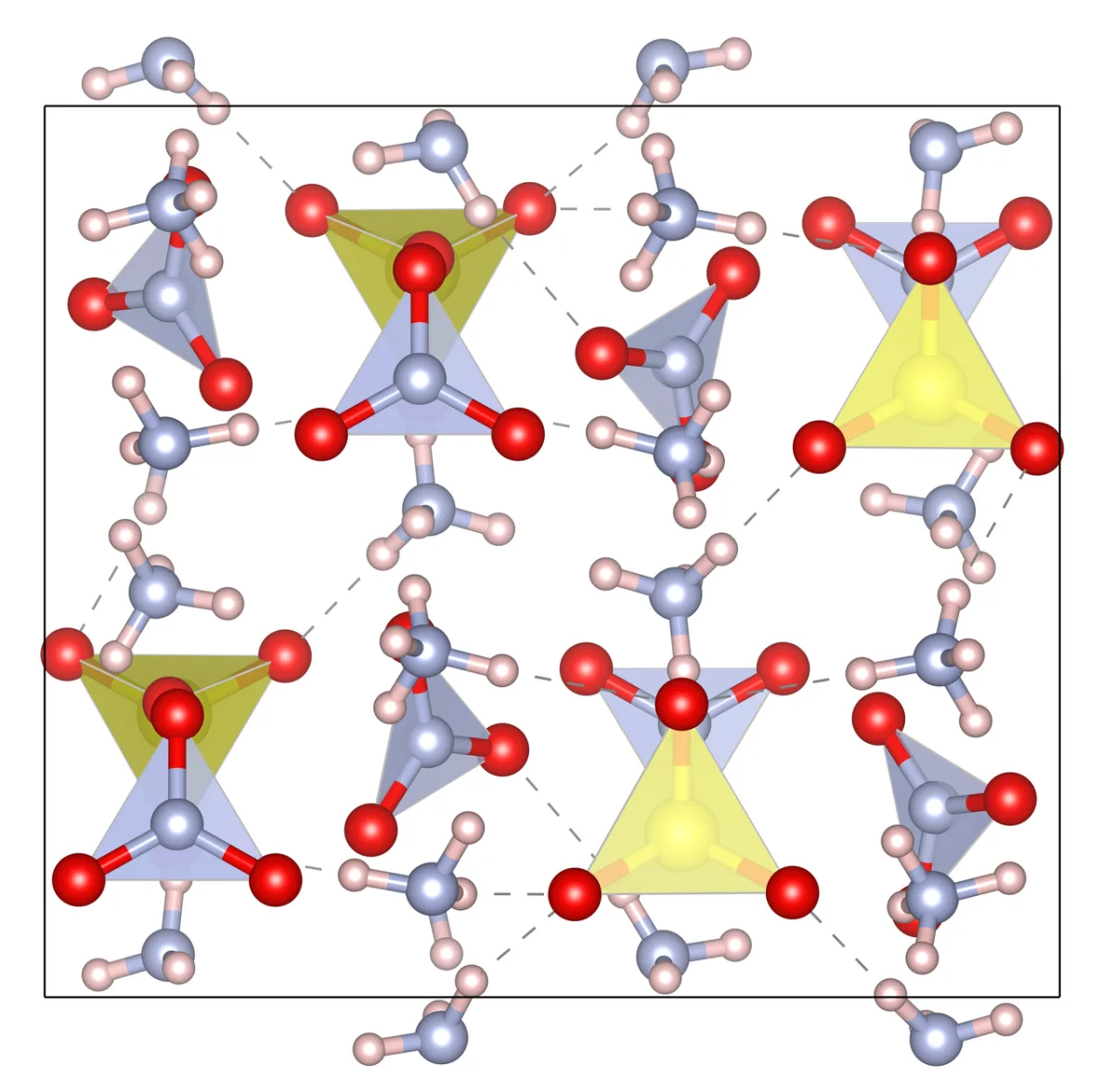
- Crystallization water – these are whole water molecules included in crystals: gypsum (CaSO4∙2H2O), mirabilite (Na2SO4·10H2O), bischofite (MgCl2·6H2O), hydrophilite (CaCl2·6H2O).
Chemically bound water is not part of the soil solution and is unavailable to plants. When it is lost as a result of dehydration or syneresis, i.e., compaction of the crystal lattice, an irreversible transformation of mineral, organic, and organo-mineral compounds occurs.
Solid water – ice present in the soil. It occurs in winter in all soils where sub-zero temperatures are observed. In places with permafrost and in tundras, ice remains in the soil even in summer. Solid water is not directly available to plants, but it serves as a source of liquid and gaseous water.
Vaporous water is contained in the soil air in the form of water vapor. Water vapor enters the soil from the atmosphere and is also formed in the soil during the evaporation of water and ice. Soil air is usually saturated with water vapor, relative humidity of which is close to 100%. As temperature increases, the water vapor pressure rises, and it moves from warmer soil layers to colder ones. Upon condensation, the vapor turns into liquid water. In many cases, this transition of vaporous water into liquid becomes a crucial source of water supply for plants.
Forms of soil moisture: what is available to plants
Water in the soil exists in different states, and not all of it is useful for the harvest. For an agronomist, it is fundamentally important to distinguish between bound, capillary, and free moisture, as the irrigation regime and plant nutrition depend on this. The volumes of available moisture accumulation vary greatly depending on the season and the climatic conditions of the region.
- Winter condensed moisture in arid regions (in the one-meter layer) — 10–14 mm
- Reserve of condensed moisture by the beginning of spring (in individual years) — 200 m³/ha
- Pore diameter for the manifestation of capillary forces — 0.001–0.1 mm
Sorbed moisture is firmly held on the surface of soil particles. It is represented by hygroscopic and film forms. Hygroscopic water is formed from air vapors and adheres tightly to soil particles in the form of a film of 2–3 molecular layers. Due to powerful attraction, roots cannot absorb it. The mobility of this moisture is extremely low — it moves only after transitioning into a vaporous state.
| Soil type | Hygroscopic water content, % |
|---|---|
| Clayey | 5–6 |
| Sandy and loamy sand | 1–2 |
Film water envelopes particles over the hygroscopic layer. It is less firmly bound, so plants can partially assimilate it due to the osmotic pressure of cell sap. However, such moisture moves very slowly — from areas with a thick film to thinner ones. As a result, roots consume water faster than its inflow is restored.
When soil moisture drops to the level of loosely bound water, synthetic processes in plants stop and wilting begins. Excessive accumulation of free gravitational water is also harmful: it creates an anaerobic environment and triggers gley processes.
Capillary water fills small pores and moves in all directions under the action of meniscus forces. It is divided into capillary-supported (rising from groundwater) and capillary-suspended (held after precipitation or irrigation). This is the most mobile and easily accessible form of moisture, which forms the basis of water nutrition. Gravitational water obeys the force of gravity, flowing downwards or accumulating on an impermeable layer. It is capable of dissolving and transporting salts, colloids, and suspensions.
The liquid phase of the soil is defined by the soil solution. It includes film and capillary water with dissolved salts, organics, gases, and colloids. The volume of the solution is equal to the total moisture volume minus maximum hygroscopicity. Chemically bound, hygroscopic, and gravitationally infiltrating water are not included in the composition of the soil solution.
Nutrition from the liquid phase: how assimilation mechanisms work
The soil solution is the medium from which roots directly take up nutrients. However, the concentration of substances in it is unstable and constitutes only a small part of the total soil reserves. To assess the real availability for plants, one must consider the dynamics of element transition into the solution.
The absorption of nutrients by the root system is regulated by three key factors:
- Intensity factor — ion activity in the soil's liquid phase. It determines the level of absorption more strongly than the total concentration. This indicator depends on the chemical potential of the ion and is calculated by the formula: µi = µi0 + RT ln ai (where µi0 is the standard potential, T is the temperature in Kelvins, ai is the ion activity, R is the gas constant).
- Replenishment factor — the soil's ability to maintain stable ion activity over time. It depends on buffer capacity, reserves of elements in the solid phase, and the rate of their transition from the soil-adsorbing complex (SAC) or total reserves into the solution.
- Ionic interaction factor — the mutual influence of different ions in the solution on the rate of their absorption by roots.
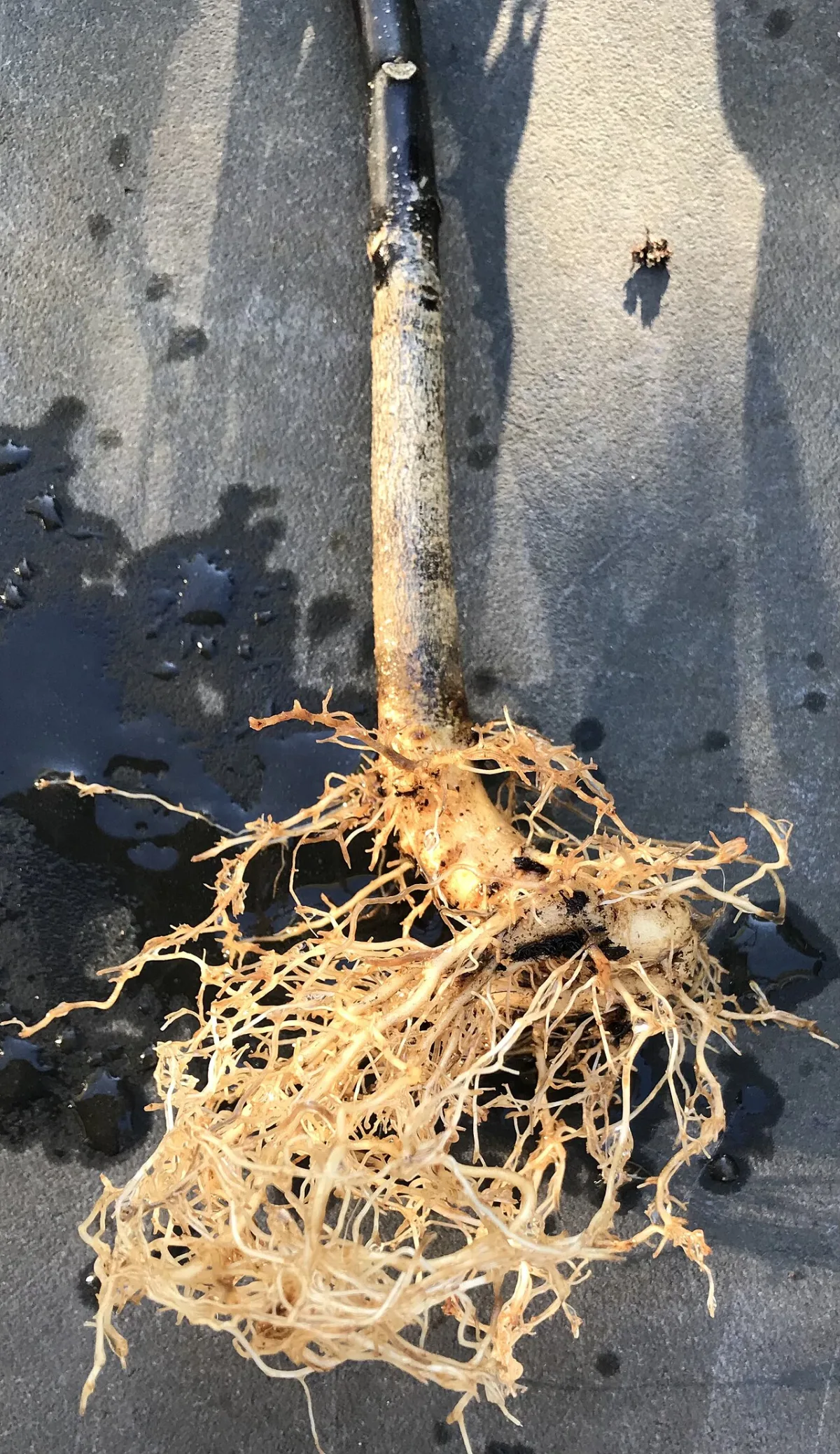
Plants are capable of regulating their own nutrient intake. By releasing root exudates into the liquid phase, they accelerate the transition of essential elements from the solid soil reserves into an available solution.
Studies on acidic and carbonate soils have confirmed that the amount of phosphorus diffusing from the soil surface to the roots depends directly on the replenishment processes of the solution. There are no universal formulas for this mechanism. However, the rate of diffusion is always determined by the balance between the solid phase and the soil solution.
М с Db, where: с is the concentration of phosphorus in the soil solution; b is the buffer capacity;
D is the diffusion coefficient in the soil pore space; α is a coefficient reflecting the soil type, its humidity, and all other factors.
If we denote the value D as the coefficient β and introduce the concept of the amount of nutrient in the reserve q=cb, the following expression is obtained: М cq, reflecting the fact that the diffusive uptake of ions is directly proportional to intensity and buffer capacity.
The ion interaction factor reflects the effect of other ions on the uptake of a given ion. It is this mutual influence of ions that explains the fact that the same level (activity) of one ion in the aqueous phase can be either insufficient or excessive for a plant, depending on the presence of other substances.
In the general case, this factor can be described as follows:
Vi , k i i k i / k j j where: Vi is the uptake rate of the i-th ion with activity αj;
Vmax is its maximum uptake rate when its activity is not a limiting factor; αj is the activity of other ions; ki and kj are Michaelis constants.
A similar ratio well describes cases of competitive ion uptake as well.
The factors considered show that the composition of soil solutions is a satisfactory indicator of plant nutritional conditions, often more informative compared to traditional analysis of soil extracts.
At the same time, a comprehensive coupled approach to studying all components of the soil—its solid, liquid, and gaseous parts—is necessary for a complete characterization of the plant nutrition process.
Read next
Agrochemistry For students
The role of cation exchange and humus in soil buffering capacity
Agrochemistry For students
The role of the soil adsorption complex in plant mineral nutrition
Agrochemistry For students