
The role of cation exchange and humus in soil buffering capacity
4 min read
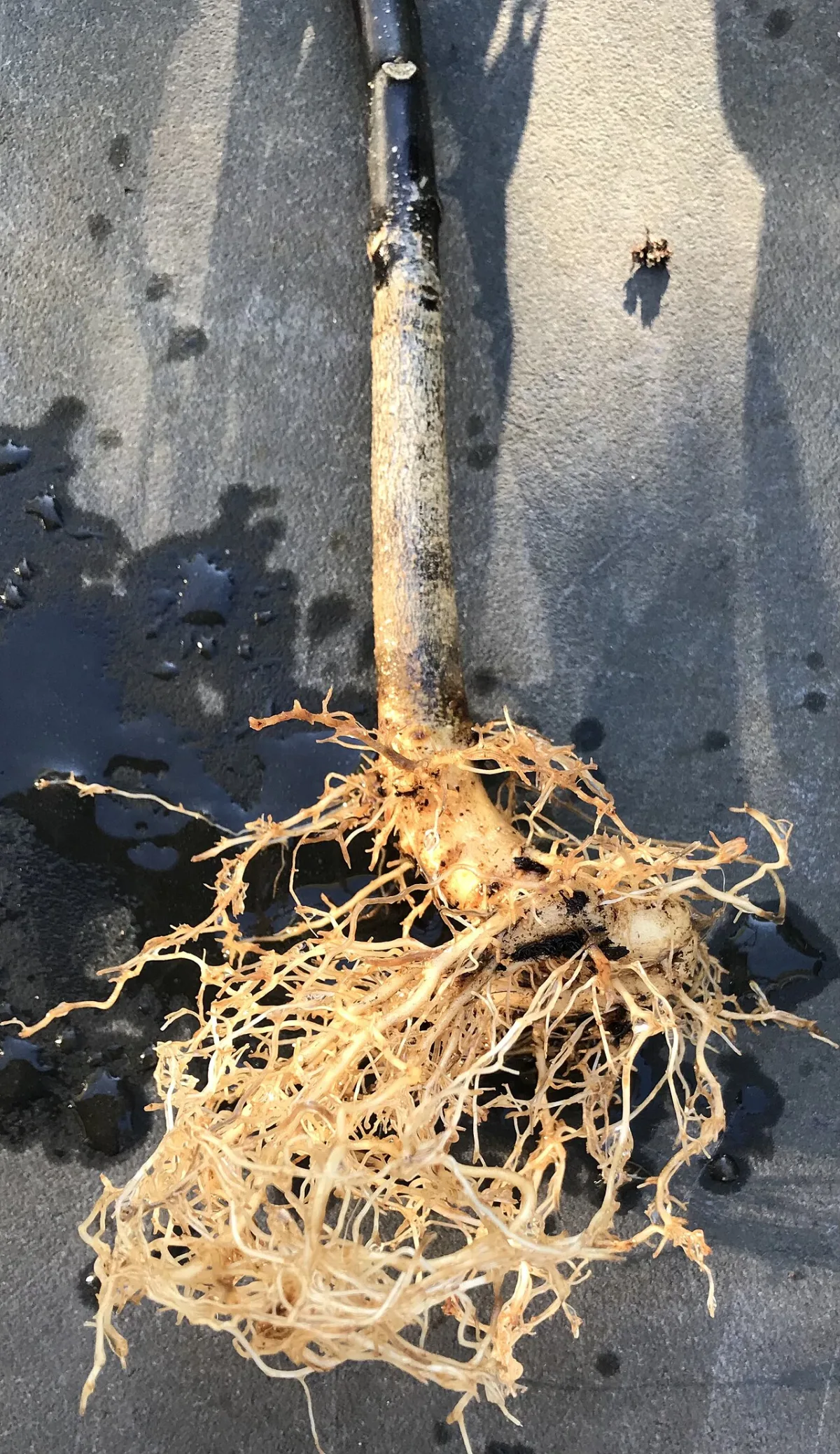
Soil buffering capacity is its ability to resist sharp changes in acidity (pH) and nutrient concentration under the influence of external factors. When you apply fertilizer, the soil smooths out chemical fluctuations, protecting plants from salt stress. Without this property, nutrients would either be instantly leached by rains or block the function of the root system.
How soil retains and releases nutrients
At the core of buffering is the function of the soil adsorption complex (SAC). It consists of minute clay and organic particles — colloids, which carry a negative charge. Due to this charge, the SAC attracts and holds positively charged cations: calcium, magnesium, potassium, sodium, hydrogen, and aluminum. The ratio of these elements determines the soil's resistance to pH shifts. For instance, saturation with calcium and magnesium protects the soil from acidification, while a high proportion of exchangeable hydrogen and aluminum, by contrast, makes it vulnerable to acidifying agents.
- Exchangeable adsorption. Cations on the surface of colloids are in constant equilibrium with the soil solution. When roots absorb elements from the solution, the colloids release the accumulated nutrients. In case of excess fertilizer, the surplus is temporarily bound by the SAC, protecting the roots from chemical burns.
- Non-exchangeable adsorption. A portion of ions, such as potassium, is firmly fixed within the crystalline lattice of clay minerals. This reduces their immediate mobility but creates a long-term nutrient reserve.
Organic matter, primarily humic acids, plays a special role in buffering. Colloidal humus particles possess a tremendous adsorption capacity compared to mineral particles. Humic and fulvic acids contain carboxyl and phenolic groups, which, upon dissociation, create additional attraction centers for cations.
Organics function in the soil through two mechanisms. First, they bind macro- and micronutrients into chelate complexes, preventing their leaching and ensuring gradual plant nutrition. Second, humus exhibits amphoterism: it neutralizes both excessive acidity and alkalinity, smoothing out fluctuations in the pH of the soil solution. This makes humified soils the most reliable in terms of nutrient retention.
A decrease in organic matter content inevitably leads to a decline in the soil's adsorption capacity. In depleted soil, even moderate doses of fertilizer can cause sharp chemical shifts that suppress the root system.
Why soil type determines fertilizer application strategy
A soil's resistance to chemical changes depends directly on its particle-size distribution and humus reserves. Heavy clay and well-humified soils possess high buffering capacity. They firmly bind applied salts, retain them in the root zone, and release them gradually to the plants. In such fields, pH levels and salt concentrations change slowly, which allows for the application of full fertilizer doses in a single pass.
Sandy, loamy sand, and organic-poor soils behave quite differently. Their buffer capacity is minimal, so applied mineral salts remain almost entirely in the free soil solution. In such conditions, the risk of technological losses and crop damage increases sharply.
On sandy and low-humus soils, applying high doses of fertilizer in a single pass is unacceptable. This causes a sharp rise in the salt concentration in the solution, triggering osmotic stress and the death of root hairs.
When working on light and organic-poor soils, an agronomist faces three main threats:
- High nutrient mobility — elements are quickly leached by precipitation and irrigation water below the root zone.
- Rapid pH changes — even small doses of acidic or alkaline fertilizers sharply shift the medium's reaction, converting nutrients into unavailable forms.
- Phytotoxicity — high concentration of the soil solution inhibits the development of the root system.
To eliminate these risks, a nutrition strategy must be built on the basis of laboratory analysis of the SAC. By knowing the adsorption capacity of a specific field, an agronomist calculates the split application and selects fertilizer forms according to the regulations for that soil type. This minimizes the loss of active ingredients and ensures plant safety.
Read next
Soil and tillage For students
The role of the soil adsorption complex in nutrition and ion exchange
Agrochemistry For students
The role of the soil adsorption complex in plant mineral nutrition
Agrochemistry For students