
Influence of the soil solution on the mineral nutrition of crops
6 min read
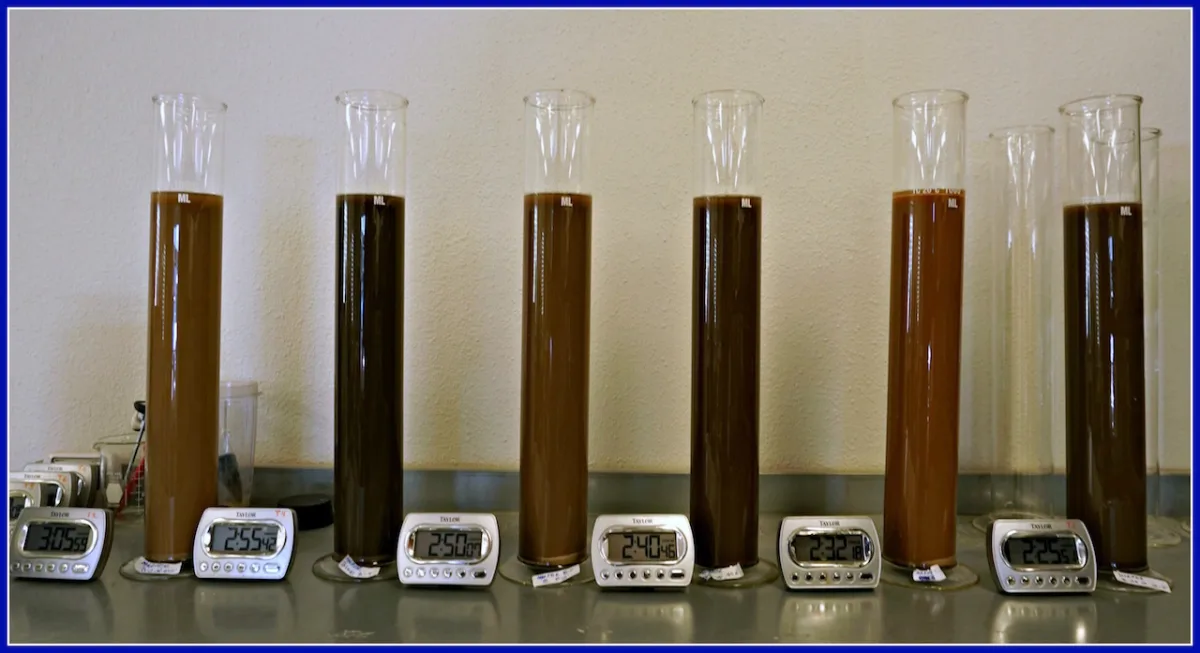
Plant response to mineral nutrition should be considered in terms of a soil–fertilizer–plant–climate tetrahedron. The absorption of nutrients by plants depends on their biological characteristics and soil properties – reaction, composition and concentration of the soil solution, temperature, aeration, humidity, duration and intensity of light, and the content of available forms of elements in the soil.
Composition and concentration of soil solution
The soil solution is in constant and close interaction with the solid and gaseous phases of the soil and plant roots; therefore, its composition and concentration are the result of biological and physicochemical processes underlying this interaction. The rate and direction of these processes are subject to significant seasonal variability, which is why the composition of the soil solution is extremely dynamic. It contains mineral, organic, and organo-mineral substances represented by ions, molecules, and colloids. In addition, it contains oxygen, carbon dioxide, and other dissolved gases. Among mineral compounds, the soil solution contains anions: HCO3–, NO2–, NO3 2PO4–, HPO42–, SO42–, CO32–, OH– and cations H+, K+, NH4 2+, Mg2+. In strongly acidic soils, there may also be Al3+, Fe3+, and in waterlogged soils, Fe2+. Iron and aluminum in soil solutions are contained mainly in the form of stable complexes with organic substances. Organic compounds in the soil solution are represented by organic acids, sugars, amino acids, alcohols, enzymes, tannins, and other products of plant and microorganism metabolism, as well as humus substances. Organo-mineral compounds are represented primarily by complex compounds of organic acids with polyvalent cations.
The total concentration of the soil solution is low and, as a rule, ranges from 0.02-0.2%. A higher content of dissolved substances occurs only in solonchaks, saline soils, and solonchak-like soils. The study of the effect of soil solution concentration on the absorptive activity of roots is especially important when implementing an intensive crop cultivation system that involves the application of high doses of mineral fertilizers. Violation of their optimum can lead to delayed seed germination and inhibition of seedlings even with sufficient soil moisture. As the concentration of the soil solution increases and the ionic composition changes, the regulatory systems that control the uptake of mineral nutrition elements are primarily disrupted. An increase in the concentration of the soil solution increases the osmotic pressure in the plant, which causes a disruption of the stomatal apparatus and increased transpiration. An excess of osmotic pressure in the soil solution over the osmotic pressure of cell sap has a detrimental effect on plants, because it sharply limits the absorption of water and nutrients by plants, which leads to cell plasmolysis.
Soil solution must be physiologically balanced, i.e., it must not be one-sided. A physiologically balanced solution is a solution in which cations and anions are in such proportions that the most efficient use of nutrients by the plant occurs.
The entire variety of element interactions with the plant organism can be reduced to three cases: additivity, synergism, and antagonism.
Additivity (from Lat. "added") – the effect of a mixture of elements in a solution is equal to the sum of the effects of each individual element.
The ability of plants to absorb mineral elements is subject to the law of constant ratio of the sum of absorbed cations to the sum of anions:
NH 4 К
NO 3 4 PO 4
This constant is greater than one and specific to the crop, as plants absorb cations in an equivalently larger quantity than anions. Based on this law, both cations and anions can be in antagonistic relationships or promote each other's entry into plants (Figs. 49 and 50; Kabata-Pendias A., Pendias H., 1989).
Element
– synergism – antagonism/synergism – antagonism
Fig. 49. Interaction between macro- and microelements in plants
Antagonism (from Gr. "against" and "to struggle"). This is a type of interaction where the physiological effect of the action of a salt mixture is less than the effect of the action of each salt taken individually. Antagonism manifests itself in the fact that cations of different elements compete with each other during their adsorption on the active surface of roots, and the importance of their valence is felt here: monovalent cations are less competitive (with the exception of H+) than divalent ones. A similar phenomenon with the same patterns is observed between anions. Antagonism is stronger between similarly charged ions and in a situation where the concentration of one ion in the soil solution greatly exceeds the concentration of another. The phenomenon of antagonism has been established between Fe and Ca; Al and Na; Fe and Zn; Mn and Zn; Cu and Zn; Zn and
Synergism (from Greek: joint action) is the mutual reinforcement of the physiological effect on a plant of each element included in a solution. Synergism can be observed between both oppositely charged ions—cations and anions—and similarly charged ones. In practice, the latter is more common when their content in the soil solution is low. The phenomenon of synergism is characteristic between S, N, and Mo; Cu and Mn; Ca and Co. Synergism can be positive, when the total effect of individual elements exceeds the sum of the impact of each of them, and negative, when the toxic effect of one salt is amplified by the toxic influence of another. In the process of plant nutrition, the additivity of the effect of nutrients can also be observed, that is, the effect of nutrients can be equal to the sum of the effects of each of them.
Fig. 50. Interaction of microelements within plants and in the environment surrounding plant roots:
1 – antagonism; 2 – synergism; 3 – antagonism and/or synergism; 4 – possible antagonism
In the composition of the soil solution, aluminum, manganese, and hydrogen are highly toxic. They inhibit root growth, especially in an acidic environment with a low content of calcium and magnesium. For most plants, an exchangeable aluminum content of 2 mmol/kg of soil inhibits the growth of above-ground and underground plant organs, but they are able to withstand higher concentrations of manganese than aluminum. Poisoning with this element affects above-ground organs more severely than underground ones. The negative influence of hydrogen ions on the root system is primarily associated with the release of aluminum, manganese, and other chemical elements toxic to plants into the soil solution. Root growth is inhibited by a deficiency of calcium ions in the soil solution. This is clearly observed when the Ca/Σ cation ratio in the soil solution is less than 0.2.
Read next
Agrochemistry For students
The role and chemical composition of the liquid phase of the soil solution
Agrochemistry For students
The role of the soil adsorption complex in plant mineral nutrition
Agrochemistry For students