
The influence of the mineral nutrition system on carbohydrate accumulation in crops
3 min read
The carbohydrate content in the harvest directly depends on mineral nutrition of the plants. Natural soil fertility is most often insufficient to obtain grain with the required technological properties, so a fertilizer system must be built artificially. The main storage carbohydrate for cereals is starch, which is deposited in the floury part of the endosperm.
| Starch component | Content in cereal starch, % |
|---|---|
| Amylose | 15–25 |
| Amylopectin | 75–85 |
In addition to starch, grain crops accumulate sugars, fiber, and associated polysaccharides in various parts of the caryopsis.
- Starch in the grain of most cereals — 50–70 %
- Starch in rice and corn grain — 70–80 %
- Sugars in the mass of the caryopsis — 2–5 %
- Fiber in naked forms — 2–3 %
- Fiber in hulled forms — 10–15 %
Sugars, represented by half sucrose, as well as monosaccharides, maltose, and raffinose, are localized in the embryo and peripheral parts of the endosperm. Fiber, hemicellulose, and pectins form cell walls; their concentration is especially high in husks and seed coats. The accumulation of these carbohydrate components is directly related to the mineral nutrition regime.
An excessive increase in nitrogen fertilizer application rates for grain crops reduces yield and starch content in the grain.
Optimizing nitrogen nutrition, on the contrary, stimulates the accumulation of storage carbohydrates. Phosphorus and potassium fertilizers act similarly. Microelements also play an important role: they increase enzyme activity and accelerate biochemical processes, stimulating carbohydrate synthesis.
Carbohydrate accumulation in grain legumes
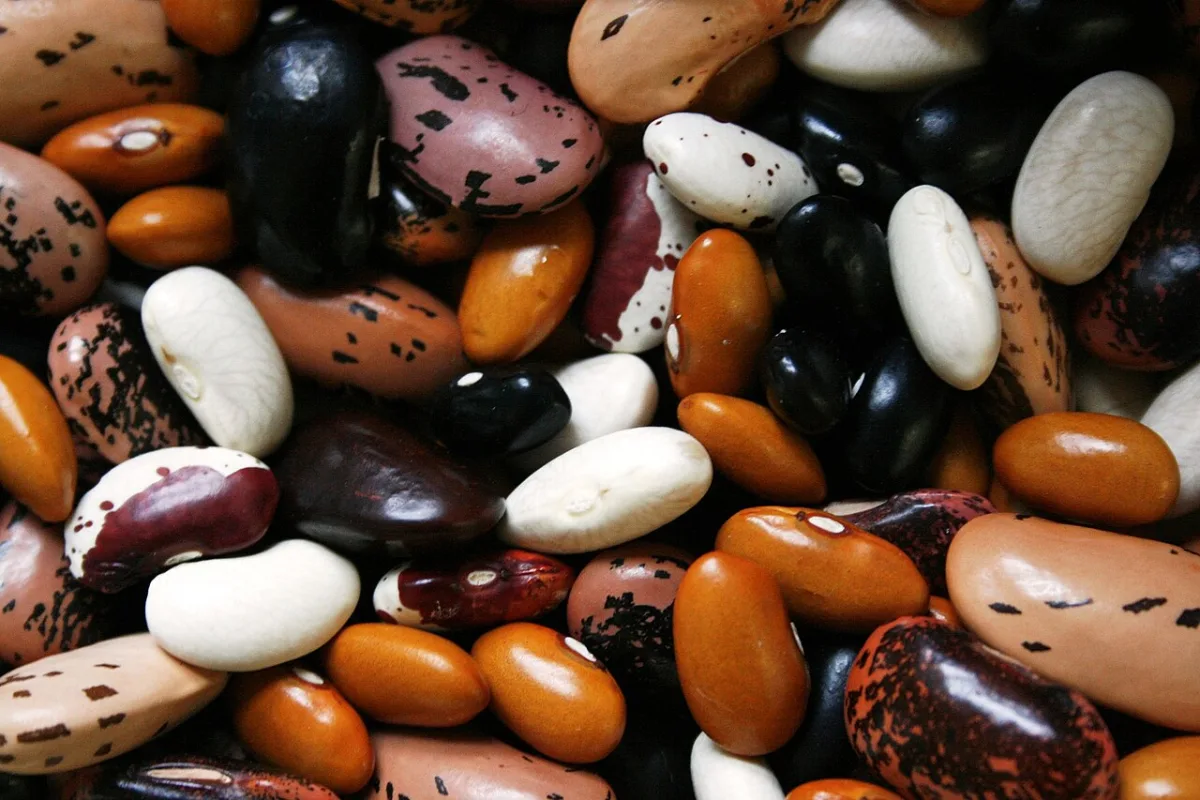
In grain legumes, seed quality is determined by starch, sugars, hemicellulose, and fiber. The main storage carbohydrate remains starch, which accounts for 40 to 55% of the seed mass. Its composition is close to that of cereals (20–30% amylose and 70–80% amylopectin), although in peas, the share of amylose can reach 50%.
During the filling period, seeds are supplied with carbohydrates due to their outflow from other plant organs. The breakdown of accumulated assimilation starch, hemicelluloses, and pectin substances is triggered in the pod valves and leaves. The resulting monosaccharides, their phosphoric esters, and sucrose are transported to the maturing seeds, where they are converted into storage starch.
The level of carbohydrate accumulation in legumes depends directly on the intensity of nitrogen fixation by nodule bacteria. For their active work, plants must be fully supplied with macro- and microelements.
On soils poor in mobile forms of phosphorus and potassium, the application of phosphorus-potassium fertilizers increases the starch content in the seeds of grain legumes.
The use of micro-fertilizers helps legumes assimilate basic nutrients faster. This stimulates photosynthesis and increases carbohydrate accumulation in the final harvest.
Read next

Agrochemistry For students
The influence of fertilizers on the carbohydrate composition and nutritional value of forage crops
Agrochemistry For students
Physicochemical properties and classification of polysaccharides in agricultural chemistry
Agrochemistry For students