
Senication as an effective agricultural practice for increasing the productivity of grain crops
4 min read

Senication improves the conditions for grain filling and, accordingly, the sowing qualities of seeds. This effect is more significant for seeds with low sowing qualities, i.e., senicants facilitate a shift in the phenotypic expression of a trait in a favorable direction within the limits of the genotype's norm of reaction.
During plant ontogenesis, competitive relations between organs—shoot–root, leaf–flower, leaf–fruit—successively alternate for the possession of metabolites. At each stage of development, the plant has its own physiologically active center or "reserve center," to which the greatest amount of assimilates is directed. At the final stages of plant development, the competitive relations in the leaf–fruit system shift in favor of the latter, and plastic substances are transported precisely to them as the most physiologically active center at this stage of ontogenesis.
Before the harvest is formed, a sharp shift occurs in leaf metabolism toward the intensification of hydrolytic processes, leading to the breakdown of proteins and starch into simpler compounds: amino acids and sugars, which then move into the generative organs—fruits and seeds.
Targeted regulation of the outflow of plastic substances from leaves and stems into the generative organs is a key link in managing plant productivity. As is known, plastic substances are attracted to ripening fruits and seeds far from completely, since a significant portion remains in the vegetative organs until they die. Moreover, a prolonged "youth" of vegetative organs, which often occurs due to unfavorable weather conditions, is accompanied by a wasteful expenditure of plastic substances to the detriment of the harvest. Therefore, the idea of accelerating leaf aging was born with the aim of more intensive "pumping" of plastic substances out of them. As a result of scientific research, methods of defoliation and desiccation were developed, which proved useful in cotton growing, as well as for castor bean, sunflower, potato, sugar beet, and a number of other agricultural crops. For cereal crops, senication proved most useful—an agricultural practice that ensures the accelerated completion of the plant's life cycle and an increase in their productivity.
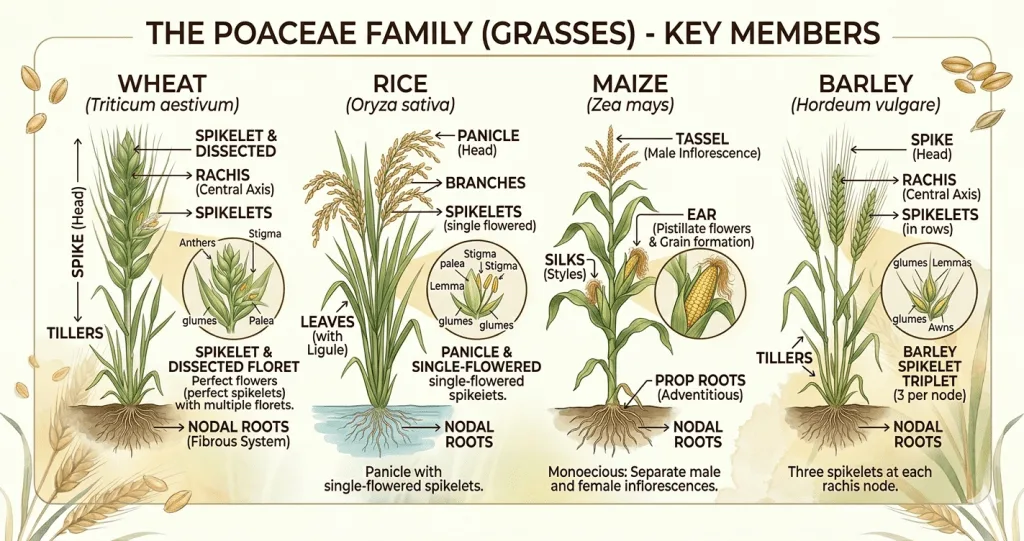
Senication is similar to desiccation, but unlike the latter, which causes the death of leaves and stems, it only ensures the acceleration of metabolism in the plant organism. The senicant used is a physiologically active mixture consisting of a microdose of 2,4-D amine salt and a nitrogen-based fertilizer, which in high concentration significantly enhances hydrolytic processes in plants and serves as an additional source of nitrogen. Senication is, in essence, a late foliar top dressing of plants with macro- and micronutrients in order to increase the rate of outflow of plastic substances from vegetative organs into generative ones—fruits and seeds. It ensures better filling and accelerated ripening of grains. Moreover, the acceleration of ripening is only an accompanying and very useful factor. Senication, as a most important and mandatory agricultural practice, has entered the cultivation technology of rice and wheat.
Features of rice senication and treatment efficiency
Efficiency of rice senication
Senication of rice contributes to the shortening of the growing season of plants by 4–6 days, better grain filling—the 1000-grain weight increases by 3–7 %, grain humidity decreases by 1.5–3.0 %, and yield increases by 5–7 centners/ha (Table 171; Sheudzhen A.Kh., 2005). This agricultural practice is carried out during the milky-waxy ripeness phase of the grain.
The composition used as a senicant for rice is:
- aqueous solution of urea (35 kg/ha);
- 2,4-D amine salt (22 ml/ha);
- boric acid (0.4 kg/ha of active ingredient).
The application rate of the working solution is 150 l/ha.
Table 171 – Efficiency of rice senication
| Indicators | Control | Senicant treatment |
| Growing season, days | 116 | 110–112 |
| 1000-grain weight, g | 27.0 | 28.0–28.9 |
| Grain humidity, % | 22.6 | 19.6–21.3 |
| Grain yield, c/ha | 44.0 | 48.7–51.1 |
Application of senication for wheat and corn
With the senication of wheat, grain yield increases by 3–5 c/ha and the duration of the growing season is reduced by 3–5 days. This occurs due to the acceleration of the natural aging of plants, expressed in the intensification of hydrolysis processes and the acceleration of the outflow of plastic substances from the leaves into the grains.
Senication of wheat is most effective at the beginning of the waxy ripeness of the grain using a 5% aqueous solution of ammonium nitrate with the addition of a microdose of 2,4-D amine salt.
Senication can also be promising when growing corn for grain. When carried out in the milky-waxy ripeness phase, the processes of hydrolytic breakdown of complex compounds and their outflow, characteristic of natural aging, are intensified in corn leaves.
As a result of leaf treatment, the processes of carbohydrate and protein synthesis are intensified in corn grain, and the water content decreases. All this ultimately leads to an increase in cob yield, accelerated ripening, and improved grain quality. The best results are obtained when using a mixture of 0.1% 2,4-D and ammonium nitrate as a senicant.
Read next
Agrochemistry For students
Principles and significance of desiccation in modern crop production
Crop production For students
Stages of organogenesis and patterns of cereal crop development
Agrochemistry For students