
Application and agrochemical properties of sodium Chilean nitrate
7 min read
Agronomic properties and rules for the application of sodium nitrate
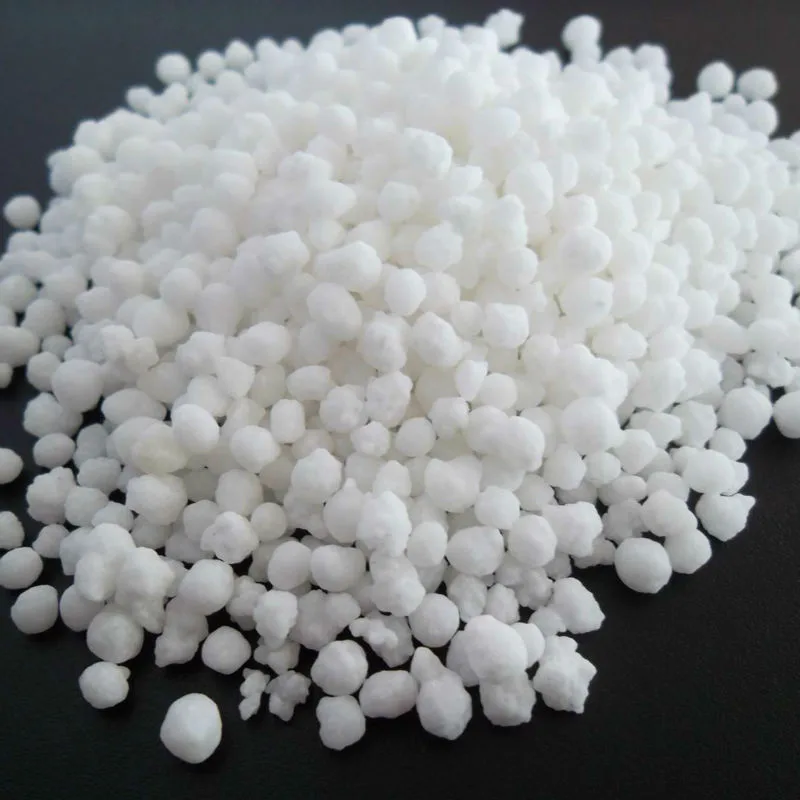
Sodium nitrate is a physiologically alkaline fertilizer containing 16% nitrogen in nitrate form and 26% sodium. In a dry state, it is a fine crystalline salt of white or grayish color, which is easy to spread and convenient for mechanized application. However, the fertilizer is highly hygroscopic and tends to cake rapidly if storage conditions are violated. Upon entering the soil, the salt dissolves easily in the soil solution and undergoes exchange reactions with the soil adsorption complex according to the scheme: [SAC]Ca + 2NaNO3 ⇄ [SAC]Na2 + Ca(NO3)2.
- Nitrogen in nitrate form — 16%
- Sodium content — 26%
- Average thickness of deposits — 0.9–1.2 m
- Reserves in Chile (1926 estimate) — 245.3 million tons
The binding of nitrate nitrogen (NO3) in the soil occurs exclusively through biological processes. Due to the high mobility of nitrates in humid climates or during heavy irrigation of well-drained soils, they are easily leached into lower horizons. To avoid loss of nutrients, it is best to apply sodium nitrate as top dressing during the growing season.
Systematic application of sodium nitrate has an alkalizing effect on the soil horizon. The fertilizer reduces exchangeable and hydrolytic acidity, and also increases the total amount and degree of base saturation of the soil. Thanks to these properties, sodium nitrate is most effective on acidic, non-limed sod-podzolic soils.
Sodium nitrate has the most favorable effect on sugar beet, which is extremely responsive to sodium. It is recommended to apply sodium nitrate primarily for this crop through root top dressing.
In addition to its natural form, synthetic sodium nitrate is used in agriculture. It is produced in small quantities in factories during the production of nitric acid from ammonia through alkaline adsorption of nitrogen oxides from nitrous gases.
History, origin, and characteristics of Chilean deposits
Natural sodium nitrate is found in the form of natural deposits on the Tarapacá Plateau in northern Chile. This plateau is located between the Andes to the east and coastal hills to the west. The climate here is extremely dry: the rains are so weak that they evaporate almost instantly. The presence of petrified trees in the earth's crust indicates that in the past, this area was humid and fertile.
| Deposit parameter | Value |
|---|---|
| North-to-south extent of the plateau | 720 km |
| West-to-east width of the plateau | 24–80 km |
| Elevation of the plateau above sea level | 900–2700 m |
The main nitrate deposits are located on the eastern slopes of the mountain range at an altitude of 1200 to 2100 m above sea level and at a distance of 24 to 80 km from the coast. The average thickness of the deposit layer ranges from 0.9 to 1.2 m, although in some places it varies from a few centimeters to 9 m. According to 1926 estimates, sodium nitrate reserves in Chile in the 1930s amounted to 245.3 million tons.
The development of the Chilean deposits went through several key stages:
- 1809 — first mention of the deposits in a book about the use of natural nitrates as fertilizer;
- 1813 — start of deposit exploitation by the Spanish;
- 1830 — organization of the first nitrate export from Peru;
- 1847 — delivery of the first shipment to Europe on the sailing ship "El Globo" for the production of explosives.
The origin of Chilean nitrates remains a subject of debate. Hypotheses regarding nitrogen fixation by soil microorganisms or lightning strikes do not explain the presence of iodine in the ore composition. The theory of seaweed decomposition explains the presence of iodine and phosphorus but requires a colossal amount of organic matter and does not explain the absence of bromine. Versions regarding origin from llama and vicuña manure or the nitrification of guano in salt lakes are not supported by findings of phosphorites. The most credible theory is that the nitrate was formed by the evaporation of water containing dissolved nitrates leached from surrounding sedimentary rocks and gravel.
Calcium nitrate (Norway saltpeter) – Ca(NO3)2 contains 13–15% nitrogen; it is formed by neutralizing 40–48% nitric acid with chalk or lime, and also as a byproduct in the production of complex fertilizers by nitric acid processing of phosphates.
Calcium nitrate was the first synthetic nitrogen fertilizer. Its industrial-scale production began in 1905 in Norway, which is why it is called "Norway saltpeter". It is a white crystalline salt that is highly soluble in water. It is highly hygroscopic and, even under normal storage conditions, absorbs moisture heavily and deliquesces. It is stored and transported in special waterproof packaging. To reduce hygroscopicity, calcium nitrate is granulated with the use of hydrophobic coatings, although this does not completely eliminate the unfavorable physical properties of this fertilizer. The hygroscopicity of calcium nitrate is rated at 9.5 points on a 10-point scale.
Calcium nitrate is a physiologically alkaline fertilizer. When applied to the soil, it readily dissolves in the soil solution. The Ca2+ cation enters into exchange reactions with the soil adsorption complex and shifts into an exchange-absorbed state:
[SAC]2K + Са(NО3)2 ⇄ [SAC]Са + 2КNО3,
[SAC]2Н + Са(NО3)2 ⇄ [SAC]Са + 2НNО3.
Remaining in the soil in an exchange-absorbed state, calcium cations shift the medium reaction toward alkalization. With systematic application of calcium nitrate on acidic soils, soil acidity decreases significantly and the physical properties of the soil improve, as calcium coagulates soil colloids.
NO3– anions form water-soluble salts or nitric acid with cations displaced from the soil adsorption complex, thereby maintaining high mobility. The NO3– anion is not subject to either physicochemical or chemical absorption in the soil. It can be bound in the soil only biologically, which is observed mainly during the warm period of the year. In the autumn-winter period, biological absorption is practically absent. Therefore, calcium nitrate should not be applied in advance in the autumn, especially in regions with a leaching water regime of soils. Its application is also impractical in humid climates or under heavy irrigation, especially on light soils. Nitrate nitrogen can be leached out, and also lost as gaseous products during the denitrification process.
It is recommended to apply calcium nitrate during pre-sowing tillage. It is used in protected soil vegetable growing and for surface application as nitrogen top dressing for winter crops, meadows, and pastures.
Currently, the chemical industry has started producing liquid calcium nitrate with a content of 11.5% nitrogen and 12% calcium. It is intended for top dressing of fruit, berry, vegetable, and ornamental crops. It is applied to the soil by spraying over the soil surface before sowing, with irrigation water, or during plant top dressing. The application rate is 0.4 l/10 m2, having previously dissolved it in 10 l of water. It must be shaken before use; the storage temperature of calcium nitrate should be no lower than 10 °C. The use of calcium nitrate for sugar beet and grain crops is effective. For sugar beet, it is applied at a rate of N100–120, and for grain crops – N90.
Read next
Agrochemistry For students
Characteristics and application rules of ammonium nitrate in agronomy
Agrochemistry For students
Gypsum application on solonetzic soils as a method of land reclamation and increasing yield
Agrochemistry For students