
Environmental factors and management of vineyard productivity
7 min read
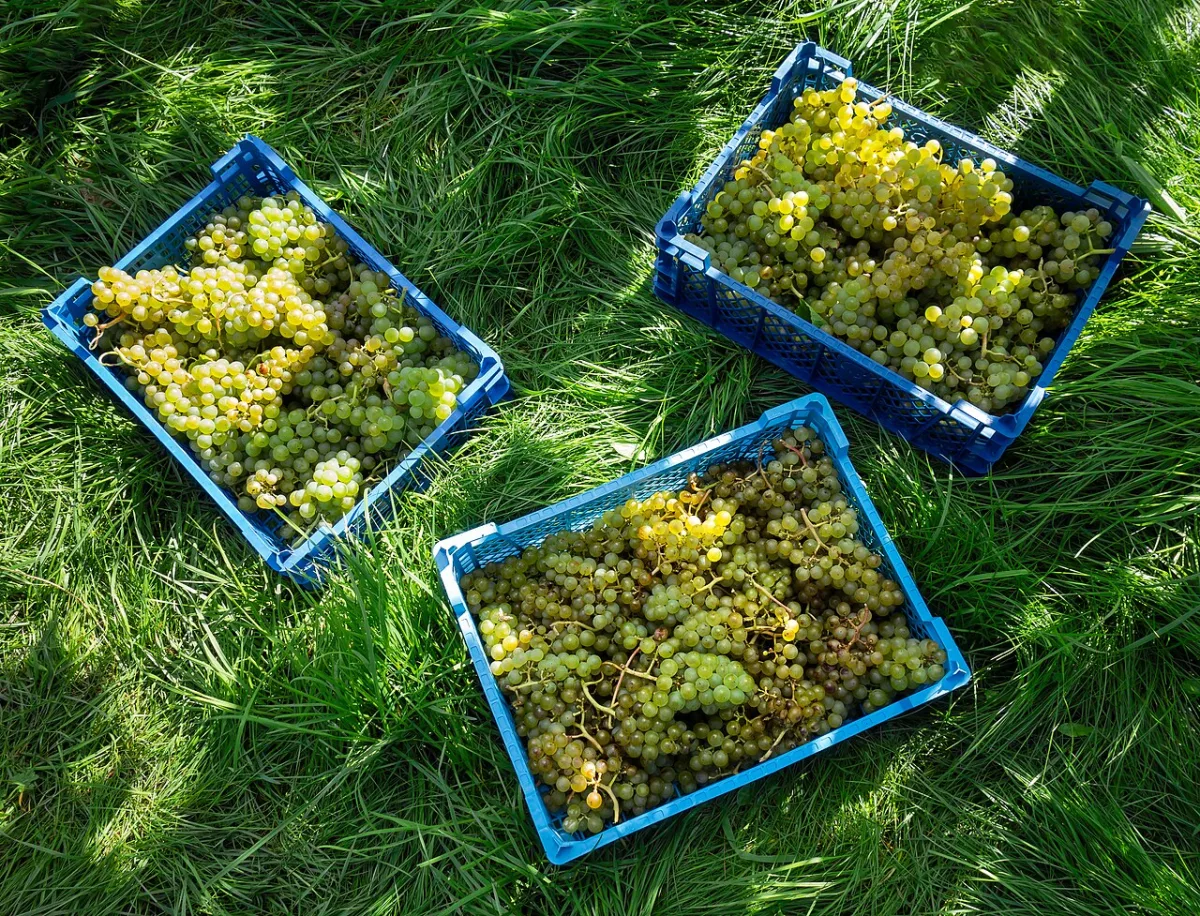
The quality and volume of the grape harvest depend on a complex set of external conditions. All environmental factors — from air temperature to the salt composition of groundwater — act on the plant simultaneously. It is important for an agronomist to remember that the influence of one factor always depends on the level of the others. If a vineyard is experiencing an acute deficit of moisture, then fertilizer application will not produce the expected effect until the irrigation issue is resolved.
The law of the limiting factor (Liebig's law) applies: a limiting factor nullifies the effectiveness of other technological practices. Direct your main resources toward compensating for the factor that is at a minimum, or toward reducing its harmful effect.
How to change the vineyard phytoclimate through agrotechnics
All environmental factors are divided into abiotic (climatic, edaphic, orographic) and biotic — phytogenic (influence of co-inhabitants) and zoogenic (influence of animal organisms). A grape plantation is an artificial agrobiocenosis. Through proper agrotechnics, we can regulate the internal phytoclimate of the plantings and mitigate unfavorable external conditions.
The phytoclimate of the vine and its productivity are influenced by the following adjustable parameters:
- choice of row orientation;
- planting pattern;
- training system;
- vine formation and pruning;
- irrigation;
- fertilizer application;
- soil management system.
Light regime and photosynthetic activity
Light is a key abiotic factor that ensures photosynthesis. In the process of evolution in shady forests, the grape has developed a unique combination of properties: it is light-loving but also shade-tolerant. According to research, with a sufficient amount of heat and moisture, natural light in cultivation areas is not a limiting factor. This gives the crop high adaptability to optical radiation of varying intensity.
For grape growers, the use of solar radiation is of paramount importance, especially its photosynthetically active part (PAR with a wavelength of 380–710 nm), which provides photosynthetic, photomorphogenetic, and thermal effects. The plant is also affected by ultraviolet rays (290–380 nm), which trigger photomorphogenesis processes. The near-infrared region of the spectrum (750–4000 nm) provides morphogenetic and thermal effects.
- PAR efficiency in the production process — 0.5–2%
- Realization of productivity potential — 15–20%
- Target PAR efficiency with new technology — 4–5%
The grape vine is characterized by high plasticity to lighting conditions. Due to the plant's shade tolerance, the radiation absorption coefficient in very bright sun is even lower than at moderate levels. To optimize the light regime of a vineyard, it is important to focus on key physiological thresholds.
| Illumination indicator | Value, thousand lux |
|---|---|
| Start of photosynthesis | about 2 |
| Light saturation | 30–40 |
| Lower limit of assimilate outflow | 1–2 |
| Upper illumination limit | 60 |
In general, the grape plant is plastic to lighting conditions. However, when choosing a maintenance technology, it is necessary to take into account pronounced cultivar and species differences. This allows for more effective adjustment of the light regime for specific plantings.
The quantity and intensity of sunlight directly determine the future grape harvest and its quality. For the initiation of embryonic inflorescences in overwintering buds, the total number of hours with high illumination is critical. At the same time, the accumulation of dry matter depends not so much on the length of the day, but on the intensity of radiant energy.
With berry development, the situation is different: an excess of sun, like its deficit, delays their ripening. The best results are obtained with light shading of the clusters, the intensity of which depends on the specific cultivar. An optimal light regime improves fruit set, which directly increases the overall yield of the vine.
A lack of light also changes the chemical composition of the juice: the malic acid content increases sharply, while tartaric acid decreases. At the same time, the intensity of illumination has practically no effect on the level of glucose and fructose. The ultraviolet spectrum is responsible for the color saturation of the berries — the more of it there is, the more intense the color.
Grape is considered a long-day plant, but the response to the photoperiod depends on the species. Cultivars of the Vitis vinifera (European-Asian) species react less strongly to the reduction of the light period than American species.
When the daylight hours in a vineyard are shortened, the following processes occur:
- shoot growth stops faster;
- the ripening phase starts earlier and accelerates;
- phellogen forms more actively, phelloderm is deposited, and starch is synthesized;
- the overall frost resistance of the plants increases.
At the same time, a short day does not affect the start and intensity of berry ripening, nor does it affect their sugar content and acidity.
How to manage the light regime in a vineyard
The light regime of the vine depends on the natural conditions of the site and the agronomist's decisions: choice of slope, row orientation, vine shape, and shoot load. On slopes with a steepness of 18–20°, the duration of summer illumination depends directly on the exposure.
| Slope aspect (steepness 18–20°) | Daylight duration in summer, h |
|---|---|
| Southern | 12–13 |
| Southwestern | 11–12 |
| Southeastern | 10.5–11 |
| Eastern | 10 |
| Western | 10.5 |
| Northern | 9 |
Row orientation redistributes solar radiation. Rows oriented north to south are illuminated evenly throughout the day from the eastern and western sides. With a west-to-east orientation, the southern side of the rows receives significantly more heat and light all day than the northern side.
On a vertical trellis, the parts of the canopy are arranged in the following order by illumination level: upper, eastern, western, southern, and northern. Depending on the training system and the shape of the bush, the proportion of shaded leaves varies.
- Proportion of shaded leaves — 30–50%
- Illumination of the outer part of the bush — 32 thousand lx
- Illumination of the second tier — 12–15 thousand lx
- Illumination inside the canopy — 2–4 thousand lx
Illumination of leaves inside the canopy critically depends on the bud load of the bushes. According to field trial data, with excessive load, the illumination level of inner leaves can drop from the optimal 27.8 thousand lx to a critical 6.4 thousand lx, which will impair the performance of the leaf apparatus.
Thus, by regulating row orientation, bush shape, and shoot load, it is possible to optimize the light regime of plants and increase the overall productivity of the vineyard.
Read next
Agrochemistry For students
The effect of moisture regime and light intensity on plant mineral nutrition
Crop production For students
Optimization of crop photosynthesis for increasing yield
Vegetable growing For students