
The influence of spectral composition and light intensity on vegetable crops
8 min read
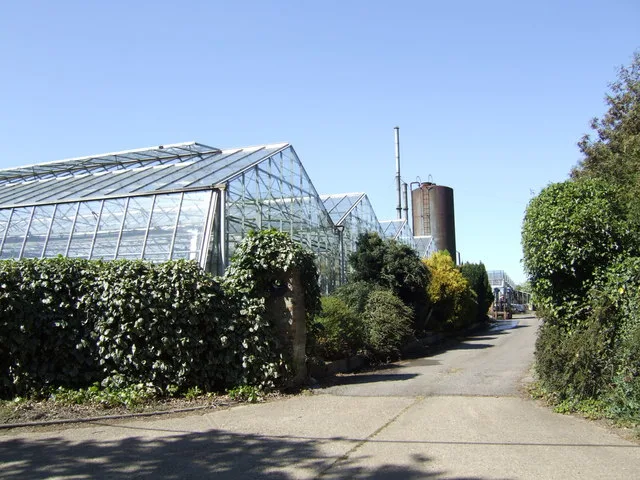
How spectral composition and light structure control harvest
Sunlight is the primary external factor determining growth rates and yield of vegetable crops. The entire solar spectrum reaching the Earth (from 300 to 4000 nm) affects plants in one way or another, but photosynthetically active radiation (PAR) in the range from 300 to 710 nm plays the key role. Each spectral range of PAR triggers its own development mechanisms, which must be taken into account when regulating light conditions in greenhouses and open soil.
- Ultraviolet rays (300–380 nm): stimulate the synthesis of vitamins, anthocyanins, and flavonoids, and increase the cold resistance of transplants during light hardening in protected ground.
- Blue-violet rays (380–490 nm): regulate chloroplast movement, the shape, size, and position of leaves, and actively assimilate carbon dioxide.
- Green (490–565 nm) and yellow rays (565–595 nm): participate in photosynthesis, the distribution of assimilates, and organ formation.
- Orange (595–620 nm) and red rays (620–710 nm): are most active during carbon dioxide assimilation, stimulate metabolism, and accelerate the development of long-day crops. They can also be used for hardening transplants, though with less efficiency than ultraviolet.
- Infrared rays (above 710 nm): provide thermal heating, stimulate organogenesis, and reinforce the long-day effect for plants of temperate and subtropical zones.
When assessing the illumination of crops, it is important to consider the structure of the light flux. On a clear noon, the share of direct radiation at the soil surface is 60–85%, while in the morning, evening, and on cloudy days, diffused light predominates. The inner part of the bush and its shaded side are illuminated mainly by diffused radiation. Since diffused light is spectrally richer than direct light, it plays a key role in plant photosynthesis.
Excess solar radiation inhibits photosynthesis and can cause leaf and fruit burns.
Light regime and crop requirements by growth stages
The intensity and duration of illumination determine the rate of biomass accumulation and the overall level of metabolism. For normal development, most vegetable crops require illumination in the range of 20–30 thousand lux. With a lack of light, biomass accumulation decreases sharply, plant development is delayed, and the formation of reproductive organs is disrupted.
- PAR range — 300–710 nm
- Optimal illumination — 20–30 thousand lux
- Minimum growth threshold — 5–6 thousand lux
- Day length for minimum — 8–10 hours per day
| Crop group | Optimal illumination | Crops |
|---|---|---|
| Most demanding (fruiting vegetables) | 30 thousand lux | Watermelon, melon, pumpkin, tomato, eggplant, pepper, okra, bean, corn |
| Moderately demanding | 20 thousand lux | Cucumber, pea, perennials, root crops, cabbage, onion, lettuce, spinach, garlic |
| Least demanding (forcing crops) | 0.5–2.5 thousand lux (for green leaf) Light not required (for forcing) |
Bulb onion, parsley, beet, celery, sorrel, garlic Asparagus, chicory, rhubarb |
Vegetable plant requirements for light change throughout the growing season. For seed germination, lighting is not required; however, with the emergence of seedlings, the need for it increases sharply for the rapid formation of roots and leaf apparatus. At the end of the growing season, when the formation of produce organs is completed, the demand for light is minimal. White cabbage and cauliflower, as well as bulb onion, are capable of accumulating plastic substances in storage organs even under low illumination — due to organic mass accumulated in leaves and stems.
A lack of light during the formation of generative organs leads to the shedding of buds, flowers, and young fruit set, and also inhibits fruit growth.
To increase the utilization coefficient of photosynthetically active radiation, it is necessary to form an optimal plant stand density. Based on their reaction to day length, vegetable crops are divided into two main groups: short-day and long-day. Short-day plants develop faster during a short daylight period, although some tomato cultivars are less sensitive to this factor. Long-day plants switch to flowering at a day length of 16–20 hours, and some species develop successfully under continuous lighting.
- Use of PAR by plants — 0.5–1.5 %
- Theoretical PAR potential — 6–8 %
- Period of sufficient light in the South of the Russian Federation — 10 months
- Day length for flowering of long-day crops — 16–20 hours
Most modern commercial cultivars and hybrids of vegetable crops respond weakly to day length. This sensitivity manifests only at the beginning of vegetative growth — until the moment of growing point differentiation, and after flowering begins, plants become neutral to photoperiod. An exception is some members of the celery family, which change their requirements during the season, due to which they are classified as long-short-day or short-long-day. At the same time, absolutely all crops require a regular alternation of day and night to maintain normal metabolism and the timely redistribution of assimilates.
In field conditions, the light regime is regulated through the precise selection of the site, growing periods, and planting patterns. It is recommended to plant light-loving crops on southern slopes, and plants producing marketable vegetative mass on northern ones. In southern regions, such as the North Caucasus and the Lower Volga, natural sunlight is sufficient for the growing season from mid-January to mid-November. At the same time, in the summer months in the south, there is an excess of solar radiation, which makes crops need protection from overheating.
To prevent heat stress in plants in open soil, a complex of technological practices is used:
- thickening of plantings, which eliminates the appearance of exposed soil areas;
- row orientation, which allows plants to mutually shade each other at noon;
- vertical training of bushes and the planting of protective windbreaks using tall-growing crops;
- cooling irrigation of the soil and foliage.
Dust and dirt on glass or film drastically reduce the influx of natural radiation. In winter greenhouses, this critically shortens the already brief period of vegetable production without the use of artificial supplemental lighting.
Reconstruction of supplemental lighting systems in protected ground
In greenhouses, it is important to minimize any losses of light energy. To do this, standard designs with the minimum area of opaque supporting structures are chosen, and internal equipment is positioned so that it does not cast shadows on the beds. Even in the most illuminated 5th and 6th light zones of Russia, natural sun is insufficient in winter for continuous production. Artificial electric lighting, which allows for year-round light culture, helps to solve the problem of radiation deficiency during limiting calendar periods.
- Light zones of Southern Russia — 5 and 6
- Power of replaced DRLF lamps — 400 W
- Power of DNAZ/Reflux lamps — 400 and 600 W
In modern greenhouse complexes, outdated DRLF-400 mercury lamps in OT-400 luminaires are being actively replaced with mirror sodium DNAZ/Reflux lamps with a power of 400 and 600 W. They are used both when modernizing existing areas and when constructing new blocks. These lamps are versatile and equally effective for growing seedlings, as well as within the full production cycle of vegetables, greens, and flowers. New lighting solutions ensure a stable light flux throughout the entire period of operation.
When selecting lighting equipment, agronomists should pay attention to the most common domestic luminaires. Devices of Voronezh production and models from the Kadoshkinsky plant have proven themselves well on the market. Specific markings of equipment compatible with modern mirror lamps include the following items:
- "Flora" series ZhSP-64-400-001 and ZhSP-64-600-001 (LLC NPP "NFL", Voronezh);
- Models from the Kadoshkinsky Electrical Engineering Plant: ZhSP 44-400-002, ZhSP 44-600-002, ZhSP 44-750-002, ZhSP 30-400-01 Reflux, ZhSP 30-600-01 Reflux, ZhSP 55-600-002.
Read next
Agrochemistry For students
Factors of photosynthesis intensity and the influence of the light regime on plant development
Viticulture For agronomists
Environmental factors and management of vineyard productivity
Greenhouses and covers For gardeners