
Tomato grafting methods for protection against soil-borne pathogens
4 min read
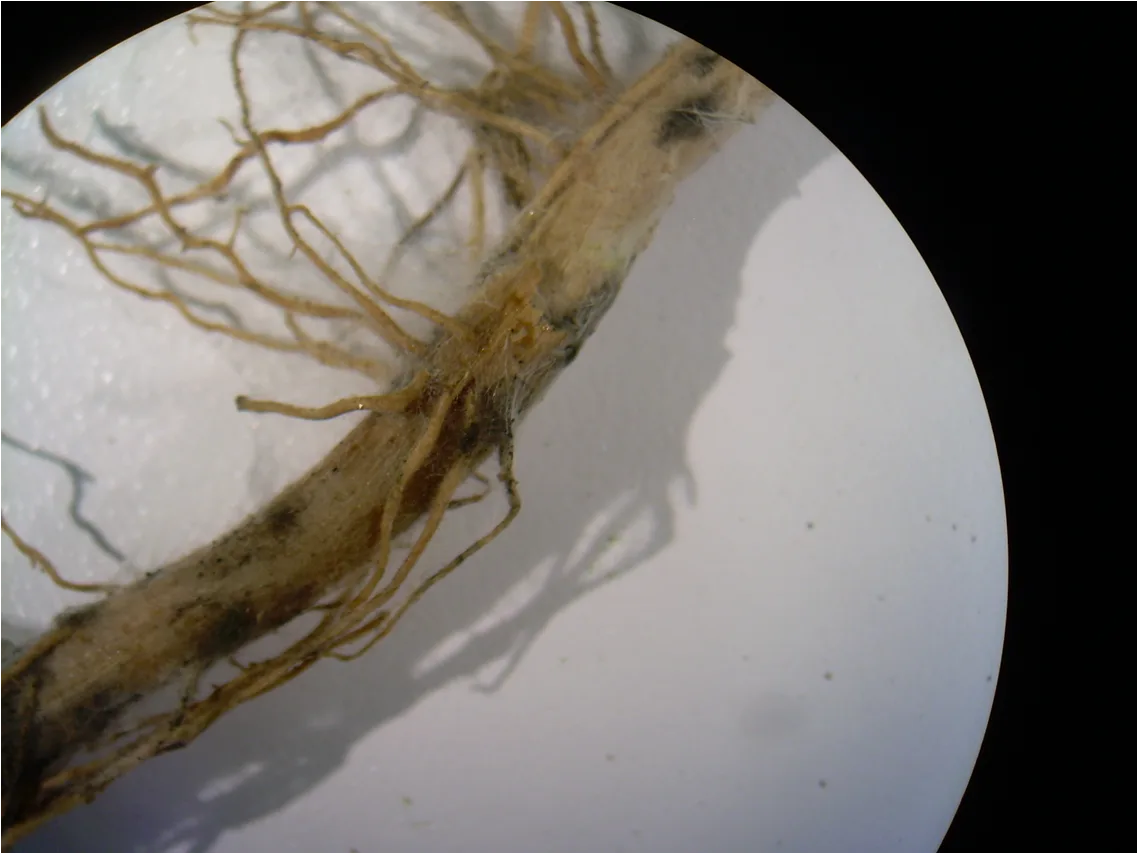
The most common methods of grafting tomatoes are cleft grafting and approach grafting (Fig. 5.4). The process itself is very simple: young plants are removed from pots, grafted, and immediately repotted. If care is taken, grafting success rates can be very high.
Grafted plants, when planted into chemically disinfected or steamed soil, often begin to grow very vigorously. To avoid the negative effects of such powerful growth, the condition of the tomatoes must be monitored during the initial phases of development. With the right nutritional regimen, the vigorous growth of grafted plants can be purposefully utilized to achieve higher yields.
If the main objective of grafting is to combat vascular pathogens, such as those causing Fusarium or Verticillium wilt, it is advisable to separate the susceptible
7 6 8 7 3х | 5 и [и А ит 7 СМ,, Мм А АА ЛИЛ УИ и ГИ ы \ | | И | \\ | \ АЕ — АВ — № — 4 | —4— < ее Ре \ — $ \] Гы ТЕЗ Fig. 5.4. Methods of grafting tomato when removing plants from pots and directly in pots: a — scion and rootstock of the same size are selected and one cut is made on each in diametrically opposite directions; b — plants are cleft grafted; c — the graft union is tied, removing any interfering leaves. The grafted plant is planted into a pot so that the graft union is above the soil surface; d — scion and rootstock are planted in the same pot and grown to the size required for grafting; e — the top of the scion is cut off, an oblique cut is made on the rootstock stem; f — both plants are grafted by approach; g — the graft union is tied, removing any interfering leaves.
rootstock before planting the grafted plant into the soil. For this, after the graft has taken, it is best to gradually cut the scion stem below the graft union. If it is cut in one operation, especially before the components have fully fused, the plant may wilt and die. When planning to combat root rots, it is not necessary to remove the scion root. SOIL FREE FROM INFECTION Pathogens of some of the most harmful diseases of greenhouse crops are soil-borne. All fungi that cause vascular wilts and root rots, as well as mushroom pathogens (if the substrate for mushrooms is considered analogous to soil), sharply reduce the yield of protected ground crops. Therefore, the fight against soil-borne pathogens must be effective. It is necessary to take into account a number of factors: - distribution of the pathogen in the soil and the type of resting structure; — growth rate of the pathogen in the soil; — type of disease caused by the pathogen (local rots or systemic infection); — duration of the growing season of a particular crop; — agricultural practices and crop rotation. DISTRIBUTION OF PATHOGEN IN SOIL In most soils, the infectious load, i.e., the number of fungal structural units per unit of soil mass, decreases with depth. At a depth of 40 cm, the pathogen population density is noticeably lower than at a depth of 20 cm. In relatively infertile soil, for example in immature or stony clay, the fungal population count decreases very sharply. In the top layer of soil 20 cm thick, populations of saprophytic and parasitic fungi and bacteria are usually most numerous. The pattern of spread of many soil-borne root pathogens is to a significant extent a function of the growth of the host root system. Consequently, in the deep layer of soil, where roots penetrate to a meter and deeper, root pathogens can reach the same depth. However, in general, both fungi and bacteria are concentrated in the top 20 cm of soil, and it is this layer that requires the most thorough treatment (Fig. 5.5). Chapter 1 has already described various resting structures of pathogens, and it is much more difficult to combat species that form resting spores or sclerotia than those that inhabit the soil in the form of mycelium or thin-walled spores.
Read next
Plant protection For agronomists
The influence of maturity stage and growing conditions on the phytosanitary status of greenhouse crops
Planting and propagation For agronomists
Biological compatibility of scion and rootstock in pomiculture
Fruit growing For agronomists