
Proper nutrition of greenhouse plants for the prevention of nitrate accumulation
5 min read
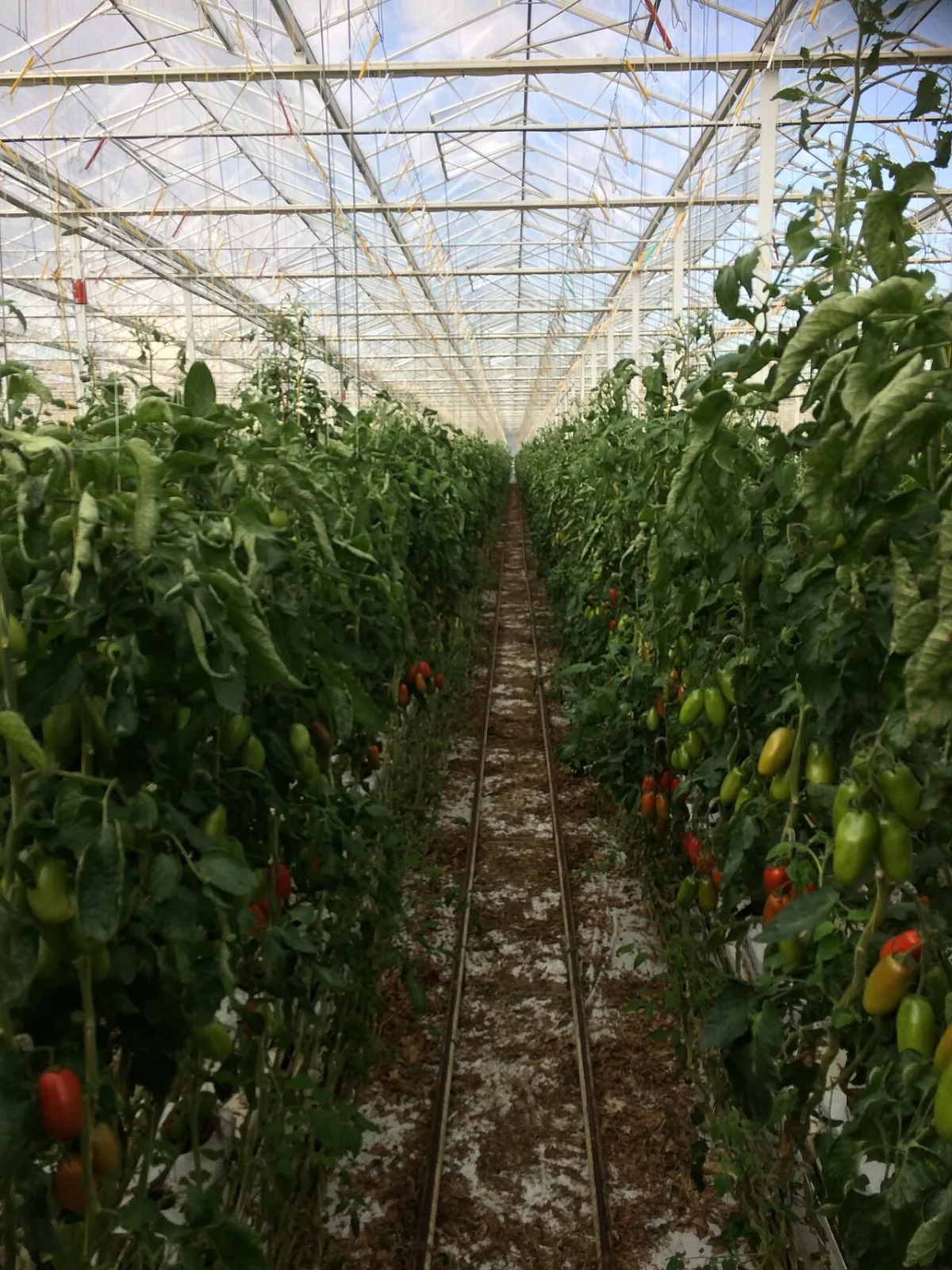
For the full assimilation of the nitrogen fertilizers we apply, two things are necessary: sun and a complete composition of the essential elements in the soil, in particular, cobalt and molybdenum. Glass or other covers become dull over time due to dust; this is one of the reasons for the accumulation of unused nitrates in fruits when fertilizers like saltpeter and urea are abused. However, if the greenhouse is located in a sunny spot, and the owner cleans the transparent cover inside and out once a year, all nitrates will be assimilated. In the worst case, the plants will simply delay their vegetative growth, that’s all. Furthermore, when the fertilizer focus is strictly on NPK (nitrogen, phosphorus, and potassium), the soil becomes depleted of micronutrients, which also leads to incomplete conversion of nitrogen and its accumulation in the fruits.
A variety of fertilizers and the mixing of their compositions is simultaneously a reliable preventative measure against nitrate accumulation. It is one thing when a person applies a "triple cologne" year after year in the form of potassium sulfate, urea, and superphosphate, pedantically caring only about NPK (or a popular analog: monopotassium phosphate and urea), and quite another when they apply compost with additions of ash, poultry manure, and liquid humates.
In the first case, they have three single-component, crude, soil-acidifying chemical preparations. In the second, a combination of four nutrient-rich fertilizers!
Over a long distance, the result will prove to be simply incomparable in terms of both harvest and plant health. The further the years go, the more the difference between these two "agrotechniques" will grow.
Conclusion
The first owner will reap the fruits not only of soil depletion but also of its acidification and poisoning. The second, even without the use of limestone, will be able to imperceptibly deacidify their soil, making it looser, "alive," and highly nutritious.
As a soil scientist, I know a lot about soil. Nevertheless, when talking about soil, I try to express myself as simply as possible. "The secret is simple: add some compost!" Otherwise, other authors, relying on scientific manuals, write things like "the soil must have a water-holding capacity of 40–50%." How, excuse me, is the average gardener supposed to determine that? And how, I would like to know, can they maintain air humidity "at a level of 60–65%"—not everyone has a hygrometer! Thermometer isn't even owned by everyone.
And all these numbers aren't needed in everyday practice once you have gained experience through trial and error. I have a soil moisture meter lying around somewhere, but I never use it. Am I really unable to distinguish dry soil from moist soil by eye? Many things turn out to be simpler than they seem at the beginning of the journey. Frankly speaking, I now believe that in gardening, it is more important not to be stingy with irrigation than to worry about all these clever numbers. Whether you poured two buckets or one—it’s not that important for the plant; it will be satisfied in both cases; the main thing is to pour at least one.
Let’s continue our conversation about soil fertility. We constantly see people judging and guessing with the air of experts as to why a yield on a certain plot turned out significantly higher than on others. In 99.9% of cases, the reason they state is incorrect. And this is natural: for a correct judgment, there is not enough data; you cannot know everything about that garden. Nevertheless, they judge immediately and self-confidently:
- "Oh, well, they just have that kind of cultivar!"
- "Oh, that's because they dug up the sod, the soil is rested..."
Fine, then you dig up the sod too—and we'll see...
But the SKILL of successful growers always remains out of sight. Indeed, it is easiest to consider a particularly productive cultivar as the cause of any success. Usually, a person uninitiated in our business can be recognized by their naive belief in the omnipotence of the cultivar; they say, "If only I could get the same championship cultivars as everyone else." And there is also a side belief that everything depends on the weather. If nothing grew, the weather is always to blame.
Whereas the cause of any success lies in care, and above all in creating and maintaining fertile soil. You will quickly find high-yielding cultivars, and it is ridiculous to fear the weather at all: a greenhouse is a greenhouse specifically so that you don't have to depend on cold weather. Start looking for the cause of your failure in the soil.
I will reveal to you an incredible secret as someone who knows all the ins and outs: more often than not, the true reason for a gardener's success is the fertilizer they apply. This reason usually leads among other possibilities. It’s just that no one sees when and what a successful gardener added to their compost buckets, or even into the compost itself. From the outside, it seems as if they did everything like everyone else: they ploughed the same way, they sowed the same way… Thus, speculations arise as to why everything grew so beautifully only for them—it must be that the rain only fell over their garden all summer long!
For this reason, I recommend that, to begin with, you learn how to properly fertilize the soil being tilled, both generously and in a diverse manner, and at the very least, do not start economizing on fertilizers right away. Unfortunately, it is precisely because of this economy that people get hooked on mineral fertilizers. Initially, they do indeed provide striking results, but this ends quickly. Do not listen to the laudatory odes of novices regarding the magical effect of granular fertilizers: they have little experience, and they do not know what will happen next.
Conclusion
Any outstanding result in greenhouse farming begins with soil preparation. The main secret to high yield is the technologist's ability to fully provide plants with all necessary nutrients. Whether you choose to use mineral fertilizers or focus on organics, balanced nutrition remains the foundation without which it is impossible to obtain maximum returns.
Attempts to save on substrate preparation and fertilizers negate the effectiveness of all other technological processes in the greenhouse.
What the plant nutrition system is superimposed upon
All other elements of agricultural technology only help to unlock the potential established by quality nutrition. If the soil is depleted, even the most expensive technologies will not produce the planned yield. The following factors are superimposed on balanced nutrition:
- a tuned irrigation regime;
- proper selection of cultivars and hybrids;
- precise spacing between plants during planting;
- timely removal of weeds;
- use of specialized greenhouse equipment.
Without competent fertilizer application, none of these practices will work to their full extent. Unfortunately, in many instructional manuals, soil composition and nutrition systems are only mentioned in passing. Authors often limit themselves to general recommendations such as "apply NPK in full," which does not allow a practicing agronomist to build an effective nutrition system.
Read next
Greenhouses and covers For gardeners
Classification of hotbeds and modern methods of their heating in agriculture

Greenhouses and covers For gardeners
Construction and operation of efficient greenhouses for a home garden
Greenhouses and covers For agronomists