
Pre-sowing seed preparation and stimulation of plant immunity
5 min read
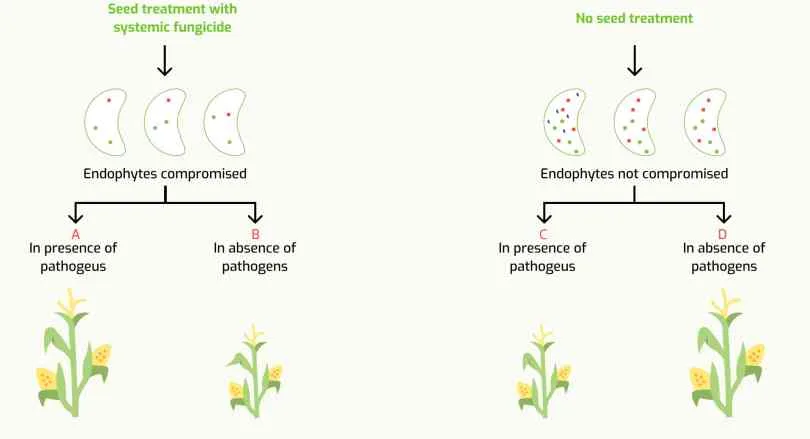
Seed preparation and immunity stimulation
The quality of seed material directly determines the health of future plants in the field and greenhouse. About 80% of crop diseases are seed-borne, and only 20% are soil-borne. Seeds from large, verified producers usually do not require treatment, but self-harvested or hobbyist seed material must be disinfected without fail.
- Seed-borne disease transmission — 80%
- Soil-borne disease transmission — 20%
- Pepper seed germination after 1 year — 50%
- Pepper seed germination after 2–3 years — 30%
"Immunocytofit" is incompatible with biological preparations, alkali-containing agents, and potassium permanganate. It is recommended to dissolve the tablets exclusively in melted water.
For pre-sowing treatment, "Immunocytofit" is most often used, which enhances the natural immunity of plants to diseases. The preparation is produced in the form of blue tablets. One tablet is sufficient for treating 5 g of seed, 20 kg of potato tubers, or 50 m² of planting area. Depending on the crop, different dosages and treatment methods are used.
| Crop | Dosage | Treatment method |
|---|---|---|
| Tomatoes, cucumbers, cabbage, onions, carrots, table beet | 1 tablet per 15 ml of water | Soak for 3 hours, sow while moist |
| Watermelon | 1 tablet per 50 ml of water | For 20 g of seed |
| Peas, sunflower | 1 tablet per 60 ml of water | Spraying 5 kg of seed |
| Onion sets, potatoes | 1 tablet per 140–160 ml of water | Spraying before planting |
For plants during the growing season, spraying with a working solution of "Immunocytofit" is also used. Garden strawberries are treated twice: before flowering and 30 days after (1 tablet is dissolved in 20 ml of water, then the volume is brought up to 2 L). The vineyard is sprayed three times at a rate of 1 tablet per 20 ml, bringing the volume to 4–5 L per 50 m² of area. The first treatment of grapes is carried out before flowering, the second — after 10–12 days, and the third — 15–20 days after the second.
The use of "Immunocytofit" in vineyards suppresses downy mildew and powdery mildew with an efficiency of 45–53%, and white and gray mold — by 44–76%. The preparation is compatible in tank mixtures with insecticides "Iskra", "Intavir", "Zeta", "Neoron", "Apollo", and "Kinmix".
Good results are obtained by soaking seeds in structured ("living") melted or spring water. It retains its stimulating properties for 2–3 days even after being heated to room temperature or briefly boiled. Such treatment accelerates seed swelling and the emergence of seedlings of peppers. Remember that pepper seeds older than one year lose germination capacity and require mandatory stimulation and germination in a moist environment.
Sowing rules and temperature-light regime
A common mistake among agronomists is sowing too early under short daylight conditions. Without sufficient lighting, seedlings stretch and weaken, so strictly adhere to the dates on the packaging. It is best to sow seeds in shallow containers, separating them by species and producers. Different companies use different seed drying regimes, which directly affects their germination speed.
When sowing, it is important to follow the rules of companion cropping:
- Do not sow different crops in the same container (for example, peppers with tomatoes), as they have different germination times and requirements for temperature and light.
- Sort and sow seeds of the same species separately, focusing on the drying standards of a specific producer.
To obtain healthy and uniform seedlings, follow the sequence of technological operations:
- Fill a clean container with loose, structured soil to the brim, level the surface, and press it down slightly for settling.
- Spread the seeds at equal intervals, which prevents excessive sowing density. Shake small seeds out of the packet; place large ones by hand.
- Gently press the seeds into the substrate with a stick or palm.
- Cover the seeds with a thin layer of loose substrate or coarse sand a few millimeters thick, but no more than three diameters of the seed (small seeds that germinate in the light do not need to be covered).
- Moisten the soil, keeping it in a moist but not soggy state, and cover the container with film, glass, or a protective cap until the first sprouts appear.
Seedling care: temperature control and protection against stretching
For uniform germination, seeds require dimmed light, constant air access, and stable substrate humidity. With poor ventilation, fungal infections develop quickly in the sowing zone, and drying out of the soil completely destroys the plant embryos. Particular attention must be paid to soil temperature, as cold in the root zone stops seedling development.
Do not allow the sowings to dry out and protect seedling trays from contact with cold surfaces. Stone windowsills become very cold in winter, which causes the soil temperature in the tray to drop far below the ambient air temperature.
- Monitor soil temperature using a soil thermometer, especially during night frosts.
- Use heating cables, thermal insulation boards, or specialized seedling trays to maintain optimal warmth.
- Place the transplants in a bright location immediately after the first seedlings appear, protecting them from direct sunlight.
- Move the sprouted plants to a cooler place to prevent the stems from becoming leggy.
For many crops, timely temperature reduction after emergence is an essential agricultural practice. This halts excessive growth of the aerial part and redirects the plant's resources toward the development of the root system. As a result, the stems do not become thin, and the transplants grow stocky and robust.
For lettuce, cabbage, and flower seedlings, it is recommended to move them to a room with a temperature 4–5 °C lower than the initial one immediately after emergence. This will prevent the shoots from stretching.
Read next
Greenhouses and covers For gardeners
Technology of growing pepper transplants for greenhouse and open soil
Soil and tillage For students
Influence of soil structure and composition on capillary moisture transfer
Soil and tillage For students