
Peculiarities of berry crop care in a greenhouse: loosening, irrigation, pruning
4 min read
Loosening of plants must be performed to create favorable conditions for air and moisture penetration into the soil. Blueberries need this to a greater extent, while cranberries and lingonberries need it less.
You must cultivate the soil where you grow blueberries several times per season to a depth of no more than 8 cm. Deeper loosening can lead to root damage.
A major problem in the cultivation of berry crops is weeds, which are difficult to eradicate because their root system is located at the same depth as that of the plants.
Excessive spacing of bushes in the first years of development is an excellent prerequisite for weed growth. It is during this period that plants must be weeded as often as possible. As a result, the plants will soon begin to suppress weeds themselves.
We recommend performing manual weeding at the beginning of the growing season of berry crops (July–August). Special chemical substances — herbicides ("Roundup", "Hydrisit", "Terbacil") — are often used to control weeds. As a rule, they are applied directly to the weeds. Sometimes they are sprayed over the area.
Only lingonberries tolerate the effects of herbicides (except for "Amitrol") well; therefore, apply the product to weeds very carefully to, if possible, avoid it getting on the branches and leaves of other berry plants.
Keep in mind that improper application of herbicides can cause serious contamination of greenhouse soil. When using them, we strongly recommend exercising caution.
Aaa aaa ld
chu 3 u et IK MAMU,
Irrigation
The cranberry is the most moisture-loving plant. There are two ways to irrigate it. The first is short-term flooding of the plot followed by drainage. This option of soil moistening ensures good penetration of air and nutrients into it. Thanks to this, the root system of this berry crop develops much better. The second option is maintaining the plot in a moist state with the help of frequent irrigation.
Irrigating blueberries and lingonberries does not present significant difficulties and is necessary to prevent soil drying. Dry, poorly moistened soil has a negative effect not only on plant development but also on fruit formation and the setting of flower buds. Mulching is excellent for protecting the soil from drying out.
Pruning
Berry crops need to be pruned, as old or diseased branches hinder the development of the bush. For such low shrubs as cranberries and lingonberries, unnecessary creeping shoots should be removed every spring with pruning shears, which can subsequently be used as planting material.
Pruning of blueberries should be carried out at the end of winter or in spring before the beginning of the growing season. Carrying out measures to remove unnecessary branches at a later date can lead to severe weakening of the plant.
Harvesting and storage
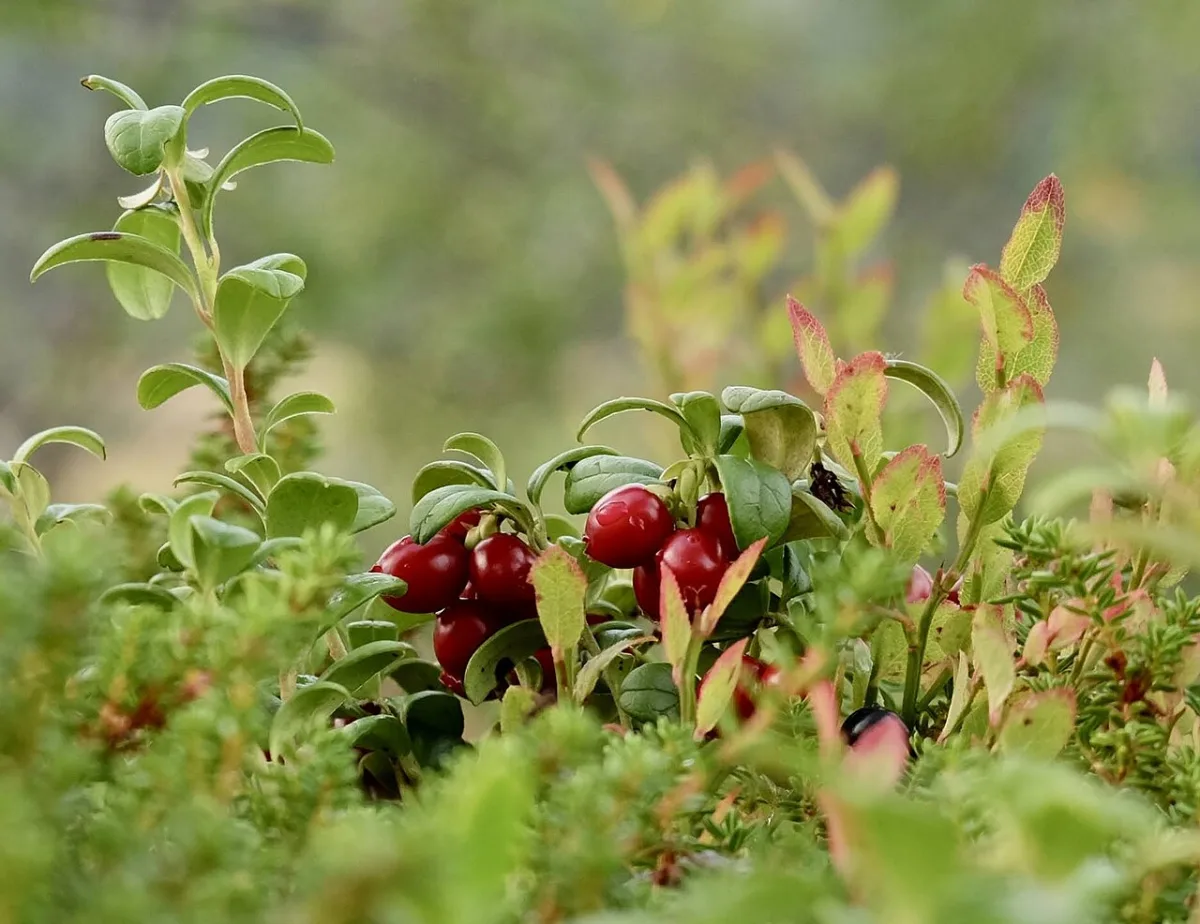
The main sign of berry ripening is a change in color. Cranberries change color from bright green to dark red. The ripening period occurs approximately on the 70th–80th day after flowering (early September). It is best to harvest cranberries manually using a special scoop.
Harvesting and storage of berry crops
When the ripening period arrives, blueberry berries change color from green to bluish. Harvesting should be done manually.
Over time, the yield of the berry crops in question does not decrease, but increases. Abundant fruiting of the bushes begins as early as the fourth to fifth year after planting the crops.
Lingonberries, cranberries, and blueberries contain a large amount of tannins, which have strong antiseptic properties. Thanks to this, they can be stored at room temperature for several weeks.
But a longer storage period requires canning or drying the berries. They can also be frozen at a temperature slightly below 0 °C. At the same time, the berry —
Features of year-round floriculture in greenhouses
In greenhouses, you can grow not only greens, vegetables, and berry crops, but also flowers. There are many cultivars of flowering plants; it is simply impossible to describe them all.
If you want flowers to grow in your greenhouse all year round, you need to take care of additional lighting and heating. In the case where the need to grow flowers in a greenhouse is due to difficult weather conditions only in the spring period, a well-insulated greenhouse is sufficient.
a % u U __ hh o ‚ V RR 25 > o A
Read next
Greenhouses and covers For gardeners
Cultivation technologies for lingonberry, blueberry, and cranberry in a greenhouse
Greenhouses and covers For gardeners
Agrotechnology of cranberry, lingonberry, and highbush blueberry cultivation on a plot
Greenhouses and covers For gardeners