
Agrotechnology of cranberry, lingonberry, and highbush blueberry cultivation on a plot
5 min read
Soil preparation and planting schemes for berry crops
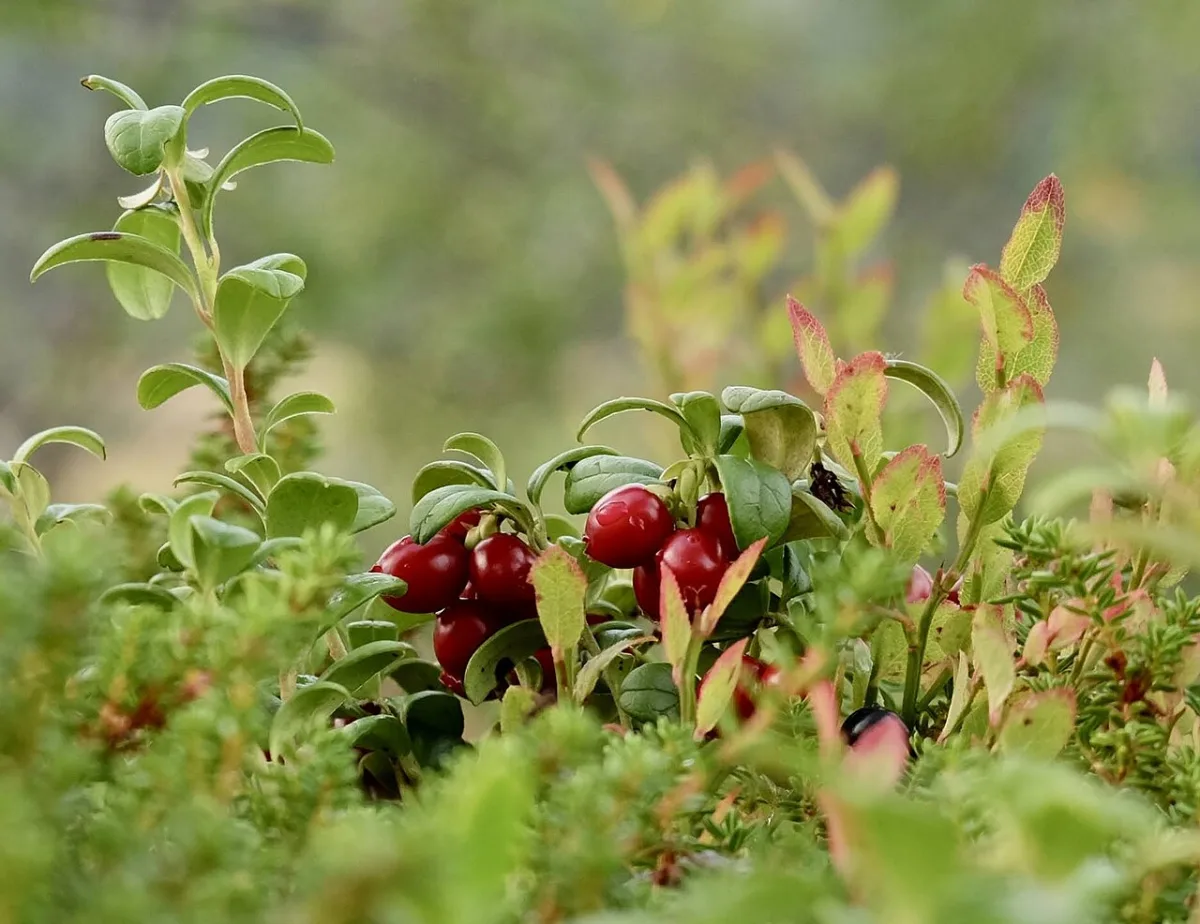
Proper site preparation is the foundation for high yield of wild berry crops under cultivation conditions. For lingonberry, peat is the best medium, on which the plant forms the greatest number of large berries. Soil for blueberry must be well-supplied with phosphorus, potassium, and manganese; however, liming of the soil for this crop is strictly contraindicated. Mineral nutrition of cranberry also directly influences the flavor and final size of the fruits.
Peat is the ideal medium for growing lingonberry. On peat soils, this crop forms the maximum number of large berries.
| Crop | Application stage | Application rate per 100 m² (are) | Application specifics |
|---|---|---|---|
| Lingonberry | Site preparation (before planting) | 4–6 m³ of peat or peat compost, 4–6 kg of complete mineral fertilizer, 6–8 kg of superphosphate | All components must be thoroughly mixed with the soil |
| Lingonberry | Annual top dressing | 2–3 kg of mineral fertilizers | Applied annually. To increase yield, mulch with bedding peat in a 2–3 cm layer |
| Blueberry | First top dressing (spring, beginning of the growing season) | 2/3 of the seasonal fertilizer rate | Fertilize the soil around the plant in a radius of 15–30 cm. Liming of the soil is excluded |
| Blueberry | Second top dressing (end of July) | 1/3 of the seasonal fertilizer rate | Fertilize the soil around the plant in a radius of 15–30 cm |
When planting nursery plants, it is important to strictly observe the spacing schemes on the site. Planting too sparsely significantly delays the time when plants enter full fruiting. At the same time, the planting scheme is individual for each type of berry crop. For example, cranberry is planted without forming rows: the closer the plants are located, the more uniformly they develop and the sooner they begin to fruit.
- Blueberry inter-row spacing — 2.5 m
- Blueberry in-row spacing — 1.25 m
- Lingonberry inter-row spacing — 25–30 cm
- Lingonberry in-row spacing — 10–15 cm
Seed propagation and cutting technology
Berry crops can be propagated both by seed and vegetatively. The seed method requires less physical effort but gives a low percentage of emergence due to the sensitivity of seed to soil dryness and direct sun. Seed are sown in a greenhouse at the end of March on moist peat, having been sprouted beforehand. Lingonberry seedlings emerge on the 14th day, and full germination is completed after 40 days. In view of these difficulties, cutting remains the most effective and reliable method of propagation.
For cutting, only strong, healthy donor bushes are selected. Shoots are cut in the spring before the start of sap flow and bud break, or in the autumn when the growing season is completely finished. The harvested material requires strict adherence to temperature and humidity conditions during storage. As an alternative to cuttings, viable rhizomes with buds or daughter plants are also used for lingonberry propagation.
| Crop | Cutting length | Harvesting time | Conditions and duration of planting material storage |
|---|---|---|---|
| Lingonberry | Not less than 5–6 cm | Spring (before bud break) or autumn (after the end of the growing season) | Planting on the day of harvesting or the next day. Storage for up to 2 days is permissible in moist moss and a plastic bag |
| Cranberry | 10–15 cm (preferably one-year-old shoots) | Spring (before bud break) or autumn (after the end of the growing season) | Up to 1 month in moist moss and a plastic bag at a temperature not higher than 0 °С |
| Blueberry | 10–15 cm (cut in April) | December (hardwood branches are harvested) | From December to April in a ventilated room at a temperature of 0–5 °С, covered with moist peat or sawdust |
The rooting technology for blueberry has its own specifics. In early April, the hardwood branches harvested in winter are cut into cuttings and planted in a greenhouse at a distance of 3–5 cm from each other. Pure peat or its mixture with sand in a 3:1 ratio is used as a substrate. When planting, it is mandatory to leave two upper buds above the soil level, and rooting itself takes from 5 to 6 weeks.
Lingonberry cuttings are planted during the plant's dormancy phase, optimally from the end of April to May. Cranberry planting is performed using a different technology, using the cluster method or spade planting. For successful rooting, the humidity of the substrate and proper depth of the shoots are extremely important.
When planting cranberry, be sure to observe the polarity of the cutting: the buds must be directed upward and remain above the ground. Leave no more than 2–3 cm of its length on the surface, otherwise the plant will dry out or spend too much energy on restructuring.
- Press several cranberry cuttings into each cluster using a special T-shaped stake or plant them with a spade.
- Immediately after planting, flood the site with water for 1–2 days (if this is not possible, water the nursery plants heavily).
- Subsequently, maintain a constant moderate level of soil moisture (do not overwater and do not let it dry out) until the root system appears after 3–4 weeks and shoot formation begins.
Read next
Greenhouses and covers For gardeners
Cultivation technologies for lingonberry, blueberry, and cranberry in a greenhouse
Greenhouses and covers For gardeners
Peculiarities of berry crop care in a greenhouse: loosening, irrigation, pruning
Greenhouses and covers For gardeners