
Optimal layout of beds and organization of space in a greenhouse
5 min read
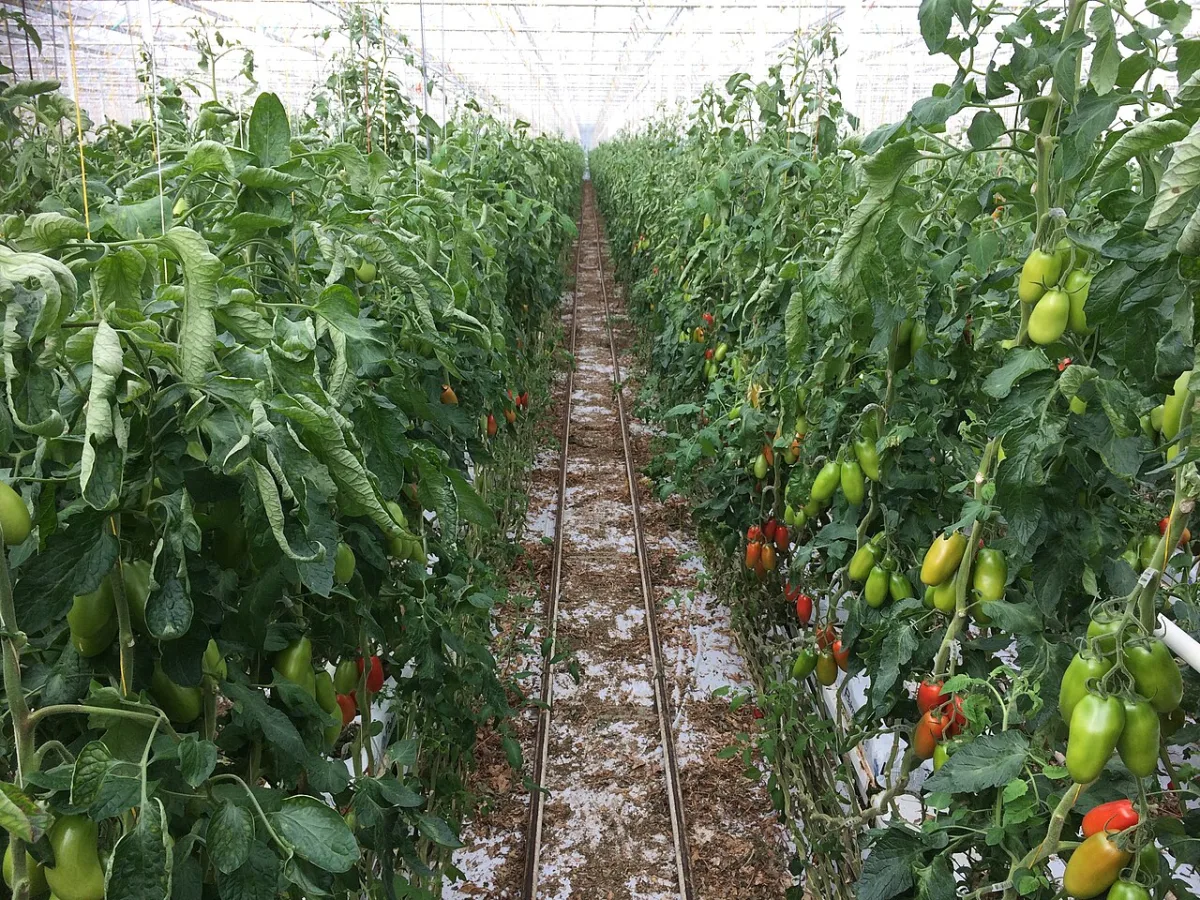
Is it necessary to sow green manure crops before winter? As you may notice, some gardeners overcomplicate the preparation of soil, falling for the green manure trend. I do not use green manure at all and do not recommend it to others for two reasons.
Firstly, these are additional labor-intensive operations, an extra burden on our already busy growing season. In my complex system of measures, everything has long been calculated and optimized; time is spent only on activities that yield a truly significant return, and green manure is just a whim; it does not provide noticeable improvements in anything.
Secondly, do green manure crops not leave behind root exudates? Who told you that they are harmless to all crops without exception? That is not how it works. A green manure crop is also a plant, and it can also be a poor predecessor for certain crops. In general, the best green manure is a favorable predecessor for each crop. If we know that one of the best predecessors for tomatoes is parsley, then let it grow before them until winter; why sow mustard or rye? Just before winter, all the rhizomes of this parsley are pulled out for drying or for fresh winter storage. After that, the soil in the greenhouse is dug up with compost or other fertilizer.
Rows and paths between them
A width of 3 m is the most common size for backyard greenhouses. With this width, only the length changes: 4, 6, or 8 m. Rarely does anyone build wider and longer farmer-type greenhouses. So, let’s take a 3 m width for marking the rows. How many rows of plants is it better to make, two or three?
Economical use of greenhouse area is a reasonable desire. Hence the calculation that the fewer paths (inter-row spaces) there are, the more area remains for the plants. Yes, most greenhouse owners do just that, with a single path in the center.
But the disadvantages are obvious.
Firstly, the greenhouse is a full 3 m wide, and even if you make a 1 m wide path, you still won't be able to reach the walls with your hands when weeding. With only one path, it is clearly inconvenient to tend to the planting, and additional foot supports will be required.
Secondly, the single path remains "earthen" or sandy, without any lining (a wide passage requires a lot of material). Soon it becomes so compacted that it practically ceases to function as a medium for roots. In addition, it is often dug too deep: fertile soil is removed from the path and piled onto the beds, thereby deepening the path to the barren subsoil. Thus, the inter-row area is lost from reach and root nutrition.
A third of the area should not be lost; roots should penetrate the inter-row space. Therefore, it is better to dig it only slightly, to a depth of 10–15 cm, and then cover it with something, for example, a board or tile. A board is preferable because it can be lifted to incorporate fertilizer into the path.
So, how many paths are better — one or two?
The rational solution is obvious: since a single path requires additional foot supports in the form of boards laid in several places, it is better to immediately make two parallel paths out of boards in the greenhouse. From the wall to the path, there will be 60–70 cm for the side beds; thus, the central bed will be about twice as wide, but you will still be able to reach the weeds from both sides. An additional plus is that the soil under the boards is not trampled and is utilized by the roots.
Result: three beds and two paths.
Scheme: bed (60–70 cm) — path (30 cm) — bed (100–120 cm) — path (30 cm) — bed (60–70 cm)
The order of planting different crops with this arrangement of paths.
• Plant tall tomato cultivars only on the side beds, and leave the central one free, or use it to produce various transplants for subsequent planting in the open soil (cabbage, cucumbers, onions, strawberry, etc.); in principle, tall tomatoes can also be planted in three rows, using all three beds, carefully thinning out excess shoots to avoid crowding.
• Plant eggplants and peppers in 8 or even more rows depending on the size of the bushes (2 + 4 + 2).
• When growing tomatoes, eggplants, and peppers in a single greenhouse, allocate a row to each of these crops: plant tomatoes in one of the outer beds, eggplants in a row in the middle, and then a row of peppers.
• Plant melons and watermelons in 4 rows for vertical cultivation, or in 2–3 rows for horizontal (creeping) cultivation.
Another argument in favor of fewer rows. Many of our citizens who work throughout the week have little time and energy left for gardening. There are many such people. The solution for them is to simplify their gardening style as much as possible, which includes more spacious planting. This implies setting the final distance between plants at about one and a half to even twice the standard distance. Put simply: if you don’t have enough time for pruning side shoots and staking bushes, why do you still insist on packing them into the greenhouse like sardines in a tin? Plant half as many units and you will spend less time on care, and in compensation, you will get fruits 2–3 times larger than usual.
In practice, the return from spacious planting surprisingly provides a gain not only in time but also in yield.
Read next
Greenhouses and covers For gardeners
Optimal planting density of crops in greenhouse conditions
Soil and tillage For students
Influence of soil structure and composition on capillary moisture transfer
Soil and tillage For students