
Features of strawberry cultivation in a greenhouse and care instructions
5 min read
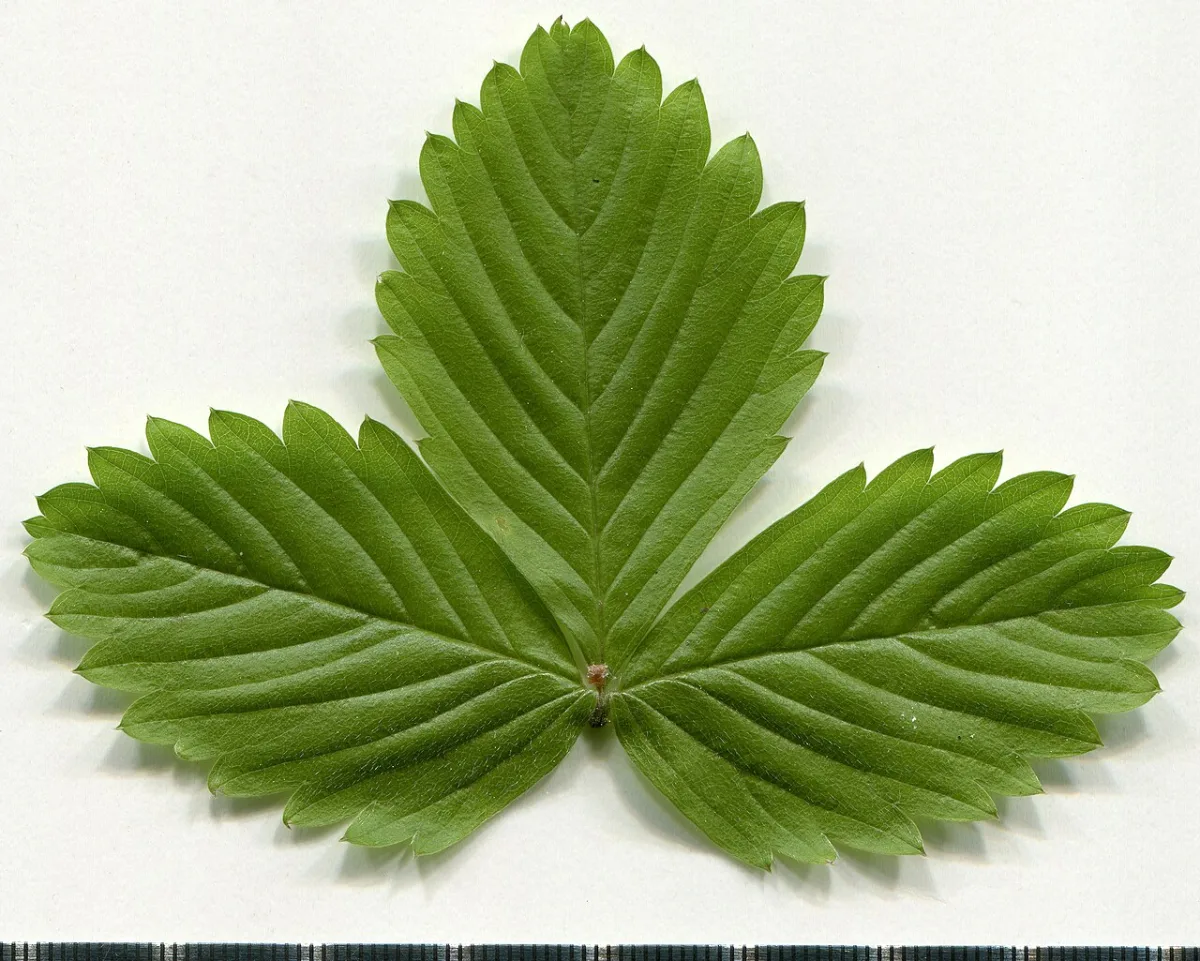
Growing strawberries in protected ground allows for a significant increase in the profitability of a berry patch. In greenhouses under a plastic cover, plants produce two harvests in one growing season instead of one. At the same time, the berries ripen faster, and total yields exceed the indicators of open ground cultivation.
- Yield increase — by 70–80 %
- Ripening acceleration — by 10–12 days
- Planting density — 9–17 plants/m²
- Maximum temperature in the greenhouse — 25–30 °С
Bush biology and planting rules
For successful cultivation, it is important to understand the structure of the strawberry bush. The plant lacks a central stem and apical growth; new growth is formed from axillary buds on the side of the stem. The above-ground system consists of crowns (shortened shoots with leaves and buds), runners (vegetative shoots for propagation), and flower stalks, which develop from the apical buds of the crown.
With age, the side crowns of the bush rise above the soil level. Because of this, young adventitious roots gradually move away from the ground and can hang in the air. This process impairs the general nutrition and development of the berry bush.
To ensure that the young root system develops properly and does not dry out, strawberry bushes must be regularly hilled.
For forcing in greenhouses, semi-everbearing cultivars are used, such as Talisman, Redgauntlet, and Senga Sengana. Quality nursery plant material must have a well-developed bush and 3 to 5 crowns. The flower buds of the transplants must undergo differentiation at a daylight length of 10–12 hours and an air temperature not exceeding 12 °С.
Strictly monitor the temperature regime. If the temperature in the greenhouse rises above 30 °С, this will negatively affect the plants. During the flowering of strawberries, be sure to ventilate the greenhouse, but only on the condition that the outside air temperature is at least 5 °С.
Planting dates depend on the season: in spring, the work is carried out from the third ten-day period of April to the first ten-day period of May inclusive, and in autumn — strictly before September 10. With later autumn planting, the plants usually do not establish well in their new location. The correct choice of planting time guarantees high survival rates.
Strawberries are planted in multi-row strips on beds 90 cm wide. If the plan is to use the plantation for two growing seasons, a two- or three-row planting scheme is applied. The density of plant stands during cultivation should be adjusted step by step.
- Place the bushes in the beds with a density of 9 to 17 plants per square meter.
- Carry out the harvest of the first berry crop.
- Remove the middle row in the strip to thin out the planting and give the remaining plants more room for intensive growth.
Soil preparation and nutrition system by years
Strawberries are demanding regarding soil fertility and the timely application of fertilizer. Plot preparation begins with deep application of organic and mineral fertilizers. The schedule for further top dressing depends directly on the age of the plantation; therefore, it is recommended to use a prepared nutrition scheme to calculate dosages.
It is strictly not recommended to apply nitrogen fertilizers under first-year bushes. Nitrogen stimulates excessive growth of vegetative mass of leaves at the expense of fruiting and sharply increases the risk of the berries becoming infected with gray mold.
| Period and object of treatment | Type of fertilizer | Application rate (per 10 m²) | Technology and depth of application |
|---|---|---|---|
| Soil preparation before planting | Organic (well-rotted manure or humus), simple superphosphate, potassium chloride | 80–100 kg of organic matter, 450 g of superphosphate, 180 g of potassium chloride | 1/3 of the mixture is incorporated to a depth of 20–25 cm, the remaining 2/3 to a depth of 10–12 cm |
| 1st-year plants (early spring) | Phosphate and potash fertilizers (without nitrogen) | According to soil requirements | Apply evenly over the entire plot and incorporate with a hoe |
| 2nd-year plants (early spring and after harvesting) | Liquid combined mixture: cow manure with water (1:5), simple superphosphate, wood ash | 1 bucket of solution per 3–4 linear meters of row (or 400–500 g of dry mixture per 10 m²) | 60 g of superphosphate and 100–150 g of ash are added to a bucket of working solution. Apply to furrows 4–5 cm deep on both sides of the rows, then cover with soil and irrigate |
| 3rd-year plants | Superphosphate, potassium chloride, ammonium nitrate | 100 g of superphosphate, 100 g of potassium chloride, 150 g of ammonium nitrate | Distribute evenly on the soil surface followed by incorporation |
Read next
Planting and propagation For agronomists
Natural methods of vegetative propagation of fruit and berry crops
Viticulture For agronomists
Biological features and types of buds of the grapevine plant
Plant protection For agronomists