
Agrotechnics for growing high-quality tomato seedlings in hotbeds
5 min read
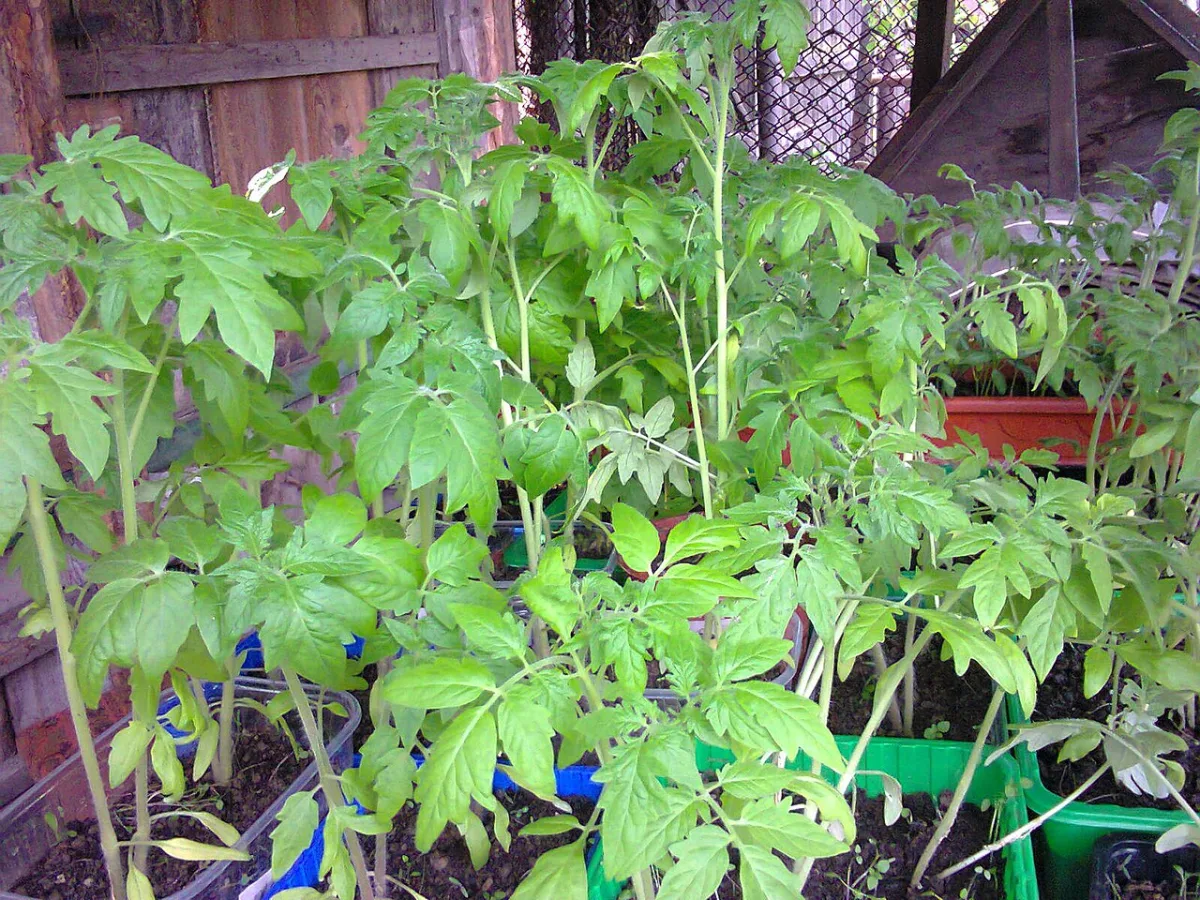
Soil preparation, sowing and temperature regime for transplants
Growing high-quality transplants of tomatoes requires a deeper soil layer than for cabbage, as the root system of tomatoes grows deeper, and the plants themselves develop to a greater height. The optimal soil mixture consists of 2 parts of sod soil and 1 part of humus. Sowing is carried out in the first ten days of April in warm hotbeds or boxes in greenhouses.
- Soil layer thickness — 16–17 cm
- Seeding rate per frame — 12–15 g
- Seedling yield per frame — 2500–3000 pcs.
- Transplant growing period — 40–75 days
Tomato seed must be treated with a mercuric chloride solution to protect against canker. Handling mercuric chloride requires extreme caution, as it is a potent poison. The sale of tomato seed from the warehouses of trading organizations without prior seed treatment is prohibited — this procedure is performed by the traders themselves.
For the proper development of seedlings, it is important to strictly observe the temperature and light regimes. When emergence occurs, the temperature is temporarily lowered to prevent the plants from becoming leggy. For ventilation, the frames are lifted only from the leeward side to avoid overcooling the hotbed.
- During seed germination, maintain an air temperature of 28–29 °C during the day and no lower than 15 °C at night.
- With the appearance of the first seedlings, lower the temperature to 13 °C for 2–3 days by opening the frames and removing the mats during the day.
- Subsequently, keep the temperature within 29 °C on sunny days, 22 °C on cloudy days, and 15 °C at night.
- Seven to 10 days after emergence, shift the plants to a 12-hour light day by covering the hotbeds with mats from 6 PM to 6 AM.
- During the short-day period, maintain the daytime temperature at 25–27 °C and 10–15 °C at night.
If ventilation is required during the time the mats are in place to regulate humidity or temperature, lift the frames so that light does not enter the hotbed. To do this, carefully cover the opened frames from all sides.
The short-day light regime is maintained until the final days of transplant growing. The mats are removed completely only 4–6 days before planting in the open soil. If it is difficult to keep the daytime temperature in the hotbed within 25–27 °C due to the cooling of biofuel or drafts, the hotbed is additionally lined on the outside with manure or other insulating material.
Pricking out, top dressing and the effect of transplant age on yield
Pricking out is carried out upon the formation of the first true leaf, which usually occurs on the 18th–22nd day after sowing. It is better to schedule this work for warm days, or use portable shelters in case of cold weather. Seedlings can be pricked out onto sods placed in the hotbed soil (grass side down) or directly into peat and peat-manure pots. The use of pots is preferable, as the root system is not damaged during planting in the field.
Before beginning the pricking out, the hotbed area is marked. 150–180 plants are planted under one frame in rows with a feeding area of 10x8 cm or 10x10 cm. After the work is completed, the seedlings are watered, and the hotbed is shaded with mats for 1–2 days. This allows the plants to establish themselves faster in the new location.
During the growing period, the transplants are top-dressed several times with organic or mineral mixtures. The following options for working solutions are proposed to the agronomist:
- Poultry manure solution (1 part manure to 12 parts water) with the addition of superphosphate (19 g per 10 L of water).
- Mineral mixture: 15 g of saltpeter, 15 g of superphosphate, and 10 g of potassium salt per bucket of water (19–12 L).
Before each top dressing, be sure to water the plants with clean water. This will protect the delicate root system of the seedlings from chemical burns caused by concentrated fertilizer solutions.
Transplants are planted in the open soil when they have 8–10 leaves and buds begin to bloom on the first inflorescence. Experimental data show that transplant age directly affects the yield and fruit ripening dates. Using 60–75-day-old transplants allows for a higher total yield and more early produce compared to 40–50-day-old plants.
| Transplant age, days | Growing method | Total yield, c/ha | Yield of mature fruit, c/ha | Yield of red fruit before August 11, c/ha |
|---|---|---|---|---|
| 75 | Standard | 220 | 60 | 3.7 |
| In manure-peat pots | 274 | 70 | 29.9 | |
| In sods | 233 | 59 | 21.8 | |
| 60 | Standard | 294 | 54 | 0.0 |
| In manure-peat pots | 277 | 61 | 0.0 | |
| In sods | 234 | 52 | 0.0 | |
| 45 | Standard | 175 | 40 | 0.0 |
| In manure-peat pots | 220 | 52 | 0.0 | |
| In sods | 176 | 36 | 0.0 |
Only 75-day-old transplants are capable of producing red fruit on the bushes before August 11. Reducing the transplant growing period to 45–50 days is justified only in farms with a relatively small area of covered ground. This helps reduce the load on hotbeds and greenhouses when a large volume of tomato planting needs to be completed.
Feeding area and transplanting schedule for seedlings
Every seedling age requires its own feeding area. This rule must be observed both in the protected soil of a hotbed and after planting the plants in their permanent location in the field. The older the seedlings, the larger the area they need to form a strong stem and a developed root system.
When growing seedlings in hotbeds, the planting density is selected strictly according to the planned age of the plants. Exceeding the standard will lead to stem elongation and a loss in the quality of the nursery plants.
| Seedling age, days | Number of plants per hotbed frame, pcs. |
|---|---|
| 45 | 200–225 |
| 60 | 175 |
| 75 | 150 |
The timing of seed sowing is calculated individually. To do this, subtract the optimal seedling age from the planned planting date in the field. The main guideline for moving tomatoes to garden beds is stable warmth, when the risk of late frosts has completely passed.
- Deadline for planting — the first ten days of June
- Guideline for planting — after the last frosts
- Seedling age range — from 45 to 75 days
Do not be late with moving plants to their permanent location. The deadline for planting tomatoes in open soil is the first ten days of June. If the schedule shifts, it is better to plant younger seedlings than to allow the seedlings to become overgrown in the hotbeds.
Read next
Greenhouses and covers For gardeners
Specifics of growing transplants of celery, cauliflower, swede, and beet
Greenhouses and covers For gardeners
Technologies for growing high-quality vegetable seedlings in hotbeds
Greenhouses and covers For gardeners