
Advantages of polycarbonate greenhouses in protecting the harvest from hail
9 min read
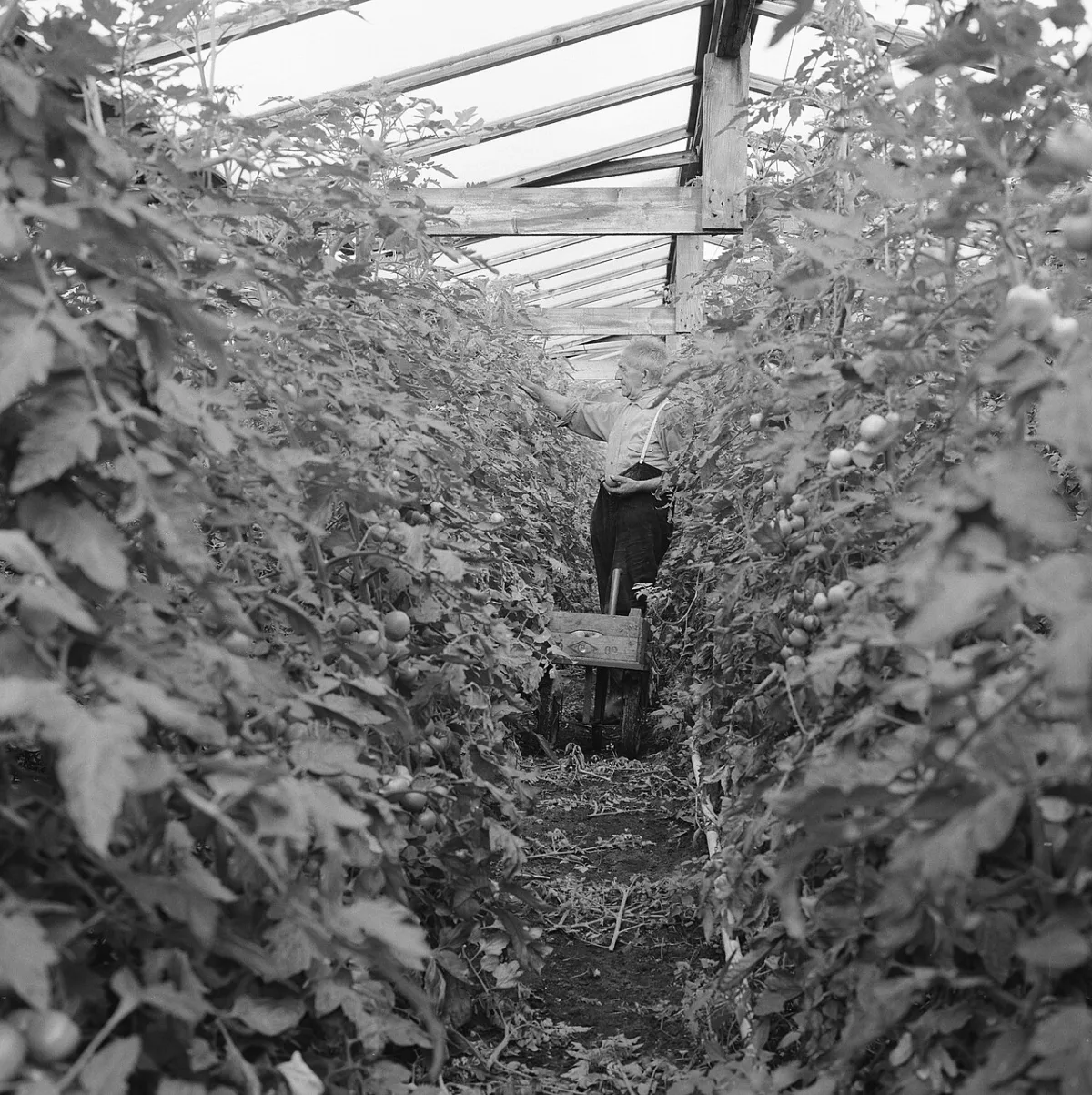
And now, let's return to PC greenhouses. Some might say that by listing the advantages of polycarbonate, I am merely proving the obvious. In truth, I am simply describing my own experience and conclusions in detail. This includes the fact that when I was choosing a model myself, I paid too much attention to its appearance, forgetting about the practical side.
Tell me, how many novice plot owners think about hail before choosing and buying a greenhouse? And if they do think about it, what size of hail do they consider?
Hail is the scourge of many regions; the damage it causes is terrible, as if stones were falling from the sky. For us, for instance, a June hailstorm happens almost every summer; only the size of the hailstones changes.
In 2014, hail the size of a large hazelnut fell: it was an impact of such force that it left notches on the bark of tree branches, as if from machine-gun fire. Garden plants were torn to shreds, and buckets and basins left outside were shattered.
I remember after that hailstorm, I looked with surprise at the broken plastic basins, buckets, and other items: they were made of modern, durable plastic that one would never think could be pierced. Yet it was pierced, and everything cracked.
Only polycarbonate withstood it so calmly that not even scratches remained on it.
So you decide: with today's climate anomalies, such hail can be expected any year. A direct hit will shatter glass and tear through film. One of the main advantages of polycarbonate — its strength — is fully demonstrated here.
After a June hailstorm of any size, garden plants quickly grow fresh foliage and recover as if nothing happened, and the remaining fruit set on fruit trees, even if only 10–20% survived, grow into unusually large fruit.
Occasionally, hail the size of a chicken egg occurs, as happened relatively recently in the Kemerovo region. There, no one even remembered the shredded vegetable gardens against the background of more serious damage caused to buildings and cars. Even if hail of that size is very rare, occurring once every several decades, it showed that the probability of some "intermediate fraction," the size of half a chicken egg, is quite high — hail from which glass will crumble like chaff.
Thus, hail harms not so much our plants as our household: it can break glass and utensils left in the open air, ruin a car body, and even damage greenhouse structures made of fragile material.
And here, the primacy of strength belongs to polycarbonate.
Conclusion
Polycarbonate as a construction material is designed in advance for large hail and, as required by building standards, with a margin of safety.
The most common models of PC greenhouses
Someone might decide that of all PC greenhouses, the best model is the teardrop-shaped one, as it is the most durable. Someone else will be inspired by the traditional look of the so-called straight-wall model. Someone else will aim immediately for a standard arched one. But how significant are the differences between them, and what determines the difference in price?
Today, three main models are in use:
1) arched, also known as a hangar — this is the most common and popular model;
2) teardrop-shaped model, or "arrow." It has gained popularity recently, after the snowy winter of 2012–2013, as a reinforced version of the arched model. In essence, it is the same as the arched one, only it withstands a thicker snow crust;
3) straight-wall, which resembles a traditional glass greenhouse "house," with the difference that its roof is not gabled but semicircular.
They all differ from each other at the level of "important trifles."
In essence, i.e., in terms of the ability to lead our plants to harvest, they are the same, as they are covered by the same polycarbonate.
At the same time, each of these models has its own small, but in some cases, significant advantages (if there were no advantages, they would not be bought or produced). Perhaps these cases apply to your situation as well.
The arched model is the simplest and most convenient to assemble. It has the fewest parts, fewer connections, and less hardware, which is why it is installed faster. (The model in the form of a house takes the longest to assemble.)
Conclusion
The simple arched model uses the least amount of material, so its cost is lower, which distinguishes it favorably from other models (there are arched models with double arches to reinforce against snow load, but they are more expensive).
The main disadvantage of the arched model is the lack of vents in the "main body," which is why the shorter version — 4 meters — is most commonly used. The others, which are longer, are poorly ventilated. The air inside them often overheats even in cloudy weather, and even more so in the sun. Sometimes, depending on the regional climate, a gardener finds that ventilation is better if the tomato plants in the greenhouse are placed in the center, away from the walls, and melon vines are trained low rather than on vertical trellises.
Arched greenhouse with two types of doors
That is how rigid, or rather, hot, the situation is even with short, 4-meter greenhouses. I am surprised every time I look at online price lists that offer us 8-meter versions. And even longer ones...
Is it possible to make additional vents yourself? I don't deny that some people can. But you need to be very handy for that.
The simple arched model is eagerly bought by rural residents who live near their plot and can clear accumulated snow in time if, for some reason, it does not slide off on its own.
It should be noted that the snow almost always slides off on its own and does not need clearing, as the transparent dome continues to accumulate heat even in winter: the fallen snow soon thaws slightly and slides down.
Only during exceptional snowfalls, when it snows for days on end and a cover of about a meter thick falls at once, as it did in the spring of 2013, is a critical mass of snow created. That year, in the Central region, mass collapsing of arched models was observed after many years of successful operation. Since then, manufacturers have reinforced the strength of their frames in various ways. But even now, experienced gardeners do not find it a bother to install support poles under the arches before every winter — just in case.
In principle, a simple arched model with three such safety supports for the winter (boards, steel angles) will withstand any snow.
Arched models are found with two types of doors: 1) a low door, as a separate vent is placed above it; 2) a high door, so the vent is mounted directly into it. So, I strongly recommend buying a model with high doors. Why? To avoid bumping your head on the door frame! Think, if not of yourself, then of your tall loved ones.
Features of teardrop-shaped and straight-wall structures
Design features of teardrop-shaped and straight-wall greenhouses
The teardrop-shaped model, or "arrow," or "hero's helmet." The main advantage is more successful struggle against snow: firstly, snow slides off it more easily, and secondly, the frame structure itself is stronger. It is purchased so that one can leave the plot for the whole winter without worry.
The "house" model is most vulnerable to snow; accumulated snow must be regularly cleared from it.
The teardrop-shaped one is, moreover, taller. The additional 40 cm of height is quite a lot, and where it is necessary to screen oneself from the neighbors' second-floor windows, it is most acceptable.
The straight-wall model in the shape of a house, as mentioned, is more complex in design, which is why it requires a more fundamental base. It costs more itself, and the manufacturer charges a separate fee for a base in the form of timber or concrete-brick masonry. Another disadvantage: it can sag under a thick crust of snow, unless the frame is made of double studs.
The main advantage is the additional (besides the end) vents along the entire length, which allows for the release of some of the hot air. The straight-wall model is suitable for those who wish to have a greenhouse longer than 4 m.
Innovations and nuances of frame selection
Recently, the greenhouse market offered an unexpected version of the arched model with a retractable roof. It slides off completely and returns to its place with the help of a manual winch. The idea is correct; it confirms the right direction in which the improvement of PC greenhouses is going today: this is protection no longer from the snow crust, but from the summer overheating in the sun, which we have identified as the main disadvantage. A retractable roof allows for the immediate release of all excess heat.
Furthermore, what cannot fail to please the soul of an environmentalist is the complete and long-lasting exposure of the entire canopy of plants inside to the sun. Full sunlight, full-quality production — a very important advantage.
Admittedly, the model is quite new, from 2017, and there hasn't been time to test it in practice yet. One can only say in advance that the complexity of the design approximately doubles the price compared to a standard arched greenhouse of the same area.
This is a tangible drawback that bars its way to the buyer. Moreover, the reliability of the lifting mechanism is questionable: what should one do if it suddenly breaks down? The roof is heavy, so surely some rollers or the flimsy winch shown in the commercial will break. Does that mean I would have to go to the factory somewhere, place an order, and then go again to pick it up?
The advantage of a standard arched polycarbonate greenhouse lies precisely in the fact that everything in it can be easily repaired by yourself.
The developers of another latest model of an arched greenhouse followed the path of a "complex of detailed improvements." Among them is one very useful, minor, but pleasantly surprising feature: hinges and latches for doors are welded onto the frame right at the factory. Now that is service!
I once encountered a whole problem when the hinges I had screwed on popped off due to flimsy self-tapping screws, and I had to fuss around reattaching the hinges to new spots.
Of course, it is gratifying when everything is worked out down to the smallest detail, when the galvanization is carried out on the inside of the frame as well, not just on the outside.
As you know, the process of improvement is eternal, and every year new upgrades for polycarbonate greenhouses will be invented, so we will keep an eye out.
Regulating daylight hours in greenhouse management
Ladies and gentlemen, greenhouse developers and manufacturers, as a practitioner, I would like to suggest another sought-after direction worth working on. We need a greenhouse in which it would be possible to regulate the daylight duration, so that just like with a sliding roof, at a certain hour I could easily turn a winch and create night or day, closing or opening the black petals of the dome.
There are many crops that can be grown under protected ground conditions for which the yield in summer could be fundamentally different than with our long daylight hours. These include:
- spinach;
- napa cabbage;
- tomato.
The further north you go, the more relevant this problem becomes.
Read next
Greenhouses and covers For gardeners
Choosing a reliable metal frame and hoops for a greenhouse
Irrigation For agronomists
Information systems and models for planning water use in land reclamation
Irrigation For agronomists