
Preparation and application of artificial garden soils for floriculture
15 min read
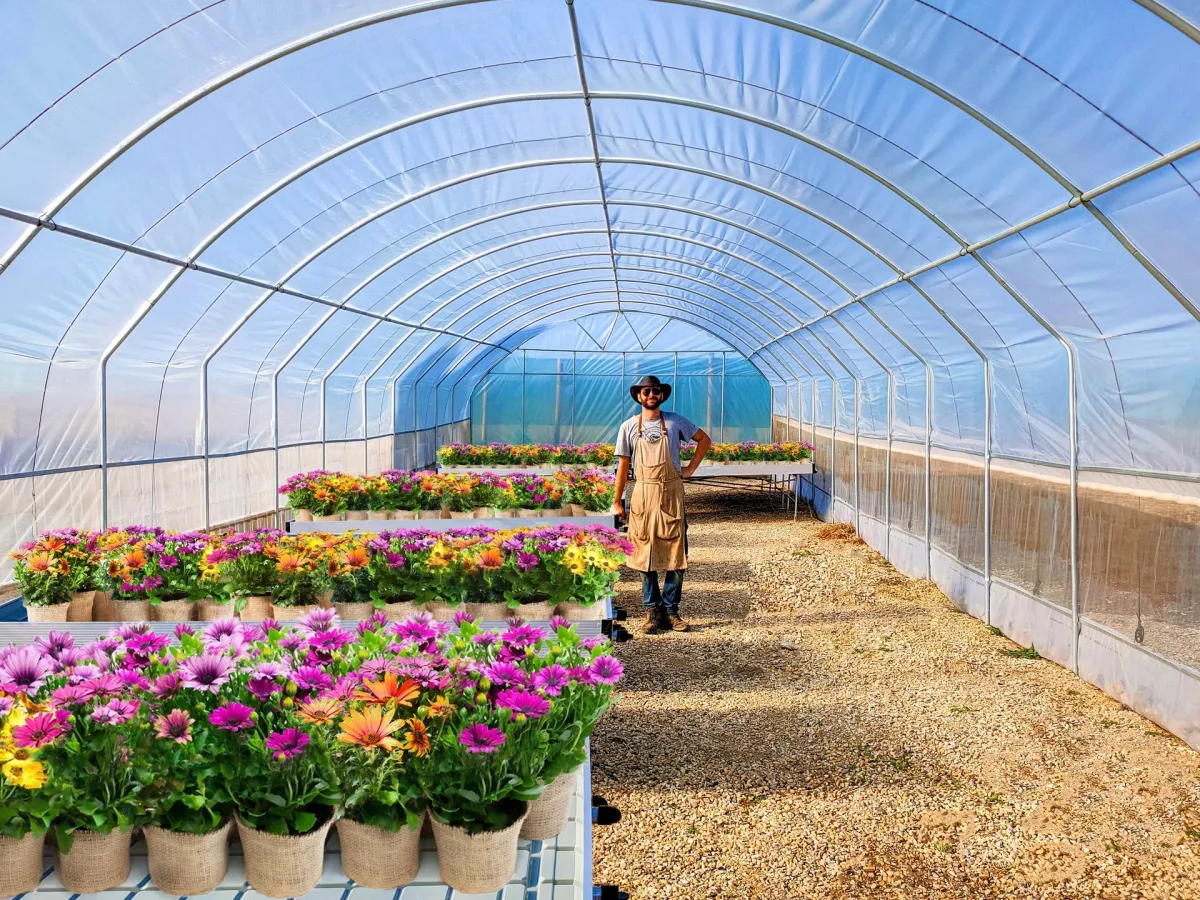
For the successful development of ornamental crops, plants must be able to obtain water and nutrients without obstruction. Common natural soils are often unsuitable for greenhouses and intensive floriculture, so they must be fundamentally improved. In open fields, 80 to 180 tonnes of garden soil per hectare are applied for this purpose, and in protected ground, they form the basis of the growth medium. The needs of crops also change with age: for example, young palms require a light soil, which, during transplanting, is replaced with a heavier and more fertile one.
- Improvement of open field soil — 80–180 t/ha
- Bulk density of turf soil — 1.2–1.5 t/m³
- Bulk density of humus soil — 0.5–0.8 t/m³
- Bulk density of peat soil — 0.4–0.6 t/m³
- Lime application for leaf mould — 0.5 kg/m³
Preparation technology and characteristics of garden soils
In modern floriculture, the four main types of artificial garden soils are most widely used: turf soil, leaf mould, humus (or compost) soil, and peat soil.
Turf soil is a heavy substrate formed as a result of the decomposition of sod. It is harvested in July from clay or loamy areas with good grass-clover vegetation before the plants have formed seeds. It is necessary for rooting cuttings prone to rotting (geranium, echeveria, kleinia), as well as for growing citrus, palms, and potted annuals (carnation, geranium, stock).
The process of preparing turf soil:
- Cut sod layers 8–15 cm thick, 20–30 cm wide, and 30–50 cm long.
- Stack the layers "grass to grass" (up to 1.5 m wide, 1.5 m high, length is arbitrary).
- To accelerate decomposition and enrich with nitrogen, place manure and lime between the layers.
- Make a groove on top of the stack to collect and retain moisture.
- Over the summer, turn the stack at least twice with a bulldozer and water it regularly. By the autumn of the second year, the soil is ready for use.
- sod soil or cultivated soil — 50;
- sand — 20;
- manure — 20;
- decomposed peat — 20.
- Vermiculite – a hydromica consisting of light, thin layered films. It is a complex of aluminum, iron, and magnesium silicates obtained from deposits on the Kola Peninsula and the Urals. It is a light, air- and water-retentive substrate. Before use, vermiculite is calcined at a temperature of 250–500°C, causing it to exfoliate and increase in volume by more than 20 times. Vermiculite is used for propagation by cuttings and for growing plants using the hydroponic method.
- Ion-exchange substrates – granulated (granule diameter 3 mm) or fibrous polymer resins of a dark yellow or brown color. They are insoluble in water but swell strongly in it. Ion-exchange substrates can be saturated with nutrients in the required amounts because they are electrically charged, allowing them to hold oppositely charged nutrient particles and exchange them for other ions, including those resulting from plant root activity. Ion-exchange substrates are used for rooting cuttings, especially in mixtures (1:1) with other water-retentive substrates (vermiculite, sawdust, sand).
- Expanded clay (leca) – rounded granules with a smooth, glazed surface, obtained from non-calcareous clays by firing them at high temperatures (1200°C). Expanded clay is used in hydroponic greenhouses, with the granules pre-crushed to increase the substrate's capacity. After 3–7 years, the expanded clay is cleaned and washed, after which it can be reused. It is also used for drainage.
- Mineral wool, produced industrially as a building material, can be used for 3 years in the form of mats (5 cm high) for growing plants or cubes (from 4×4×4 cm to 10×10×10 cm) for cuttings. When growing plants on mineral wool, nutrient solutions containing the necessary amount of macro- and microelements are applied. Mineral wool is sterile, has a low bulk density, high water capacity (up to 90%), an alkaline reaction, and warms up quickly. Its use eliminates the labor of preparing soil mixtures and weeding plants. It takes two weeks to replace mineral wool in a 1-hectare greenhouse area. In foreign farms, carnations, gerberas, ficus, and stock plants of chrysanthemum and begonia, among other plants, are grown on mineral wool.
- Thermal mat size — 2×1.2 m
- Supply voltage — 220 V
- Heating time — 11–12 h
- Heating temperature — 60–90 °C
- Disinfection depth — 25–30 cm
- Reduction in the number of weedings — 2–3 times
- Mix 85% thiazon powder with moistened sand in a 1:3 ratio.
- Uniformly scatter the mixture over the surface of the area to be treated at a rate of 50–150 g/m².
- Till the soil and irrigate abundantly at a rate of 7–10 l/m².
- After 10 days, loosen the soil thoroughly to completely remove residues of the preparation's gas phase.
- trays for substrate, sowing seed and planting, as well as racks for their placement;
- tanks for preparing and storing the nutrient solution;
- pumps, compressors, and pipelines for supplying water and solutions to the roots;
- units for preparing, distributing, and adjusting nutrient mixtures;
- automatic regulators for solution supply and chemical composition monitoring;
- systems for monitoring and regulating the microclimate in greenhouses.
- Mineral: gravel, expanded clay, granite and marble crushed stone, perlite, coarse sand;
- Organic: sawdust, peat, moss;
- Specially prepared minerals: vermiculite;
- Granulated plastics: porovinyl, minplast.
- Dig a pit 40 cm deep.
- Concrete the bottom and walls of the pit.
- Cover the concrete with a special varnish to prevent alkalization of the solution.
- Fill in the substrate in layers, decreasing the particle diameter from bottom to top.
- Frequency of solution change — every 30–45 days
- Frequency of composition adjustment — every 7–15 days
- Concentration during the rest period — 50% of the standard rate
Leaf mould is obtained by the decomposition of tree leaves (maple, elm, linden, birch, aspen, fruit trees). Leaves are placed in stacks in the autumn or spring for two years. To accelerate decomposition, the leaf mass is compacted, moistened, and lime (0.5 kg per 1 m³) is added to neutralize acidic decomposition products. In the second year, the mass is turned 2–3 times and watered with liquid manure. The result is a light, loose soil with nutrients in a form accessible to plants. It is used for sowing small seeds (begonia, gloxinia), as well as a base for growing primrose, cyclamen, camellia, and cineraria.
Leaves of oak and willow should not be used for preparing leaf mould due to their high tannin content. Finished garden soils must not be stored in the open air: they quickly lose their structure, become compacted, and leach out.
Humus soil is formed during the decomposition of hotbed biofuel. Greenhouse manure is placed in stacks in the autumn, turned and moistened over 1–2 years. It is rarely used in its pure form, but rather as a nitrogen-rich component of soil mixtures. If necessary, humus soil can be replaced with compost, which is obtained through the decomposition of plant and animal residues over 2–3 years with the addition of lime for disinfection.
Peat soil is prepared from peat crumbs or peat from high and low moors. Lime and manure are added to the raw material to reduce acidity and enrich it with nitrogen, after which the mixture is placed in stacks 40–60 cm high. The substrate is left for 2 years, periodically turned, and watered with liquid manure. The result is a light, loose, and moisture-retaining soil. It is suitable for sowing small seeds, as well as for growing azaleas, hydrangeas, camellias, orchids, and ferns.
Storage rules, mixing, and substrate recipes
As they become ready, all types of soils are screened and sent to storage in closed soil sheds. Soil mixtures are prepared as needed: each component is measured by volume, poured into one place, thoroughly mixed, and necessarily disinfected before use. Depending on the ratio of the components, a heavy, medium, or light mixture is obtained.
The needs of crops change as they grow. For instance, young palms require a light mechanical soil, which is replaced by a heavier and more fertile one during subsequent transplanting.
Composition of standard soil mixtures for growing flower crops:
| Soil mixture | Turf soil (parts by volume) | Leaf mould or humus soil (parts by volume) | Sand (parts by volume) |
|---|---|---|---|
| Heavy | 3 | 1 | 1 |
| Medium | 2 | 2 | 1 |
| Light | 1 | 3 | 1 |
Individual compositions have been developed for specific flowering crops. For example, one of the greenhouse substrate options for rose cultivation includes the following components (% by volume):
An accessible and widespread organic component for greenhouse substrates is high-moor sphagnum peat with a decomposition degree of 10–25%. This is one of the best water-retaining substrates, capable of adsorbing nutrients and gradually releasing them to plants. Before use, the peat is pre-aerated, shredded, limed, and enriched with mineral fertilizers.
The soil mixtures used in floriculture often include semi-decomposed manure or humus. In greenhouse substrates, the organic matter content can be as follows: up to 10% – low; up to 30% – reduced; 30–60% – medium; more than 60% – high.
Various additives are often incorporated into soil and soil mixtures: crushed tree bark, composted for 3–7 months; softwood and hardwood sawdust; straw cuttings 10–15 cm in size; washed coarse-grained river or lake sand with particle sizes of 0.5–1 mm, etc. They improve the physical properties of the soil, making it water- and air-retentive.
Water and air capacity is determined by the bulk density of greenhouse substrates. This mass should be less than 1 g/cm3 so that, during regular irrigation, the substrate does not compact and the plant roots do not experience oxygen deficiency.
In this regard, greenhouse substrates are divided into the following groups by density:
| Loose | 0.1–0.4 g/cm3 |
| Medium | 0.5–0.7 g/cm3 |
| Compacted | 0.8–1 g/cm3 |
| Dense | more than 1 g/cm3 |
The air content in the substrate should be at least 15–20%, and the total porosity should be 50–60%. When using fresh sawdust and straw cuttings as loosening components, nitrogen fertilizers must be added to the substrate, as nitrogen is actively used by microorganisms that break down the sawdust or straw.
The salt regime of the soil is determined by the concentration of water-soluble salts. For moderately salt-tolerant crops, depending on the substrate density and its organic content, this concentration is 5.5–7 g/l; for salt-tolerant crops, it is 8 g/l.
Artificial substrates began to be used in the cultivation of ornamental plants in the 20th century. The main ones include the following:
Perlite – volcanic glass that contains high amounts of silica, aluminum oxides, iron, potassium, and sodium. It is characterized by lightness, high adsorbing capacity, and water retention (700–800%). In floriculture, it is used mainly for rooting cuttings.
Zeolites are sedimentary and volcanogenic-sedimentary rocks. They are aluminosilicates capable of selectively absorbing and releasing various substances (water, cations). Typically, zeolites with a particle size of up to 10 mm are used as a substrate additive (30% by volume).
Disinfection of substrates in protected ground is carried out via steaming (thermal disinfection), electrical sterilization, and chemical disinfection.
Substrate steaming in soil-based greenhouses is carried out through a system of perforated polyethylene pipes, which are laid in furrows at a depth of 30 cm and connected to a pipeline. The distance between the pipes is 40 cm. They are covered with soil and topped with tarpaulin or film.
Steam is supplied until the soil temperature reaches 90–110°C throughout its entire depth; it is monitored using a remote thermometer. The treatment cycle is 14 hours. The substrate can also be steamed under a film tent equipped with a steam supply pipe.
Disinfection of soil mixtures and reusable substrates
Substrate cleanliness directly determines the establishment and yield of floral crops. To free the soil from disease pathogens, pests, and weed seeds, agronomists apply thermal or chemical disinfection. The thermoelectric method is suitable for rapid soil preparation directly on-site. For this, portable thermoelectric mats with spiral heating elements are used, which are connected to a 220 V power supply.
After switching off the power, the mats retain heat, maintaining the operating temperature for another 3–4 hours. This is sufficient to completely suppress the activity of pathogens in the root zone and accelerate the decomposition of plant residues. In addition, thermal treatment converts elements of mineral nutrition into a form accessible to plants. The kit for operation includes an electrical control panel and 16 to 30 thermoelectric mats.
Chemical disinfection requires more time, but it is indispensable when preparing large volumes of substrate. Thiazon, carbation, and other specialized preparations are used for this purpose. Violation of their application rate can lead to chemical burns of the root system or the accumulation of toxic gases in the soil.
Strictly observe the waiting periods after chemical treatment: plants can be planted after using thiazon no earlier than 20–30 days, and after carbation — in 30–50 days.
Reusable artificial substrates, greenhouse equipment, and storage facilities also require regular sanitation. Treatment methods vary depending on the water-holding capacity and structure of the materials. This prevents the accumulation of pathogens during long-term use of materials.
| Treatment object | Preparation or method | Concentration / application rate | Features and application timing |
|---|---|---|---|
| Soil mixture in greenhouses and hotbeds | Carbation | 1 l/m² of 40% aqueous solution | 30–50 days before substrate use |
| Expanded clay for hydroponics | 5% ammonia solution | Until fully submerged | Once every 3–7 years: sieve through a screen, flood with water, wash with solution |
| Water-absorbing substrates | 5% formalin solution | Until fully saturated | Soak in the solution for 3–4 days |
| Greenhouses, containers, storage | 2% formalin solution | Surface spraying | Preventive disinfection before the start of the season |
Low-volume hydroponics: requirements for substrates and equipment
In modern industrial floriculture, conventional soil is increasingly giving way to low-volume hydroponics. Growing plants in artificial media saves capital investment, simplifies process mechanization, and improves working conditions. However, hydroponic systems require high technological discipline from personnel. In the absence of a soil buffer, the slightest deviation in nutrition parameters or air temperature is immediately reflected in the state of the plants.
The success of cultivation largely depends on the choice of substrate. Water culture in its pure form is almost never used in production due to the difficulty of supplying roots with oxygen. Solid substrates provide roots with reliable support and optimal air access. The main requirements for an artificial soil are the ability to hold roots firmly, create good aeration, and be chemically neutral. Vermiculite is considered the most common and promising mineral for these purposes.
A modern hydroponic greenhouse requires a specialized complex of equipment:
The supply of nutrient solution is organized in two ways. In industrial conditions, the sub-irrigation method (flooding) with automatic environment control dominates. Automation uses ion-selective electrodes to continuously monitor the acidity level (H+), as well as the concentration of potassium (K+) and nitrogen (NO3−) ions. In small farms and indoor installations, the flow method with overhead irrigation is used more frequently. In this case, the solution is supplied dropwise, through perforated pipes, sprayers, or manually, and the excess draining off is returned to the storage tank.
The choice of substrate determines the design of planting containers and the nutrient supply regime. All artificial substrates differ in density, porosity, water capacity, and resistance to root exudates. According to their origin, they are divided into four groups:
Expanded clay quickly accumulates salts and is difficult to disinfect from pathogenic microflora. Consider this when planning substrate usage cycles.
For cultivation on substrates with low water capacity (gravel, expanded clay, crushed stone), special planting areas are constructed. Preparation is carried out strictly according to technology to protect plants from the chemical impact of concrete. The crop is planted into the prepared substrate, and automatic irrigation is set up. The nutrient solution is supplied from below: 6–7 times per day during the period of active growth and 1–2 times during the rest period.
Water-capacity substrates (peat or mixtures of vermiculite with expanded clay and gravel in a ratio from 1:3 to 1:5 by volume) do not require complex engineering solutions. They are used to fill ordinary containers, racks, or pits in greenhouses and are periodically moistened. In the substrate-free (aeroponic) method, plants are placed in cups on plastic pipes. The solution is supplied automatically based on the "ebb and flow" principle, providing the roots with water, nutrients, and oxygen.
Nutrient Regimes and Solution Formulation
For the full development of plants, physiologically balanced, neutral solutions without harmful impurities are required. In industrial floriculture, this method is indispensable when growing roses, carnations, calla lilies, chrysanthemums, and gerberas. At the moment, more than 500 formulations have been tested in production. They contain macronutrients (N, P, K, Ca, Mg, Fe, S) and a complex of micronutrients (B, Mn, Mo, Cu, Zn, Co, V).
Historically, the first balanced recipe allowing plants to be grown without soil "from seed to seed" was proposed in 1849. It was based on simple salts, and micronutrients were supplied as impurities with ordinary non-distilled water. For its time, this was a major scientific achievement.
| Salt | Mass per 1 l of water |
|---|---|
| Ca(NO3)2 | 1 g |
| KH2PO4 | 0.25 g |
| MgSO4 | 0.25 g |
| KCl | 0.125 g |
| FeCl3 | traces |
Modern technology requires operational management of nutrition depending on the season and developmental phase of the plants. In the winter period, potassium should predominate in the solution, and in spring and summer — nitrogen. The composition is adjusted taking into account the current needs of the crop.
Read next
Vegetable growing For students
Soil preparation and technologies for growing high-quality vegetable transplants
Greenhouses and covers For agronomists
Selection of substrates and management of mineral nutrition in greenhouses
Greenhouses and covers For gardeners