
Classification and botanical features of grain legumes in crop production
9 min read
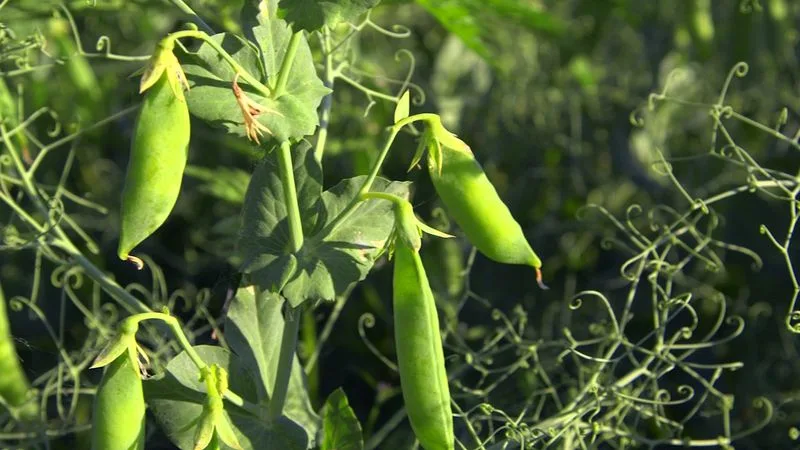
Classification of grain legumes and field care specifics
Grain legumes (Fabaceae family) are divided into food (beans, lentils), forage (chickpea, broad beans, white, yellow and narrow-leaf lupin, grass pea, common vetch and winter vetch), industrial (peanut, soybean) and universal (pea, soybean) crops. This group also includes cowpea, hyacinth bean, jack bean and mung bean. Depending on the leaf structure and the method of seed germination, the plants are separated into three groups, which directly influences their cultivation technology.
The first group includes crops with pinnate leaves, which germinate via the epicotyl. Their cotyledons remain in the soil. This group includes field peas, lentils, broad beans, peanuts, chickpeas, vetches and grass peas. Such plants allow for deep seed placement, as well as harrowing before and after seedling emergence.
The second and third groups consist of crops with trifoliate (common, runner and lima beans, mung bean, soybean, cowpea, pigeon pea) and palmate leaves (blue or narrow-leaf, yellow, white, perennial lupins). Their cotyledons are pushed to the soil surface during germination. This biological nuance requires modifications to standard crop care practices.
Since crops of the second and third groups grow initially by the elongation of the hypocotyl, they require shallower seed placement. Harrowing such crops before seedling emergence is strictly prohibited.
For harvest planning, it is important to consider stem strength. Peas, vetch, lentils, grass peas and some bean forms have lodging stems — they cling to each other with tendrils and remain upright only until the seed-filling stage, after which they lodge. Soybeans, lupins, broad beans and bush forms of beans have sturdy, erect stems that maintain a vertical position throughout the entire growing season. During growth, all grain legumes pass through the following sequential phases: emergence, stem branching, budding, flowering, pod formation, seed filling, full seed filling (start of ripening) and full maturity.
Nutritional value and economics of feed utilization
Grain legumes surpass grasses in protein quality and digestibility, providing the lowest production cost for protein. The plants fix atmospheric nitrogen through symbiosis with root-nodule bacteria of the Rhizobium genus, using only solar energy. Legume seeds are valuable not only for their protein but also for their high fat content (soybean, peanut, lupin), vitamins A, B1, B2, C, D, E, PP, as well as calcium salts. The proteins of these crops contain essential amino acids: lysine, cysteine, tryptophan and valine.
- Lysine in soybean (vs wheat) — 6 times higher
- Protein in green mass and straw — 8–15 %
- Straw advantage in protein over cereals — 3–5 times
Legume seeds serve as raw materials for the food, chemical and light industries. They are used to produce cereals, flour, vegetable casein, varnishes, plastics, synthetic fibers and medical preparations. Not only grain, but also hay, straw, chaff and green mass are directed toward forage purposes. To balance protein in diets, it is effective to use intercropping of legumes (beans, soybean) with maize for silage, as well as beans with oats.
The addition of protein-rich legume crops to carbohydrate-rich maize feeds (grain, silage) is a mandatory requirement for creating a proper feeding ration for livestock animals.
| Crop (indicators per 1 kg of absolutely dry matter) | Feed units | Crude protein, g | Fat, g | Fiber, g | Ash, g |
|---|---|---|---|---|---|
| Pea | 1,16 | 259 | 18,6 | 85 | 34,5 |
| Common vetch | 1,16 | 310 | 16,8 | 76 | 39,8 |
| Yellow lupin | 1,02 | 405 | 48,5 | 170 | 46,8 |
| Narrow-leaf lupin | 1,10 | 321 | 39,5 | 145,4 | 38,2 |
Agrotechnical importance of grain legumes and management of nitrogen fixation
Grain legumes reduce soil nitrogen depletion and ensure high yields of vegetable protein. For example, alkaloid cultivars of yellow lupin are grown as green manure on sandy soils, and narrow-leaf lupin on loamy soils. These crops form up to 30 t of green mass per 1 ha, which in its effect on subsequent crops is equivalent to the application of an equal amount of organic fertilizers. Ploughing under alkaloid lupin on poor sandy soils of Polesie allows for high yields of winter grain crops and improves overall soil fertility.
- Nitrogen accumulation in soil after peas — 50–150 kg/ha
- Green mass of lupin for green manure — up to 30 t/ha
- Fluctuations in protein levels in seeds — 10–15 %
- Nutritional value of pea straw — 0,23 feed units/kg
Symbiotic nitrogen fixation is inactive or completely ceases in acidic and nutrient-poor soils. Under these conditions, plants experience nitrogen starvation, yield decreases, and the crude protein content in green mass and seeds drops to a minimum. Due to soil differences, fluctuations in protein levels for one crop even within the same district can exceed 10–15 %.
Nodulating nitrogen-fixing bacteria are strictly specific to their host plants. They are divided into compatibility groups:
- pea, vetch, grass pea, and broad bean;
- alfalfa and sweet clover;
- bean;
- lupine and serradella;
- clover;
- soybean;
- chickpea.
To ensure inoculation of seed and soil with nodulating bacteria, encapsulation (pelleting) of seed material with factory-produced Nitragin preparations is applied before sowing.
Grain legumes optimize the structure of field operations. Early sowing and early maturity of peas and grass pea help to unload machinery during peak periods of sowing and harvesting. Early mowing or ploughing under of legume green manures frees the field for subsequent sowing of corn or millet. In crop rotation with potatoes, cereals, and oilseed crops, legumes increase the overall productivity of arable land. Lupine, vetch, grass pea, pea, broad bean, and in the south of Russia — chickpea, are used as fallow crops.
Cultivation features and value of peas
Pea is the primary food and forage grain legume crop. Mature and immature seeds (green peas), as well as vegetable beans, are in demand in the canning industry due to their content of 20–35% protein, 25–30% sugar, vitamins, and calcium salts. In livestock farming, pea serves as a key component of compound feed.
| Crop | Digestible protein content per 1 feed unit, g |
|---|---|
| Pea | 120–185 |
| Oats | 83 |
| Barley | 70 |
| Corn | 59 |
With timely harvesting, pea straw also becomes a valuable feed, containing 6–8% protein and up to 34% nitrogen-free substances (carbohydrates). In pure form and in mixtures with oats or barley, peas are cultivated in occupied fallow for green mass. In terms of quality, silage from such pea-grass mixtures is richer in protein and carotene than pure corn silage. Due to symbiotic nitrogen fixation, pea accumulates protein without the application of nitrogen fertilizer and leaves a significant amount of nitrogen in the soil, acting as an excellent predecessor.
In global agriculture, grain legumes occupy about 135 million hectares (about 14% of the grain area). In the Russian Federation, about 5 million hectares are occupied by grain legumes, of which about 4 million hectares account for peas. The remaining areas are distributed among soybean, lupine, bean, lentil, grass pea, chickpea, and faba bean.
| Country / Region | Pea sowing area |
|---|---|
| CIS | ~ 4.7 million hectares |
| China | 3.5 million hectares |
| Crop (data for the Republic of Belarus for 2010) | Sowing area, thousand hectares |
|---|---|
| Pea | 135 |
| Lupine | 135 |
| Soybean | 45 |
| Vetch | 35 |
Pea sowings in the Russian Federation extend north to the boundaries of agriculture (65° N), passing through Karelia, Arkhangelsk Oblast, Yakutia, and Kamchatka. Expansion of sowings to the south is hindered by climatic and biological factors.
The advancement of peas to the south is impeded by their low drought resistance and high susceptibility to the pea weevil (Bruchus pisi). In Dagestan and Transcaucasia, overwintering cultivars are often sown to reduce these risks.
Read next
Crop production For students
Economic importance and agricultural practices for bean cultivation
Crop production For students
Biological features and economic importance of peanut cultivation
Vegetable growing For gardeners