
Specifics of cucumber and tomato pollination by bees in greenhouse operations
3 min read
In protected ground, cucumbers and tomatoes remain the main crops. Cucumbers have unisexual flowers with large and sticky pollen, which cannot be transferred by wind. Under normal conditions, tomatoes are pollinated by wind, but in closed greenhouses the air is still; therefore, it is also necessary to attract bees here to obtain a good harvest.
- Cucumber share in greenhouses — 74%
- Tomato share in greenhouses — 10%
- Increase in tomato yield with bee pollination — 30-40%
- Cucumber pollen viability — up to 3 days
- Number of visits to a cucumber flower for pollination — from 7 to 10
Stigmas of female cucumber flowers are ready for pollination even before the corolla opens, and the viability of matured male pollen lasts up to three days. The best fruit quality is achieved if bees pollinate the flowers during the first hours of flowering. Keep in mind that bees visit female flowers three times less often than male ones, especially in low light. Insects collect all pollen by noon and then transfer its remains on their bodies while gathering nectar.
How to stimulate nectar secretion and regulate bee activity
The intensity of bee flight directly depends on nectar secretion, which is influenced by the cultivar and agricultural practices. Timely application of potassium-phosphorus fertilizer actively stimulates this process. Nitrogen fertilizers provide a positive effect only at moderate doses and necessarily in combination with other nutrients.
It is unacceptable to apply large doses of poorly decomposed manure into damp soil. This causes poisoning of greenhouse plants by ammonia and hydrogen sulfide.
Any disruptions in irrigation, temperature regime, and mineral nutrition strongly depress plants. Flowers begin to secrete less nectar, causing fruit sets to wither or deformed pear-shaped fruits to form, even when pollination has taken place.
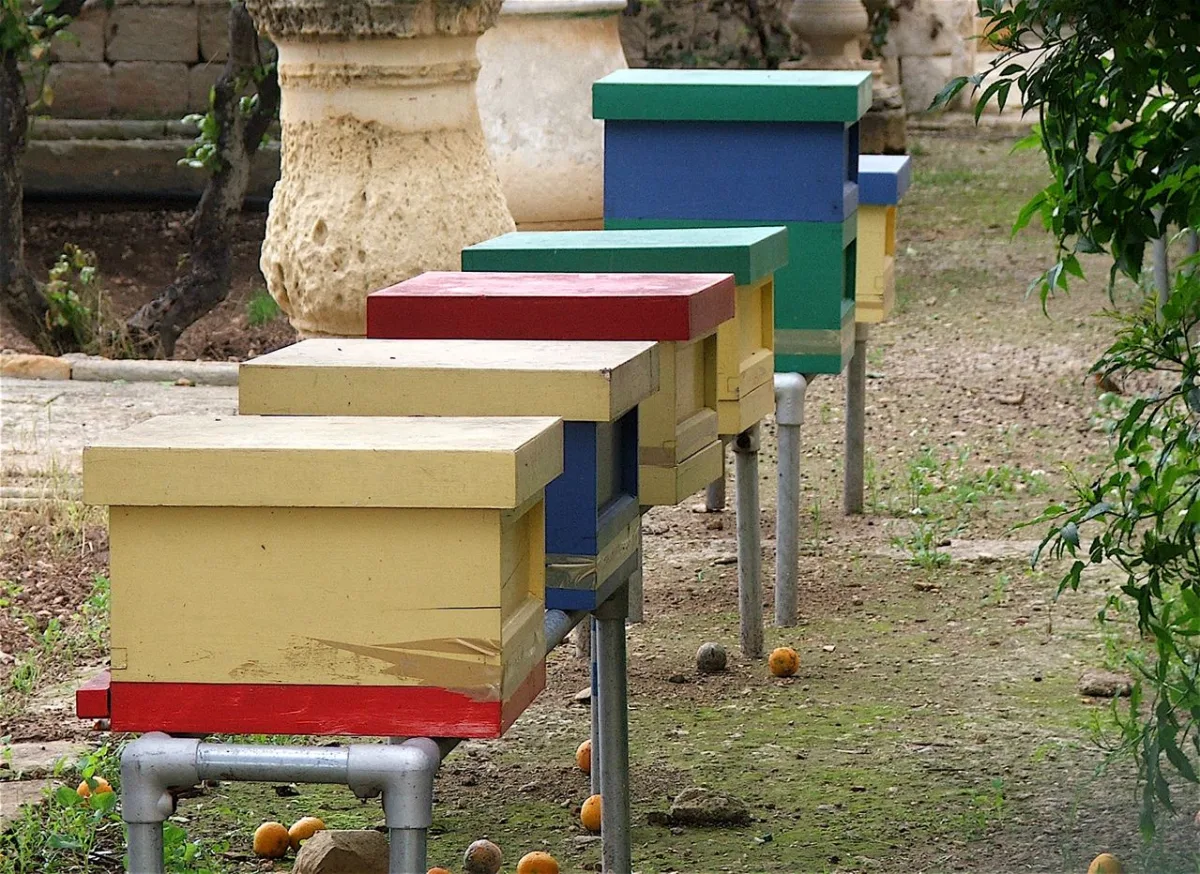
For greenhouse pollination, lightweight, simple, and inexpensive hive designs that ensure good colony development are suitable. A standard hive consists of a box body with rabbets for frames, a bottom, an inner cover, a roof, and a shallow super. Farms use vertical or horizontal hives made of wood or modern polymer materials. To reduce the physical load on the beekeeper, hives consisting only of bodies for a shallow frame are used in greenhouses.
For effective work in greenhouses, medium-strength honeybee colonies are selected. Excessively strong colonies increase the risk of stinging greenhouse personnel, while weak ones simply will not cope with the workload. At the same time, the nest volume must be sufficient for full-scale work on flowers.
It is sufficient for the colony to occupy:
- a body of a multi-story hive;
- a shallow super of a multi-story hive.
Read next
Beekeeping For students
Safe use of pesticides in greenhouses during beekeeping
Beekeeping For students
Features of keeping and working with bee colonies in greenhouses
Beekeeping For students