
Features of keeping and working with bee colonies in greenhouses
9 min read
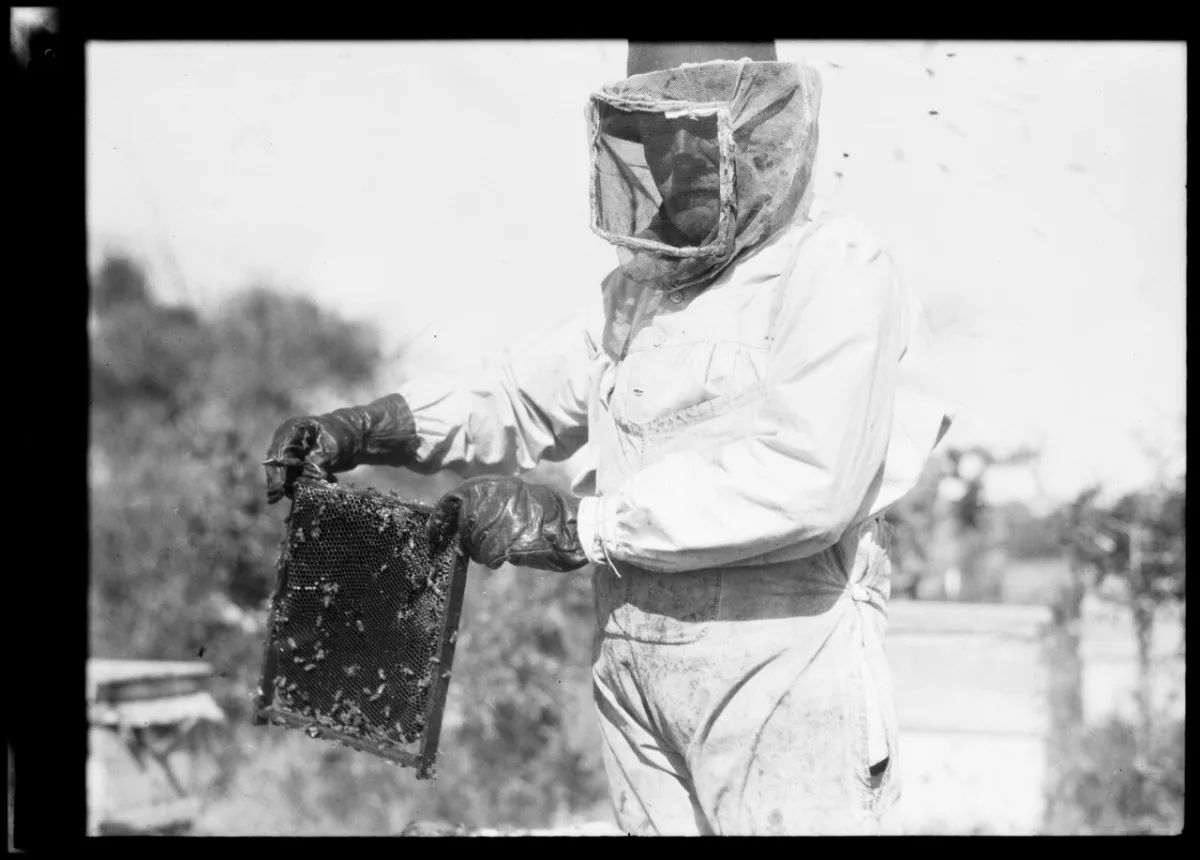
Placement and adaptation of honeybee colonies in the greenhouse
Timely introduction of bees into greenhouses ensures high-quality pollination of cucumbers from the very first days of flowering. The timing of colony placement directly depends on the bee bread reserves in the nests and the time of crop planting. To ensure the insects begin their work quickly and are not injured by the glass, strictly follow the rules of adaptation in protected ground.
- Determine the introduction dates: in winter with sufficient bee bread reserves — a few days after the cucumbers are planted in the soil; in spring or in case of feed shortage — a few days before the start of flowering.
- Choose an overcast day for settling, when bee flight is calmest and they hit the glass less frequently.
- When introducing them in sunny weather, move the hives into the greenhouse only at the end of the day, so that some bees can perform their orientation flight in the evening, and the rest — the following morning.
- If some bees remain near the southern glass panels on a sunny day, collect them onto frames with drawn comb and shake them back into the nest or onto the landing board.
- Placement rate — 1 colony per 1000–2000 m²
- Reserve hives for replacement — 1–2 units
- Period of colony weakening in the center of the greenhouse — 2–3 weeks
For effective pollination, choose colonies with young queens, as they are less prone to swarming. The southwest corner of the greenhouse is considered the best place for placing the hive. In large block-style greenhouse complexes, the second hive is placed in the opposite southeast corner, and the entrances are oriented to the north or east so that the plants do not obstruct the flight path. It is essential to leave free space near the hive for the beekeeper to work, and the structure itself should not be placed too high or near heating pipes to avoid overheating.
In multi-span block greenhouses, the colony in the southwest corner always strengthens due to the influx of drifting bees from other points. Install the weakest colony in this corner — over time, its strength will level out.
In hangar-type greenhouses, it makes no sense to install a second bee colony, as this does not increase the number of flower visits. One of the colonies will inevitably begin to outpace the neighbor in development, and the second will quickly weaken. Do not place a hive in the center of the greenhouse without a duplicate colony in the southwest corner. Due to the loss of drifting bees, the colony will lose strength within 2–3 weeks and will require replacement or reinforcement.
Bee care and mobilization for cucumber pollination
Inspections of nests in greenhouses are carried out in the morning hours, or throughout the day in overcast or rainy weather. Work must be done quickly, without fuss. The presence of the queen in the nest is determined by the presence of fresh eggs, without wasting time searching for her. Aggressive and queenless colonies are always inspected last.
To prevent bees from wandering around the greenhouse, bright orientation markers — white, blue, or yellow shields — are installed near the entrances. On sunny days, the glass in the southwest corner must be shaded with chalk mixed with flour waste. To make the whitewash resistant to washing off, a small amount of superphosphate or lime is added to the solution.
Bright nighttime lighting of greenhouses and corridors is fatal to bees, especially southern breeds — they fly toward the light and crash into the glass. Also, avoid internal insulation of greenhouses with film: insects die in large numbers in the space between the film and the glass. Insulate greenhouses only from the outside.
The appearance of brood sharply increases the colony's need for honey, bee bread, and water, forcing the bees to actively visit the flowers. If bees were introduced late and there is no brood in the nest yet, they may ignore the flowering cucumbers. In such a situation, it is necessary to artificially accelerate and stimulate the bees' work.
If honeybee colony is working passively in the greenhouse, it can be mobilized for pollination in two ways. The first method is to catch several foraging bees in an active greenhouse using a bottle or flask and release them where there is no flight. The second option is to swap the active and passive colonies during peak flight hours. When swapping places, both hives must have the same orientation in the greenhouse corners; otherwise, bees returning with food will not find the entrance at the new location, will begin to wander, and will die.
With the arrival of sunny days, greenhouses begin to be ventilated by opening the transoms. Bees that have flown outside cannot return after the frames are closed and perish on the glass. Screens cannot be placed on the transoms — in summer, they will worsen ventilation and lead to plant overheating. As a result, in early spring, greenhouse bee colonies weaken.
With the arrival of warm weather and the beginning of flowering of coltsfoot, hazel, and willow, flight openings are created for bees by removing a portion of the glass. The opening is positioned opposite the hive in the corner of the lower slope of the greenhouse, where the most bees congregate. The glass near the flight opening is slightly shaded with whitewash — this helps the bees, especially young ones, to orient themselves better, preventing them from hitting the glass and helping them find their way out and back more quickly. Without clear landmarks, the bees wander and flock to the outermost greenhouses on the side of the nectar sources, strengthening them at the expense of the middle ones.
The influx of nectar and pollen stimulates brood rearing, causing feed reserves to melt away rapidly. In favorable weather, strong colonies bring in up to 2–3 kg of nectar and pollen per day from willow, maple, and yellow acacia, while weak ones must be provided with supplementary feeding even at this time. To avoid hindering the growth of strong and medium colonies, nests are expanded in time with foundation wax, which bees build out quite readily when pollen is available. Before the honey flow, honey supers are installed on the hives.
- Size of the flight opening — 10×10 cm
- Minimum number of frames in the nest for a split — 10 pcs.
- Sealed brood for a split — 3–4 frames
- Additional bees for a split — from 2–3 frames
- Maximum nectar intake per day — up to 2–3 kg
In stuffy greenhouses with a weak honey flow, bees easily enter a swarming state out of idleness. To prevent swarming, beekeepers use colonies with young, one-year-old queens in greenhouses — they are not prone to swarming in their first season, which saves time on maintenance. However, a swarming state can still occur if an excess of young, idle bees accumulates in the hive. This happens due to bees drifting into the outermost greenhouses or if the beekeeper over-strengthens the colony with brood, creating a giant "honey producer." To avoid this, splits are made from strong colonies.
- Wait until the colony occupies at least 10 frames.
- Remove 3–4 frames of sealed brood with the bees sitting on them from the hive.
- Additionally, shake bees from another 2–3 frames into the new split.
- Form a separate split, reducing the load on the parent colony.
Grey mountain Caucasian bees and their hybrids quickly switch to strong nectar sources appearing outside and fly out of the greenhouse. The Carpathian breed is less susceptible to this and works more stably on the pollination of greenhouse crops.
At the same time, one should not fear a total loss of bees to external nectar sources if the size of the flight openings does not exceed standard dimensions. Through a small opening, young bees mobilized to the outside cannot find a way out en masse, which ensures that the main part of the colony remains working in the greenhouse.
Read next
Beekeeping For students
Methods of attracting bees for pollination of nightshades in greenhouses
Beekeeping For students
Preparation of bee colonies and the wintering facility for the winter period
Beekeeping For students