
The contribution of Lawes, Sachs, and Knop to the development of agrochemistry
3 min read
Modern plant nutrition schemes are based on classical field experiments of the XIX century. Research by French scientists was confirmed by the work of an English colleague (1814–1900), who founded the oldest agricultural experiment station. The data he accumulated proved that nitrogen fertilizers are highly effective, and that atmospheric nitrogen on its own cannot provide normal crop nutrition.
In parallel, the experiments proved the key importance of phosphorus for yield. The results of these long-term trials formed the basis for the industrial production of mineral fertilizers. Thanks to long-term experiments, the experiment station itself turned into a major scientific and methodological center for agrochemistry.
| Period of experiment | Practical research results |
|---|---|
| 1836–1838 | Vegetation experiments proved the important role of phosphorus in plant life |
| 1840–1841 | Field experiments confirmed the high effectiveness of phosphorus fertilizers |
| 1842 | The first superphosphate production plant was opened |
| 1843 | The world's longest-running experiment on nitrogen application rates on continuous wheat was established |
| 1859 | Cereal crops were successfully grown for the first time in an artificial environment until full seed maturation |
How the water culture method helped determine fertilizer composition
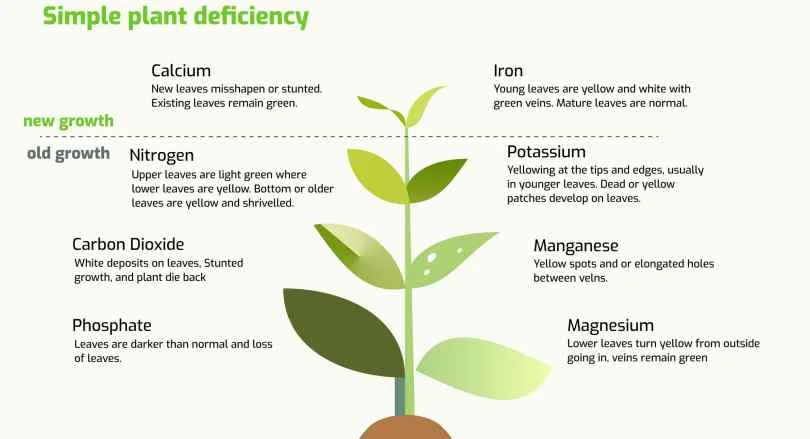
After the first discoveries in the field of mineral nutrition, researchers focused on the composition of fertilizers. To understand exactly which elements and in what quantities plants need, they began growing them in artificial conditions — water and sand. Two German scientists (1832–1897 and 1817–1891) independently developed the water culture method.
The essence of the method was to grow crops in distilled water with the addition of soluble salts. This helped to precisely determine which elements from the soil and ash are vital for plants, and which they can do without. Based on these experiments, researchers identified a group of essential nutrients.
- Potassium (K)
- Calcium (Ca)
- Magnesium (Mg)
- Nitrogen (N)
- Phosphorus (P)
- Sulfur (S)
- Iron (Fe) — in a very small amount
Elements like silicon, sodium, and chlorine were initially considered unnecessary, as water cultures yielded good results without them. Later, when salt purification technologies improved, scientists revised these conclusions and made significant adjustments to the list of essential nutrients.
Read next
Agrochemistry For students
The emergence of agricultural chemistry as a science from Carl Sprengel to Justus von Liebig
Agrochemistry For students
K. K. Gedroits' contribution to the development of the theory of agricultural chemistry and soil science
Agrochemistry For students