
Diagnostics and biological characteristics of root rot pathogens in vegetable crops
6 min read
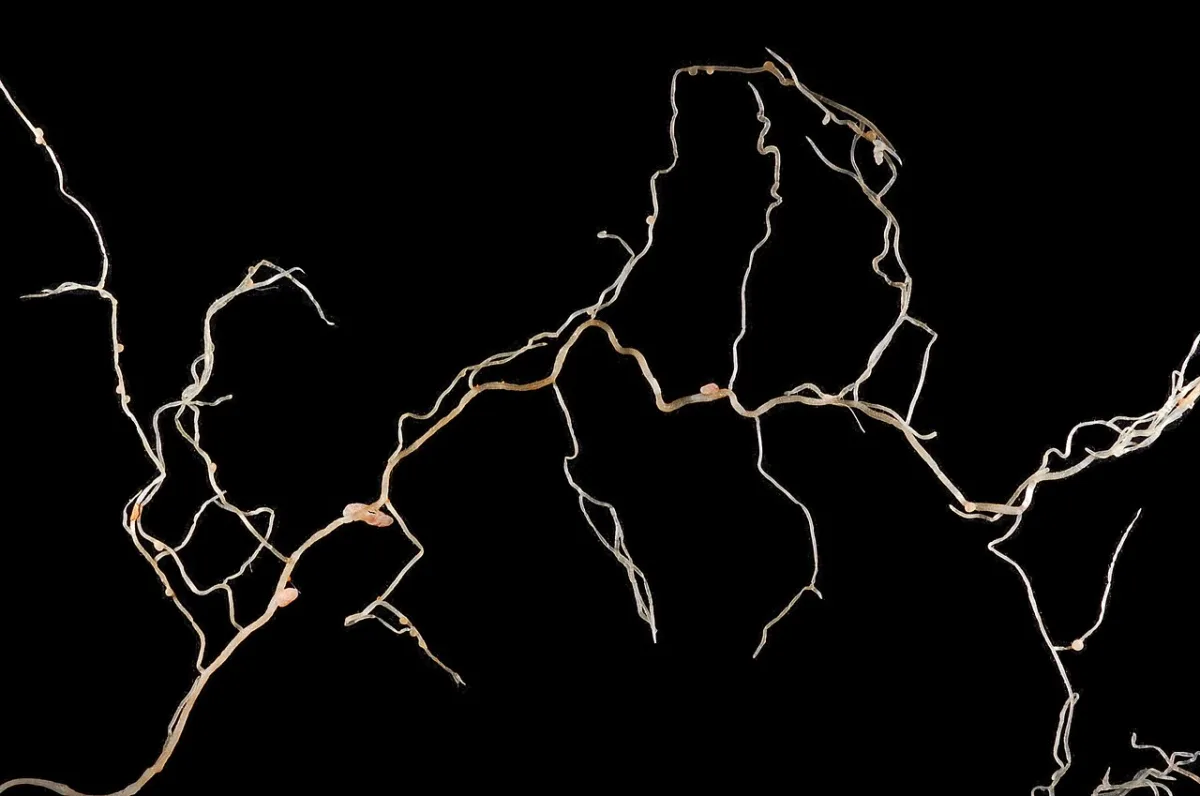
In a humid chamber, a white fluffy mycelium develops rapidly on tissues affected by Pythium, without sporulation. Fusarium also initially forms a white mycelium, but over time it turns pink, and a mass of spores forms within it. Phytophthora forms a silky, light-brown mycelium, on which characteristic zoosporangia appear.
Biology of pathogens. The disease agents are facultative parasites. All factors that weaken the root system of the plant contribute to the development of the disease. Cucumber seeds sown in cold and waterlogged soil, as well as those planted too deeply, germinate poorly and sometimes rot before the seedling can emerge from the seed coat. From the roots, pathogens are able to spread diffusely upward to the root collar and into the stem. Sporulation forms on the surface of the affected organs, which ensures the spread of pathogens both by water currents and aerogenically. When roots are affected by Pythium, local necrosis and wet rot are observed; Fusarium and Verticillium mainly cause systemic toxicosis and rapid wilting. Rhizoctonia spreads through pieces of mycelium and usually grows without spore formation. Growing hyphae secrete toxins, which causes the death of root epithelial cells. The fungus usually survives in the soil in the form of sclerotia.
Fusarium persists in seeds for a long time, over eight years. The pathogen is activated inside the seedlings during the cotyledon leaf formation phase and grows through the vessels into the root collar, and then into the stem. The growing mycelium, on the one hand, secretes toxins, and on the other, clogs the vessels and causes tracheomycotic wilting. The spread of Fusarium in the soil is carried out by chlamydospores and microconidia.
Source of primary infection. Pythium enters greenhouses mainly with peat; transmission via seeds is possible. Conversely, Fusarium is transmitted mainly through seeds. Rhizoctonia is mainly preserved in non-steamed Fig. 77. ALTERNARIOSIS OF SEEDLINGS (ROOT ROT.. a.. 7% r o, / 5 / A, 2.1.3.2. Root diseases of adult plants
This is a group of local diseases that cause necrosis of the epidermis and root cortex, but the pathogens, as a rule, do not move above the root collar zone. In most cases, the root system dies partially or completely.
Other diseases that cause vessel blockage and secrete toxins are classified as systemic, as in this case, pathogens move through the plant's vascular system. Some of them are easy to identify, while others do not have characteristic symptoms of damage. For accurate identification of the pathogen species in this case, it is necessary to carry out laboratory testing. The cause of most root diseases is phytopathogenic fungi belonging to the genera Pythium, Fusarium, Rhizoctonia, and Phytophthora. These pathogens are capable of penetrating plants and colonizing them mainly after damage to living tissues. Therefore, the peak of disease development intensity occurs during the period of plant transplanting and during gross violations of cultivation technology, which leads to impaired root functioning (drying out, high salt concentrations, waterlogging, and associated asphyxia).
The main routes of pathogen entry into greenhouses: infected substrate, contaminated transplants, or infected seeds. Before the start of the season, a microbiological analysis of soil mixtures, substrates, and seeds should be carried out to determine the feasibility of special treatments. Substrates should not be disinfected unnecessarily, as the phytotoxicity of treated soils persists for 1-1.5 months, and the transplant mixture is usually started to be used earlier. If a high degree of contamination is detected, soil mixtures are steamed or treated with methyl bromide, Vydate, or Basamid Granular at least three weeks before use.
Seed infection leads to the wilting of individual plants, but diseased plants do not develop from infected seeds in all cases. Fighting such an infection is difficult. The formation of disease foci is associated with the spread of infection from infected plants to neighboring ones. In natural biocenoses, this is prevented by microbiota, which causes soil fungistasis. In steamed or sterilized greenhouse substrates, pathogens meet almost no obstacles. A significant part of the plants continues to develop because its defense properties are activated. Under good cultivation conditions, only weak plants are lost. However, the resistance of even strong and well-developed plants decreases sharply when temperature and water conditions of cultivation are violated.
Seed treatment methods do not guarantee the complete suppression of latent infection in seeds. Its detection is a laborious and long process. However, large batches of seeds in large farms still need to be checked. If a high degree of infection is detected, such seeds should be additionally heated.
Root rot of cucumber is a dangerous disease capable of completely destroying both young and fruiting plants in greenhouses of any type. The main insidious nature of the pathogen lies in the latent infection of transplants. Often, in slightly affected plants, the infection does not manifest itself at all until the beginning of fruiting, and then it suddenly activates when growing conditions deteriorate.
The symptoms of the disease begin with browning of the root neck and roots. During hot hours, the lower leaves wilt and turn yellow, fruit sets die off, and young cucumbers stop developing. The main root becomes dark brown and rotted; its epidermis and cortex are completely destroyed, while the vascular system remains intact. As a result, the affected bushes quickly wilt and dry out.
The disease is caused by a complex group of pathogens. These are fungi of the genus Pythium (Pythium debaryanum Hesse, Pythium ultimum, Pythium aphanidermatum), Fusarium (Fusarium culmorum, Fusarium solani, Fusarium gibbosum, Fusarium oxysporum), as well as Rhizoctonia solani Kühn, Ascochyta cucumis Fautr. et Roum., Whetzelinia sclerotiorum (d By) and the bacterium Erwinia carotovora (Jones) Bergey, Harrison.
Losses from root rot increase sharply at extreme soil temperatures — below 16 °C and above 28 °C. The infection spreads particularly quickly when the soil overheats.
Risk factors: temperature, humidity, and irrigation
The main cause of a root rot outbreak is a combination of stress conditions for the cucumber and a high infection background in the greenhouse. Most phytopathogenic fungi develop in a wide temperature range from 5 to 45 °C at an optimal soil pH of 5–6. However, each pathogen has its own temperature optimum for activity.
| Pathogen | Temperature optimum or activity |
|---|---|
| Pythium | 12–24 °C |
| Phytophthora, zoospores | above 7 °C |
| Phytophthora, infection hyphae | 12 °C and above |
Disease development depends directly on soil moisture. With frequent and heavy irrigation, water displaces the air necessary for roots to breathe. As a result, the root system weakens, and the plants' susceptibility to phytopathogens increases sharply.
It is not only overwatering that is dangerous, but also drying out of the soil. When roots dry out, their individual parts die off and become entry points for the infection. Rot pathogens first colonize these dead tissues as saprotrophs and then proceed to parasitize healthy cells.
- Optimal soil pH for pathogens — 5–6
- Irrigation water temperature (shock) — 10–11 °C
- Dangerous soil temperature — below 16 °C and above 28 °C
Irrigating cucumbers with cold water at a temperature of 10–11 °C stops root development and causes them to die off. A high concentration of salts in the soil solution leads to similar consequences and an increase in susceptibility to rot.
Read next
Plant protection For agronomists
Diagnostics and control methods for bacterial canker of pepper in greenhouses
Plant protection For agronomists
Ascochyta blight of cucumber in greenhouse: biology and methods of plant protection
Plant protection For agronomists