
Technology for raising tomato seedlings in early and mid-season hotbeds
4 min read
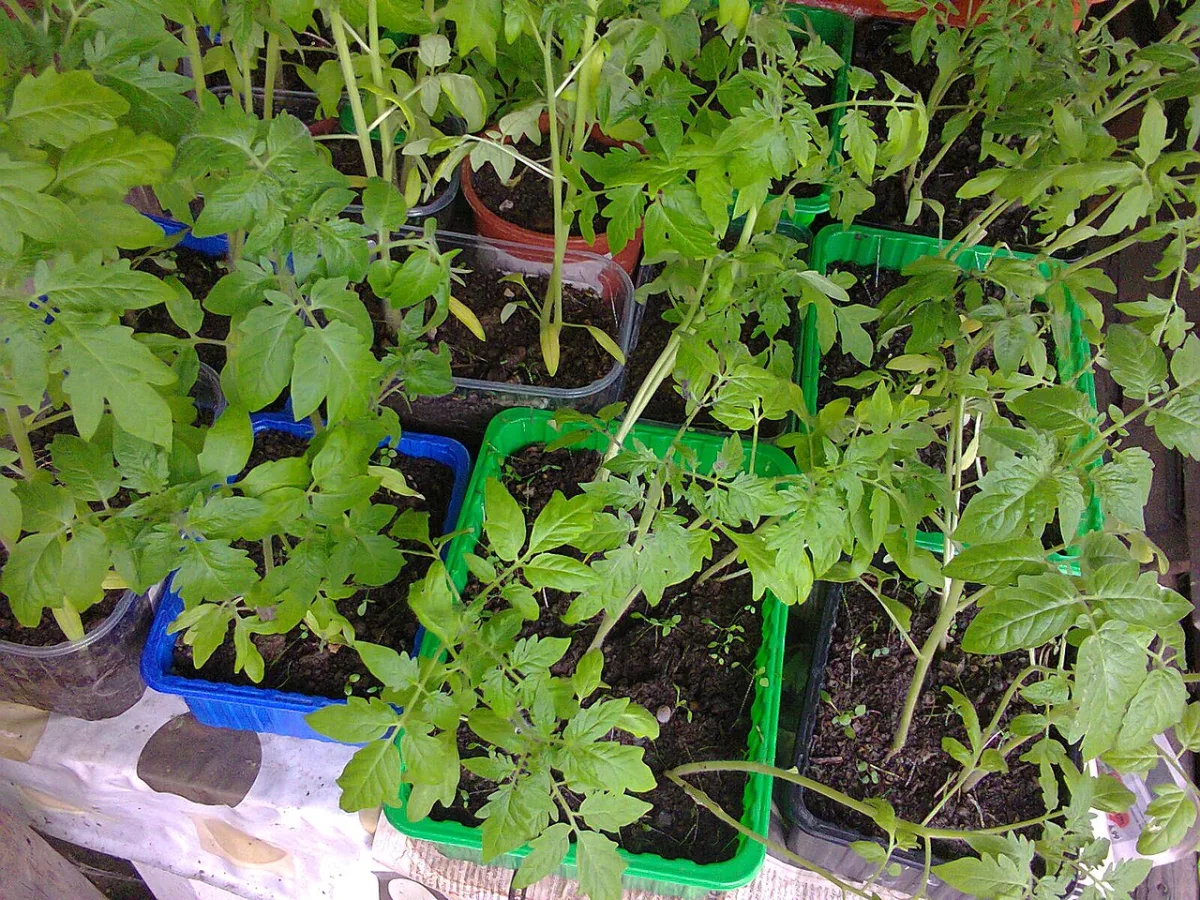
Transplanting tomato seedlings into early and mid-season hotbeds allows for an extra-early harvest, but requires careful substrate preparation. The best soil is considered to be old hotbed soil mixed with turf soil, or old hotbed soil with the addition of 1/3 part humus and 1/10 part sand. If these components are in short supply, a mixture of equal parts fertile field soil and peat soil is used. In this case, 20 g of nitrogen fertilizer, 40 g of superphosphate, and 30 g of potash salt must be added to each square meter of the substrate.
The soil is applied in an 18–20 cm layer, leaving at least 15–18 cm of free space below the frames. Planting density is calculated based on the specific characteristics of the cultivar. For example, for the "Bizon" tomato, the rate is 10 plants per frame, while for the "Budennovka" cultivar, it is 8 plants.
- Planting dates for early hotbeds — March 20–25
- Planting dates for mid-season hotbeds — mid-April
- Soil layer thickness — 18–20 cm
- Minimum distance to the frame — 15–18 cm
- Planting density per frame — 8–10 plants
Planting the seedlings is carried out in a spread-out manner along or across the hotbed. When placing them longitudinally, the plants are set in two rows along the frame, strictly following a staggered pattern throughout the entire hotbed.
- Place the plants into the holes in an inclined, almost recumbent position.
- Form a small soil mound around the stem, covering it up to the first true leaf.
- Water the planted seedlings with warm water.
- Cover the hotbeds with mats for 24 hours a day until the plants are fully established.
Plant care: microclimate, bush training, and top dressing
After the seedling establishment period is over, the mats are removed from the hotbeds during the day and left on only at night. The humidity inside the hotbeds should be 65–75%. To achieve this, the plantings are regularly ventilated, preventing the temperature from dropping below 14–15 °C at night. During the day in sunny weather, the temperature is maintained at 25–28 °C, and on cloudy days — within 20–22 °C.
Tomatoes in hotbeds grow intensively and, without control, can stretch up to 3 meters, setting 12–15 inflorescences. To ensure this does not occur at the expense of fruit filling, the bushes are trained to a single stem. No more than 4–6 inflorescences are left on the plant, with 3–4 being considered the optimal number. All excess side shoots are regularly removed.
Suckers must be removed before they exceed 5 cm in length. Later pruning traumatizes the plant, and the tomatoes will take a long time to recover.
Until the beginning of June, while the threat of late frosts remains, the frames must not be removed from the hotbeds. The crop continues to be managed in a spread-out way, pinning the stems to the soil and covering them with earth to encourage the development of additional roots. Then, the frames are completely removed, the plants are carefully lifted, and tied to support stakes. During this same period, additional soil is added to the hotbeds.
With the appearance of the first fruit set, irrigation is increased to two watering cans per frame, and active ventilation continues. At this same time, regular top dressing of plants with organic and mineral mixtures begins. Liquid fertilizers are applied every 3–5 days, and dry mixtures are incorporated into the soil at intervals of 10–15 days.
Before each application of fertilizer — both in liquid and dry form — be sure to pre-water the soil in the hotbed with clean water.
| Type of top dressing | Mixture composition | Application method and dosage |
|---|---|---|
| Organic (poultry manure-based) | 1 part manure to 2 parts water (after fermentation, dilute 1 bucket of solution into 6 buckets of water) | Liquid watering from the start of fruiting every 3–5 days |
| Organic (cow manure-based) | 1 part cow manure to 8 parts water with the addition of 25 g of superphosphate per bucket of solution | Liquid watering from the start of fruiting every 3–5 days |
| Mineral liquid | 10 g of nitrogen fertilizers, 5 g of superphosphate, and 2 g of potash salt per 1 bucket of water | Liquid watering from the start of fruiting every 3–5 days |
| Mineral dry | 10 g of nitrogen fertilizers, 25 g of superphosphate, and 15 g of potash salt | Dry application per frame with an interval of 10–15 days |
Read next
Greenhouses and covers For gardeners
Technology for forcing green crops in spring hotbeds
Greenhouses and covers For gardeners
Technologies for growing high-quality vegetable seedlings in hotbeds
Greenhouses and covers For gardeners