
Greenhouse microclimate management: professional tips from an agronomist
5 min read
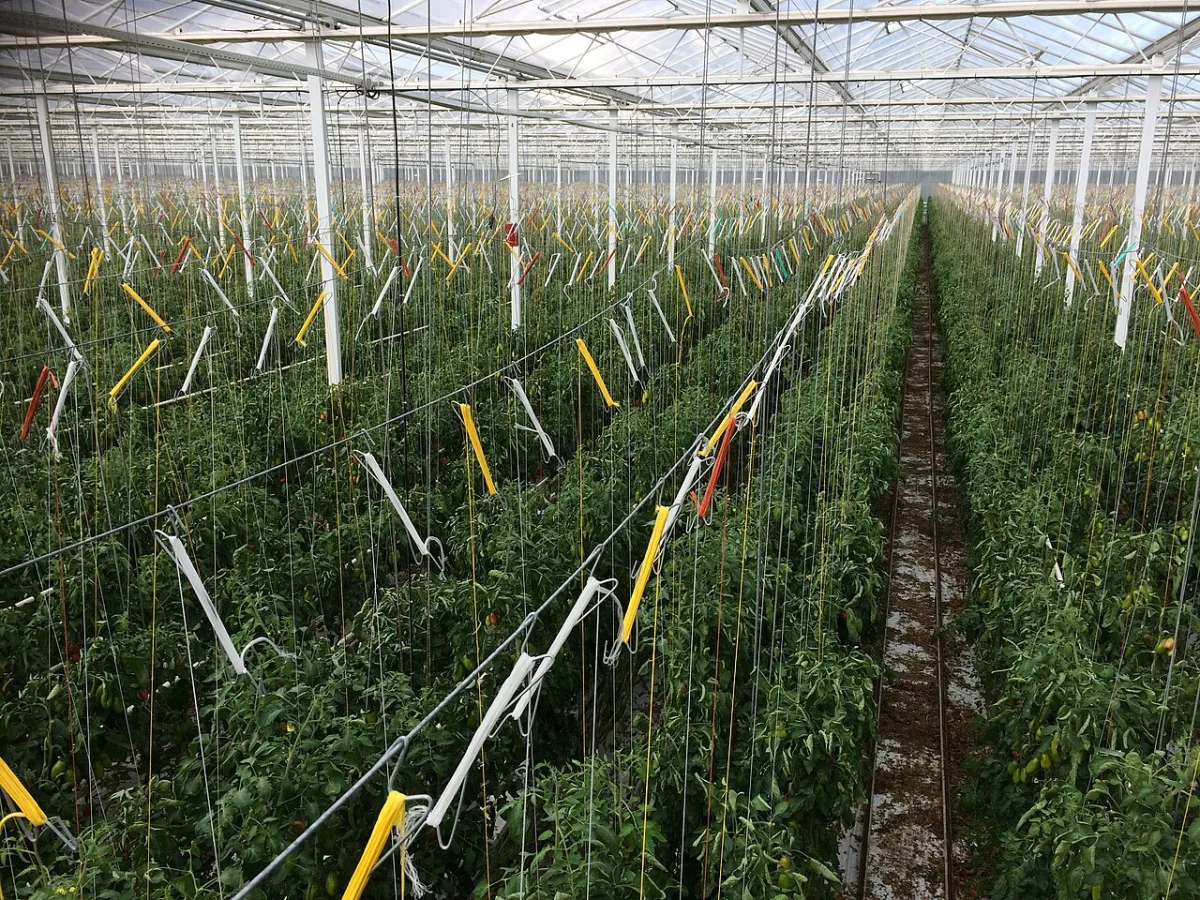
Microclimate and temperature management in the greenhouse
Finally, you have transplanted your seedlings into the greenhouse. This is where arguably the most crucial part begins. After all, assembling a greenhouse is simple enough according to the provided instructions, but "steering" the conditions inside it throughout the growing season is what defines the skill of its owner. There are too many secrets and too many potential nuances to settle for a short, formal manual. So, what is "steering" a greenhouse?
"Steering" means maintaining specified parameters, primarily air temperature and soil moisture, within optimal ranges for the crops. Just as a ship's captain maintains a set course, a greenhouse owner maintains the set parameters.
Some people have a simplified view of greenhouse maintenance, thinking it is enough to know the optimal daytime temperature, around 25 °C, and maintain it constantly, while the nighttime temperature is just whatever it turns out to be, as it is beyond our control. In reality, everything is more complex.
Let me ask you a direct question: where is your thermometer hanging, and at what height? There will be one temperature at head level and another at the ground, where it is colder. So, where do you want the 25 °C temperature to be: at the ground level or at the mid-height of the greenhouse?
Plant development depends largely on the temperature near the root system; for it to be 25 °C there, the top must be at least 30 °C. But no more than that, as temperatures above 30 °C trigger overheating in the tomato plant, causing damage to its tissues.
It is worth keeping track of such nuances.
A greenhouse like a sailing ship in a storm
Can you imagine a sailing ship at sea steered by its captain from inside his cabin? No, the captain tries to stay on the bridge constantly to react sensitively to weather changes, allowing himself a short rest only in the calmest weather. Otherwise, the ship will be tossed about and waste a lot of time. Similarly, temperature fluctuations drain the plant's energy and hinder its development.
When you have your own greenhouse, I have no doubt that you will smile when you appreciate this comparison to a sailing ship. Being inside a greenhouse during bad weather, you feel gusts of wind against the polycarbonate as if they were hitting sails: everything sways and creaks; it feels like you are on a ship in a storm! And then those ropes for the plants everywhere...
Conclusion
It is clear that modern automation allows ships to be navigated "blind" and industrial greenhouse complexes to be managed via monitor readings: sensors, timers, and electric motors control everything. However, the vast majority of garden plots lack this; they rely on manual control, and the more often you are near your greenhouses during the season, the higher the harvest you will get.
Yes, the best option is to open and close the greenhouse daily at the right time, sometimes even several times a day, depending on sudden weather changes. This means that every day is different:
- ideally, you open and close doors and vents, sometimes all at once, sometimes partially, just as a captain sets and furls sails depending on their understanding of the wind;
- there is no strict schedule; the opening and closing times are dictated only by the sun.
This is hard for a beginner to grasp, who would prefer to have clear instructions on what time to open the doors and what time to close them, but it is easy for a practitioner to understand.
Indeed, when a thunderstorm is approaching, why leave the doors and vents open? They probably won't be torn off their hinges, but they will increase windage, which puts extra stress on the polycarbonate and the frame. Furthermore, the wind will blow out all the heat accumulated during the day: after all, besides maintaining high temperatures around the plants during the day, our greenhouse also stores heat in the soil for a warmer night, and an attentive owner protects this heat rather than wasting it by closing the greenhouse in time in the evening.
In one way or another, during strong winds, it is better for the greenhouse to be closed. On overcast days, it is also better to keep the dome closed, keeping it on "low heat" to accumulate warmth for the night.
I have outlined how it should look in an ideal scenario only to better understand the essence, as in an apprenticeship, one is supposed to master the classics first. Few people in daily life follow such a rigorous approach: the production gains are not worth such time investment. A high harvest can also be obtained through more simplified care. Most owners adhere to an average regime: early in the morning before leaving for work, all "bottles" are uncorked, and in the evening, they are corked at approximately the same time. There are those who, all year round, keep one door in the greenhouse open—and it still works, accumulates heat, and produces tomatoes.
Conclusion
Cold must be avoided by all means—that is the whole secret for starters. When literature strictly emphasizes that "at temperatures below 10 °C, tomatoes stop growing and their seed do not germinate," one instinctively wants to retort: "Even if they did grow, what is the difference! Why fuss with a thermometer if everything below 18–20 °C is cold for them anyway! At temperatures below 18–20 °C, it is not growth, but suffering!" You may have gained some millimeters, but overall, a cold period is a waste of time. It should not be allowed, forcing the greenhouse to heat up in the sun during the day in spring "in reserve" with the doors closed.
Otherwise, a beginner stands there with a thermometer in hand and rejoices that growth has started at 13 °C...
Read next
Greenhouses and covers For gardeners
Classification of hotbeds and modern methods of their heating in agriculture

Greenhouses and covers For gardeners
Construction and operation of efficient greenhouses for a home garden
Greenhouses and covers For agronomists