
Building a sturdy hotbed out of plastic pipes with your own hands
3 min read
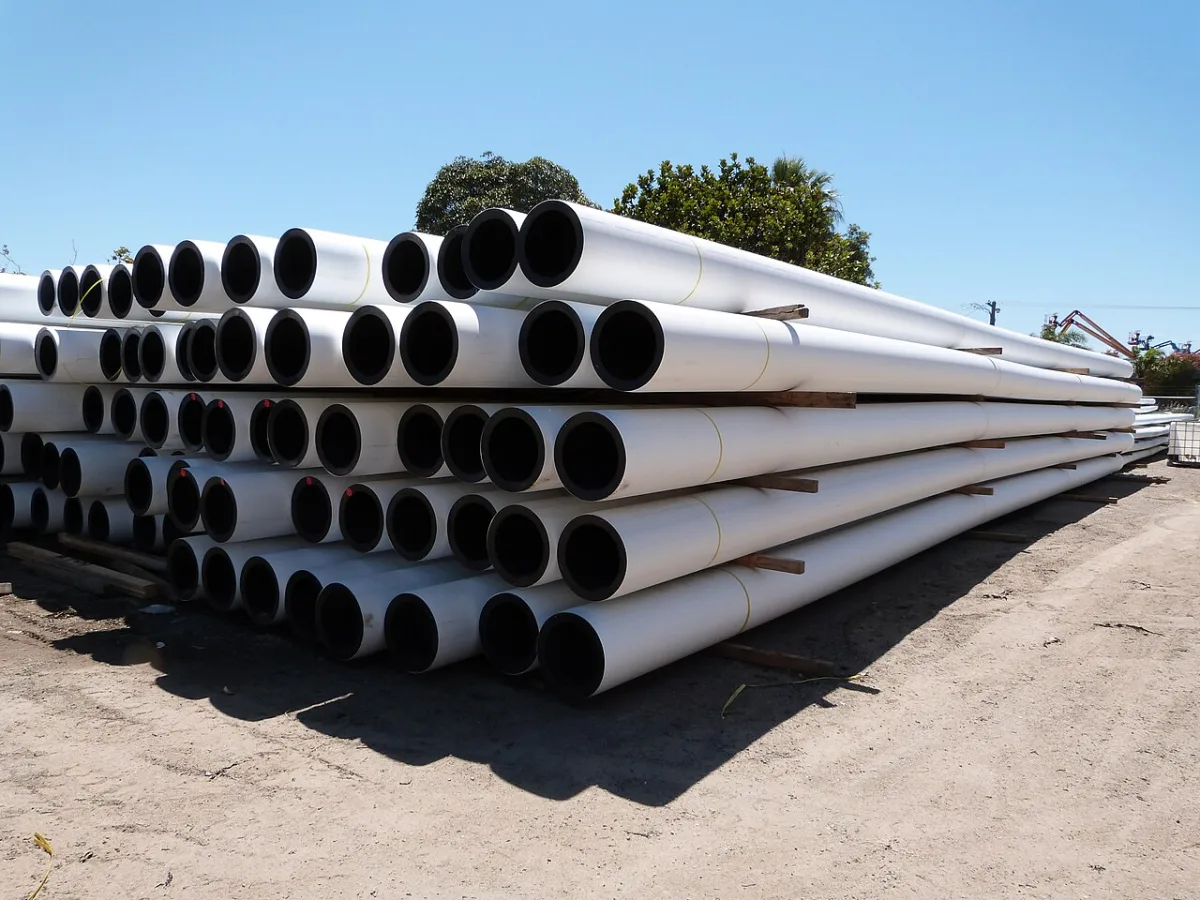
A hotbed made of plastic pipes is one of the simplest and quickest structures to build for protected ground. The arched frame can be assembled by two people in just a few hours. Unlike rectangular structures, the arched shape does not require complex calculations or the installation of numerous stiffening ribs.
- Rebar thickness — 12 mm
- Height of rods above ground — 80 cm
- Rebar driving depth — 70 cm
- Maximum spacing between arches — 1 m
- Polycarbonate thickness — 6 mm
- Covering sheet overlap — 10 cm
A large number of joints weakens the plastic frame. Self-tapping screws can be used to join the elements, but it is better to use a specialized soldering iron — this will ensure maximum tightness and strength of the connection.
- Prepare a strip foundation. Cut the plastic pipes using an angle grinder or a hacksaw for metal according to the drawing. On a flat surface, assemble the gables and install them on the foundation.
- Assemble the door. To do this, prepare 3 transverse components up to 90 cm wide, 2 vertical components up to 2.1 m high, two tees, and four elbows. Attach the hinges to the side post. Make the door opening approximately 1 cm wider than the door itself.
- Outside the foundation, drive 12 mm thick rebar rods into the ground to a depth of 70 cm. The height of the rods above ground level should be about 80 cm, and the distance between them should not exceed 1 m.
- Prepare pipes to the length of the arch. Put one end of the pipe onto the driven rebar rod, bend it into an arch, and secure the other end on the opposite pin. Install all the arches in this manner.
- For stability, secure the pipe ends to the foundation with galvanized brackets. Connect the arches with longitudinal plastic pipes using clamps: run one strictly along the center of the arch, and two more along the sides.
- Mount the ventilation vents, assembled according to the scheme, into the frame.
- Cover the frame with cellular polycarbonate 6 mm thick. Lay the sheets with a 10 cm overlap, secure them with self-tapping screws with washers, and trim the excess with a utility knife. At this stage, you will need an assistant to hold the sheet while it is being bent.
Metal profile frame for year-round use
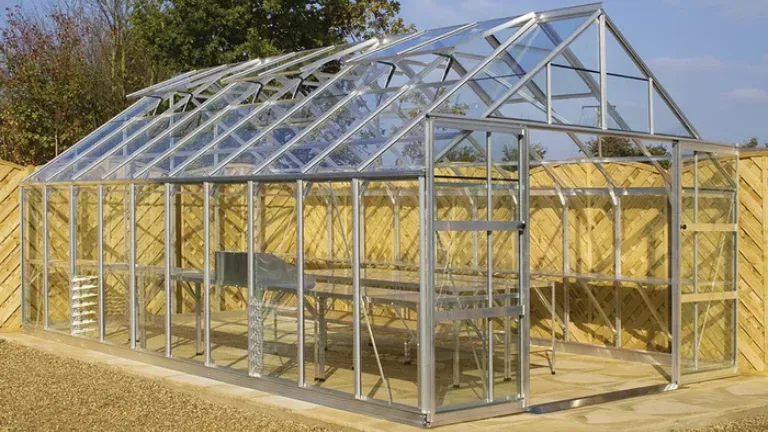
To create rigid and durable structures, metal profiles are used. In most regions, such greenhouses are used for spring-summer crop cultivation. However, in southern regions, a sturdy metal frame covered with polycarbonate allows for setting up a year-round greenhouse.
For the construction of a capital structure with a gable roof and vertical walls, a 6x27 profile is used. The frame sections are positioned at a distance of 100 cm from each other. When covering, polycarbonate sheets are laid with a 3 cm overlap, and all connecting seams must be treated with a special sealant. For ventilation of a small greenhouse, it is sufficient to install one transom on the end wall.
Metal profiles can deform under the weight of snow. In regions with heavy snowfall, it is impractical to build such greenhouses.
To increase the stability and load-bearing capacity of a metal greenhouse, experts recommend using a reinforced profile with a thickness of 0.6 mm.
Read next
Greenhouses and covers For gardeners
DIY construction of a polycarbonate and plastic pipe greenhouse
Greenhouses and covers For gardeners
DIY construction of greenhouses from window frames and metal profiles
Greenhouses and covers For gardeners