
Technological processes and breeding methods in modern fish farming
13 min read
Fish are a primitive yet highly diverse group of animals that emerged in water basins 440 million years ago and remain a valuable food source for humans to this day. In different countries, fish accounts for 17 to 83% of the human diet. Its high energy value, content of high-quality proteins, unsaturated fatty acids, mineral substances, and the preparation of gourmet fish products have sparked well-deserved human interest and led to the creation of an entire industry – fish farming. Currently, a complex of production processes and techniques for breeding fish in artificial conditions is being developed and improved, and equipment and breeding techniques for intensive industry management are being created.
Objective: to study the fundamental technological processes in fish farming with the goal of obtaining biologically complete, human-safe fish products.
Task 1. Study the modern systematics of fish.
Classes: Cephalochordata, Cyclostomata, Chondrichthyes, Osteichthyes
Subclasses: Myxini, Petromyzontida, Elasmobranchii, Holocephali, Sarcopterygii, Actinopterygii
Task 2. Describe the characteristics of various fish species.
Task 3. Study the production processes in fish farming.
1) Breeding and selection work – a complex of measures to improve the economically useful qualities of fish by modifying genetic properties and developing more productive breeds adapted to living in specific conditions, characterized by high product quality. The following facilitate breeding: high fecundity, external fertilization, and rapid growth.
Challenges of breeding: conducting complex experiments; creating standard environmental conditions for evaluating results; individual record-keeping; difficulty in maintaining material purity given the high fecundity of fish.
Breeding and selection methods in fish farming: crossbreeding and artificial selection.
Table 1 – Main types of crossbreeding in fish selection
Reproductive, Introductory, Absorptive, Alternative
Table 2 – Standard indicators for broodstock formation in trout by body mass, kg
Two-year-olds 0.5–0.7 – – Three-year-olds – 1.2–1.5 0.8–1.0 Four-year-olds – 1.5–2.0 1.2–1.5
Table 3 – Selection of broodstock by age
No. Female age, years Male age, years
5 9 5–6–7–8
6 10 5–6–7–8–9
Table 4 presents data on the average fecundity of fish farming subjects.
Table 4 – Average fecundity of fish farming subjects, thousand eggs Fecundity Fecundity Atlantic salmon 9.8 Russian sturgeon 240.0 Freshwater salmon 4.0 Siberian sturgeon 200.0 Steelhead salmon 1.5 Beluga 550.0
Rainbow trout 3.5 Kaluga 500.0
Brown trout 10.0 Sevruga 150.0
Pink salmon 1.8 Sterlet 40.0
Coho salmon 3.5 Inconnu 150.0
Chinook salmon 7.0 Nelma 180.0
Arctic char 3.5 Carp 220.0
Common whitefish 40.0 Vimba bream 20.0
Peled 19.0 Grass carp 500.0
Muksun 35.0 Silver carp 500.0
Vendace 10.0 Bream 110.0
Omul 11.0 Pike-perch 250.0
Table 5 provides data on the storage time and fertilizing capacity of eggs for various fish species. Table 5 – Time for maintaining fertilization capacity of eggs for various fish species
Russian sturgeon 2–3 h – 18–20
Rainbow trout 2–3 days 8 days 0.9–1.0
Grass carp – 1.5 h 10–11
Silver carp – 0.5 h 10–11
Carp 1h 1.0–1.5 h 24
Mature individuals – when their eggs and sperm are suitable for fertilization.
Females have a soft abdomen; eggs are released upon pressure.
Males have changed coloration, body shape, pearl tubercles, etc.; drops of sperm are released upon pressure on the abdomen. Different numbers of eggs are obtained from females during the spawning period.
In artificial fish breeding, it is important to know the duration of egg viability for fertilization.
To obtain high-quality sexual products from broodstock and females during artificial fish rearing, the following methods are used:
– ecological – regulation of temperature, water flow, and light exposure.
Figure 1 – Performing hormonal stimulation of broodstock
Joint maintenance of females and males during spawning.
a) Stripping – 5–6 females' eggs are stripped into an enameled or plastic container (no more than 3 l), then carefully transferred to another container and fertilized.
b) Vital surgical extraction – via cesarean section or by incising the oviduct.
Figure 2.1 – Collecting sexual products via cesarean section Figure 2.2 – Collecting sexual products via oviduct incision c) Dissection – more common in large sturgeon; they are killed, hung up, and the abdomen is cut open by 20–30 cm.
d) Combined – the main portion of sexual products is stripped, and the remainder is obtained by incising the abdomen.
Egg fertilization – the fusion of sperm with eggs
1) Wet – sperm mixed from 3–5 males is added to a container with water and eggs, gently stirred for 2–3 minutes, then rinsed and left to swell.
2) Semi-dry – previously diluted mixed sperm with water is then mixed with the eggs.
3) Dry – eggs are placed in a dry mixture, sperm is added and thoroughly mixed, after which water is poured in (for salmonids, whitefish, and cyprinids).
Preparation of fertilized eggs for incubation – de-adhesion and preventive treatment to prevent fungal diseases.
De-adhesion of eggs is done manually or using various devices with the use of chalk, talc, skimmed milk, silt, potato starch, or vegetable oil.
Figure 3.1 – Modern tray incubators Figure 3.1 – Incubation cabinets
Degummed eggs are washed in water and incubated on artificial spawning grounds or in special devices located in natural water bodies.
Figure 4 – Schemes of artificial spawning grounds: Fish egg incubation apparatus a – at the bottom of a water body outside the water body by factory method b – in the water column a – Sesgrin apparatus,
Maintaining the temperature regime is important for egg incubation.
and duration of fish embryogenesis water Russian sturgeon 12–20 5–10 105–130 Siberian sturgeon 14–18 5–9 110–145 Beluga 10–17 5–14 120–150 Starry sturgeon 16–22 4–6 95–130 Sterlet 13–16 5–7 85–110 Pink salmon 7–12 45–210 450–750 Chum salmon 1–8 80–195 360–780 Freshwater salmon 2–8 160–220 340–400 Rainbow trout 6–10 30–40 340–410 European vendace 0.3–1.0 155–175 135–170 Peled 0.2–0.8 180–195 145–185 Omul 0.5–0.8 160–200 170–210 Whitefish 0.4–1.0 160–200 155–200 Bighead carp 22–25 1–1.5 35–40 Inconnu 1.1–2.0 145–155 160–220 Carp 18–22 3–4 60–80 Grass carp 22–23 1.5 35–40 Black carp 22–26 1.0–1.5 35–40
The duration of embryogenesis is influenced by temperature and light regime. Table 7 – Duration of trout embryogenesis depending on water Russian sturgeon 12–20 5–10 105–130 Siberian sturgeon 14–18 5–9 110–145 Beluga 10–17 5–14 120–150 Starry sturgeon 16–22 4–6 95–130
Sterlet 13–16 5–7 85–110 Pink salmon 7–12 45–210 450–750 Chum salmon 1–8 80–195 360–780 Freshwater salmon 2–8 160–220 340–400 Rainbow trout 6–10 30–40 340–410 European vendace 0.3–1.0 155–175 135–170
Peled 0.2–0.8 180–195 145–185 Omul 0.5–0.8 160–200 170–210 Whitefish 0.4–1.0 160–200 155–200 Bighead carp 22–25 1–1.5 35–40 Inconnu 1.1–2.0 145–155 160–220 Carp 18–22 3–4 60–80
Grass carp 22–23 1.5 35–40 Black carp 22–26 1.0–1.5 35–40
Nursery plant material – refers to larvae, fry, fingerlings, yearlings, and two-year-old fish.
During the larval period, the development of young fish outside the egg membrane varies among different fish species. It is important to consider temperature, water volume, oxygen saturation, and light regime. Various equipment is used for rearing larvae.
Methods for rearing juveniles are presented in Table 8.
Advantages Disadvantages Application 1. Rearing juveniles in natural conditions in separate, suitable sections of a water body Is the simplest and cheapest, requires no costs for preliminary preparation of the water body Juveniles are not protected from predators, depend on the state of the aquatic environment, high mortality rate observed Used for rearing Pacific salmon 2. Rearing in specially adapted natural water bodies (lakes)
Based on the use of self-renewing feed resources. Juveniles are protected from predators Complexity of managing some biotechnological processes, especially during control measures and harvesting of juveniles Widely used for rearing whitefish and salmonids 3. Rearing in specially built or adapted pond-type water bodies Juveniles are protected from predators, stocking density can be controlled, and food supply can be regulated. Large areas are required and ensuring they have the appropriate water regime. Additional costs for purchasing feed and water aeration, as well as prevention of fish diseases Use for rearing carp and herbivorous fish species. Possibility of applying intensive technologies that allow significantly increasing productivity and output of nursery plant material 4. Rearing in factory conditions using special installations and pools Full control of all fish farming processes is ensured. Use of artificial feed and high stocking densities allows for the maximum possible volumes of nursery plant material High costs for ensuring all necessary conditions (temperature and oxygen regimes, water quality, aeration, removal of metabolites, etc.). Used for all fish species
As they grow, fish are sorted by manual, semi-automatic, or automatic methods: when juveniles reach 0.5–1 g; 3–5 g; 15–20 g, and then 2 times per season.
When sorting, indicators of fish etiology are taken into account:
– appearance of small hemorrhages on the surface of the body;
– ulcers on certain parts of the body or fins;
– impairment of coordination of movements (circular motion);
Feeding of fish is the main method of intensifying commercial fish farming, which makes it possible to increase the yield of products per unit area.
Feeding rates for different species and rearing temperatures, mixture compositions, and feeding regimes have been developed.
Optimal feeding regimes (frequency) have been developed depending on the fish weight and water temperature for commercial rearing. When rearing fish, the size of granules and pellets matters, depending on the size of the fish. Failure to comply with requirements may result in slowed growth, increased feed costs, blockage and injury to the esophagus. The economic and zootechnical feasibility of fish farming depends on the organization of feeding.
Table 9 – Daily feeding rate for larvae and trout fry with starter feeds, % of body weight (M. A. Shcherbinina, E. A. Gamygin, 2006) water, ºC Up to 0.2 0.2–0.5 0.5–2 2–5 5–10
2 3.7 3.2 2.5 1.8 1.5
4 4.2 3.7 2.9 2.1 1.8
6 4.8 4.3 3.3 2.5 2.2
8 5.7 5.0 3.8 2.9 2.6
10 6.5 5.9 4.4 3.4 3.0
12 7.5 6.9 5.2 4.1 3.5
14 8.6 7.8 6.1 4.7 4.1
16 9.4 8.3 6.7 5.3 4.8
18 9.8 8.7 7.4 5.7 5.2
20 9.0 8.1 6.5 5.1 4.4
The composition of water, where fish constantly live, contains many different organisms that cause diseases and reduce the quality of production, pathogens of various diseases..
Despite the multi-stage fish protection system (in blood, lymph, muscles, skeleton – immune substances, complex systems, C-reactive proteins, leukocytes), the following are encountered:
a. Infectious diseases – viral hemorrhagic septicemia; spring viraemia of carp; viral encephalopathy and retinopathy; infectious salmon anemia; furunculosis; vibriosis.
b. Invasive (parasitic) diseases – protozoal; ichthyophthiriasis, trichodiniasis, ichthyobodosis, chilodonellosis, trichodiniasis, apisomosis;
Helminths: flatworms, tapeworms, roundworms, and annelids.
Mycoses: pathogens are fungi – saprolegniasis, ichthyosporidiosis, branchiomycosis, candidiasis, etc.
c. Non-contagious diseases – gas bubble disease, branchionecrosis, nutritional diseases (avitaminosis), liver degeneration.
– maintaining fish farming hygiene, cleanliness and order of equipment and water;
– cleaning and washing inventory and equipment when moving them to other farms;
– isolating ponds from livestock animals by constructing vertical walls, sheeting, and nets;
– observing sanitary and veterinary measures on fish farms.
Assignment 4. Study the specifics of pasture, lake, pond, and cage fish farming.
Based on organization and technology methods, modern fish farming includes the following sectors: pasture, pond, cage, and industrial.
Pond fish farming is a sector of modern aquaculture, accounting for > 500 enterprises in the Russian Federation and utilizing 110,000 ponds.
– production-related: spawning, fry, nursery, overwintering, grow-out, and broodstock ponds;
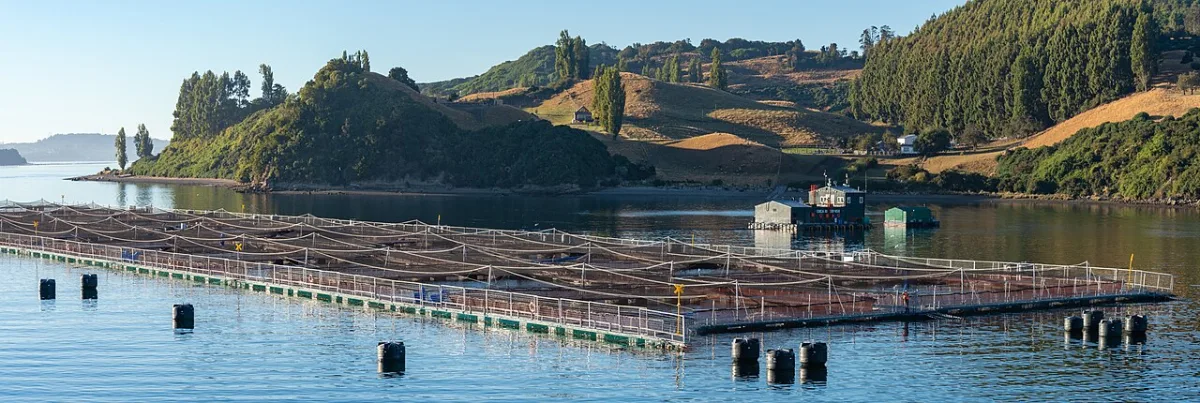
Cage fish farming has developed in the water areas of lakes, reservoirs, sea bays with clean water, as well as near NPPs, PSPPs, TPPs, etc.
Lakes, rivers Thermal (TPP, NPP) Bays, coves
Assignment 5. Get acquainted with the specifics of managing industrial and commercial cage fish farming.
1) rearing fish with high stocking density;
4) application of mechanization and automation of production processes;
Zoohygienic and technological standards for industrial fish farming have been developed.
Schemes for organizing the production cycle of cage farms have been developed, ensuring a rapid turnover of funds.
Currently, farm-based fish farming is developing due to small business support programs, which is important for saturating the domestic food market.
Example of calculating costs for organizing a commercial fish farm with an 18-month production cycle for 100 tons of product (in 2009 prices)
Option 1. Stocking material with a weight of 10 g is raised to an average market size of 1200 g.
Farm project development – 150,000 rub.
3. 10 cages at a price of 64,000 rub./unit – 640,000 rub.
Need for stocking material – 850 kg at a price of 0.23 EUR/unit (985 rub./kg) – 837,250 rub.
Customs clearance of stocking material (35%) – 293,037 rub.
Need for feed for year 1 (at FCR = 1.0) – 16,150 kg at a price of 60 rub./kg – 5,590,200 rub.
Need for feed for year 2 (at FCR = 1.1) – 92,400 kg at a price of 60.5 rub./kg – 5,590,200 rub.
Wage fund for 9 people for 18 months – 2,232,000 rub. (1 manager – 30,000 rub./month, 1 accountant-economist – 15,000 rub./month, 1 chief fish culturist – 15,000 rub./month, 2 fish culturists – 12,000 rub./month, 4 auxiliary workers – 10,000 rub./month).
Other expenses (average 15% of costs from items 1–8) – 1,636,723 rub.
Option 2. Stocking material with a weight of 200 g is raised to an average market size of 3000 g.
Farm project development – 150,000 rub.
3. 10 cages at a price of 64,000 rub./unit – 640,000 rub.
Need for stocking material – 7000 kg at a price of 4.9 EUR/kg (215 rub./kg) – 1,505,000 rub.
Customs clearance of stocking material (35%) – 526,750 rub.
Need for feed for year 1 (at FCR = 1.1) – 38,500 kg at 60 rub./kg – 2,310,000 rub.
Need for feed for year 2 (at FCR = 1.2) – 73,440 kg at 60.5 rub./kg – 4,443,120 rub.
Wage fund for 9 people for 18 months – 2,232,000 rub.
Revenue from the sale of market fish, 100 tons at a price of 150 rub./kg – 15,000,000 rub.
Read next
Fish farming For students
Technology of artificial fertilization and de-adhesion of carp fish eggs
Fish farming For students
Biological characteristics and classification of fish and cyclostomes
Fish farming For students