
Vladimir Vernadsky's doctrine of the biosphere and the evolution of living matter
16 min read
The study of Earth's biosphere is one of the greatest and most interesting generalizations of modern natural science. It serves as the scientific foundation for researching natural objects and applying a complex approach when organizing modern production.
Earth is often compared to a spaceship, and humans to its passengers. In the vast reaches of space, in the part of the Universe known to us, only Earth is a planet of life. And only on it can people live. The life support system for them is the biosphere — the realm of existence of living matter, a collection of living organisms.
The cradle of Homo, the basis of his physical and spiritual development, the source of all natural resources — all of this is the biosphere. And in understanding the laws of its evolution and organization lies the key to the rational transformation by human labor and social thought.
The greatness of V.I. Vernadsky lies in the fact that he was the first to understand and scientifically substantiate the unity of man and the biosphere.
Vladimir Ivanovich Vernadsky (1863-1945) was a prominent domestic scientist, mineralogist, and crystallographer, one of the founders of geochemistry and biogeochemistry. His main ideas regarding the biosphere problem were formed at the beginning of the current century: he presented them in lectures in Paris. In 1925, V.I. Vernadsky's article "The Course of Life in the Biosphere" appeared, and in 1926, the book "The Biosphere" was published. Later, V.I. Vernadsky repeatedly examined various aspects of the doctrine in articles and in a large monograph, published only 20 years after his death, titled "The Chemical Structure of the Earth's Biosphere and Its Surroundings."
Let us consider some of the most fundamental principles of V.I. Vernadsky's doctrine of the biosphere.
At the heart of the doctrine lies the concept of the planetary geochemical role of living matter in the formation of the biosphere as a product of the long-term transformation of matter and energy in the course of the geological development of Earth.
First of all, V.I. Vernadsky defined the space covered by Earth's biosphere.
The biosphere (from Greek *bios* life, *sphaira* globe) is the shell of the Earth in which the life of diverse organisms develops, inhabiting the land surface, soil, lower layers of the atmosphere, and the hydrosphere.
Being a person scrupulous in matters of scientific ethics, V.I. Vernadsky repeatedly reiterated that the term "biosphere" did not belong to him, that it was first used at the beginning of the last century by the French biologist J.-B. Lamarck, who developed the first evolutionary concept. A specific geological meaning was given to the term "biosphere" in 1875 by the Austrian scientist E. Suess. However, the complete doctrine associated with this term was created by V.I. Vernadsky.
Planet Earth is characterized by the presence of three surface geospheres — the hydrosphere, lithosphere, and atmosphere.
The hydrosphere, or the water shell of the Earth, is represented by oceans, seas, lakes, rivers, and artificial reservoirs. The water shell covers about 71% of the Earth's surface; the greatest depth in the western part of the Pacific Ocean reaches 11.5 km (Mariana Trench).
The lithosphere, or Earth's crust, is the outer solid shell of the globe with a thickness of up to several tens of kilometers.
The atmosphere, or air shell, consists of several layers: the troposphere, up to 15 km in altitude above the Earth's surface; the stratosphere, with the ozone screen, extending up to 100 km in altitude; and the ionosphere, representing a layer of rarefied gas, reaching up to 500 km in altitude.
The biosphere encompasses, therefore, the upper part of the lithosphere (up to 15 km in depth), the entire hydrosphere, and the lower part of the atmosphere (the troposphere and the lower layers of the stratosphere, up to 25 km in altitude). Consequently, as a whole, the biosphere represents a layer of life distribution with a vertical thickness of about 40 km, although the actual boundaries of the spread of living matter are more restricted.
The biosphere has a mosaic structure, composed of ecosystems, which represent a miniature model of the biosphere. The biosphere itself is a global ecological system.
The collection of living organisms inhabiting the biosphere is called living matter by V.I. Vernadsky. The recurring theme throughout the doctrine is the idea that living matter is a function of the biosphere, and the biosphere is the result of the development of living matter.
In any ecosystem, living matter is represented by three groups of organisms: 1) autotrophs (producers) — self-feeding (from Greek *trophe* feeding, *autos* self; from Latin *producens* producing).
These are plants that use light energy to produce all complex organic compounds of their bodies from simple inorganic ones present in the environment; 2) heterotrophs (consumers) — feeding on other beings (from Greek *heteros* other; from Latin *consumo* consuming).
These include the most diverse creatures — from protozoa to mammals, including humans. Animals that feed directly on producers are called primary consumers. They themselves are consumed by secondary consumers. There are consumers of higher orders, with some species corresponding to several such levels. Primary consumers are called herbivores, or phytophages. Consumers of the second and higher orders are carnivores; 3) mixotrophs (reducers) — those that decompose living matter (from Greek *mixis* mixing; from Latin *reductio* return).
These organisms (primarily bacteria, fungi, and protozoa) decompose organic residues into mineral substances during their vital activities.
The total mass (biomass) of living organisms is estimated to be approximately 2.4 × 10¹² t.
In addition to living matter, Vernadsky distinguished 3 other categories of substances, totaling 4: 1) living matter; 2) biogenic substance — matter originated from living organisms (coal, oil, peat, chalk); 3) bio-inert substance — inorganic matter transformed by organisms (soil, sedimentary rocks); 4) inert substance — all that had no connection to living organisms (solidified lava, volcanic ash).
The energy balance of the biosphere and environments of life
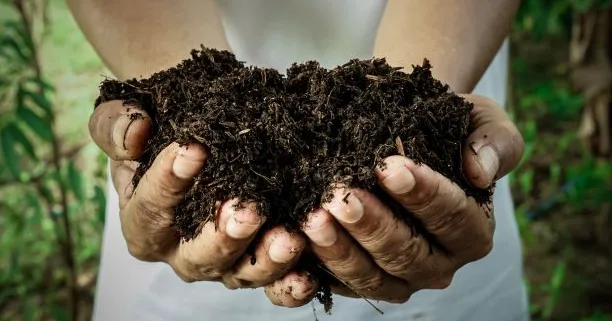
Within the biosphere, there are four environments of life: two abiotic (water and air), one bio-inert (soil), and one living (the organism). For agronomic practice, the soil is of key importance — it is a bio-inert body where the non-living mineral base continuously interacts with living organisms. All inhabitants of these environments are divided into monobionts (living in one environment), dibionts (in two environments), and polybionts (having mastered three or four environments).
The number of organisms and the rate of their development in any ecosystem depend on the volume of incoming energy and the intensity of substance circulation. The biosphere is an energetically open system that constantly absorbs energy from the external environment. The flux of sunlight is captured by the molecules of living cells and converted into the energy of chemical bonds. During photosynthesis, the created chemical substances are sequentially transferred from plants to herbivorous animals, and then to carnivorous organisms of the first, second, and subsequent orders.
The transfer of energy in ecosystems strictly follows the laws of thermodynamics. A portion of the potential chemical energy of food is expended by the organism to carry out vital functions, and a portion is inevitably lost as heat, increasing entropy — a measure of the system's disorder. To prevent maximum entropy and the death of the system, organisms must extract negative entropy (negentropy) from the environment, working against the gradient. This process is based on autotrophic plant nutrition: during photosynthesis, the orderliness of mineral and degraded organic substances increases at the expense of solar energy.
- Environments of life in the biosphere — 4 (water, air, soil, organism)
- Age of the Earth — more than 4.2 billion years
- First traces of life — about 3 billion years ago
Soil belongs to bio-inert environments: processes within it depend both on the mineral base and on the incoming solar energy, which plants bind during photosynthesis and pass further along the food chain.
Stages of biosphere evolution and the formation of the first organisms
Over billions of years of its existence, the biosphere has traveled a complex evolutionary path. Sedimentary rocks have preserved a clear sequence of strata with characteristic fossil remains. The Cretaceous and Carboniferous layers got their names from the predominant rocks, while the Jurassic, Devonian, Permian, Cambrian, and other systems were named after the localities where they were first described. The study of the radioactive decay of uranium and its transformation into lead (the radio-geochronological method) allowed for the determination of the start and duration of geological periods. The oldest rocks have been found in Siberia and Australia, and the total age of the Earth is slightly more than 4.2 billion years.
The emergence of life on Earth is viewed as an empirical generalization and a process of cosmic scale. At the stage of planetary formation, substance from carbonaceous chondrites arrived from space, rich in water and organic compounds — nucleotides, amino acids, and porphyrins, which constitute the nuclei of chlorophyll molecules. This facilitated the formation of the hydrosphere and ensured a high initial concentration of organic matter in primary water bodies.
The first traces of life were recorded in lithosphere layers formed about 3 billion years ago. According to a common hypothesis, the synthesis of complex organic molecules (amino acids) was preceded by their formation from methane, ammonia, hydrogen, and water vapor under conditions of high temperatures, ultraviolet radiation, and volcanic activity. The uneven distribution of these substances in water led to the precipitation of coacervates — primary colloidal clusters.
Coacervates became the first pre-biological systems, possessing the following properties:
- the ability to divide;
- selective absorption of substances from the surrounding solution;
- the disposal of unnecessary compounds.
These properties formed the basis for metabolism, energy transfer, and information transfer. As a result of a qualitative leap, coacervate droplets gained the ability for self-replication and turned into the simplest living organisms. The primary stage of biosphere development was characterized by the appearance in the hydrosphere of unicellular prokaryotes (non-nucleated organisms), which then differentiated in several directions:
- into unicellular and multicellular organisms;
- into plants and animals;
- into male and female individuals;
- into producers, consumers, and decomposers.
The gradual increase in the amount of oxygen in the water due to the vital activity of organisms and its diffusion into the atmosphere made the rapid spread of life and the development of eukaryotic (possessing a defined nucleus) cells possible, which led to the evolution of more complex living systems.
| Oxygen content in the atmosphere | Approximate period |
| 3–4 % | 1 billion years ago |
| 8 % | 700 million years ago |
Approximately 600 million years ago, an evolutionary explosion of new life forms occurred, such as sponges, corals, worms, mollusks, seaweeds, and others. Thus, for a long period (3500 – 400 million years ago), water was the main medium of life, and evolution within it reached higher plants and vertebrate animals.
The second stage of biosphere evolution can be considered the appearance of parasites (temporary harmful cohabitants) and symbionts (permanent beneficial cohabitants) in aquatic organisms. This led to the formation of a second medium of life — the organism. The phenomenon of symbiocenosis (and parasitocenosis) continued to develop with the emergence of new media of life (air, soil).
Some "cohabitants" entered into such close relationships with the "host" that they became peculiar "organs" of its body. For example, humans receive vitamin B1 from *E. coli*. It is known that in a number of cases, if there are no symbionts, immunity does not develop.
The third stage of biosphere evolution is the emergence of organisms from the aquatic environment onto land, where, under their direct influence, new media of life were formed — air and soil. About 400 million years ago, two phases of the Caledonian tectonic cycle took place, associated with the exposure of large areas of shallow marine waters. Organic residues of marine organisms were, apparently, the primary basis upon which first amphibians and then terrestrial forms of plants could appear.
The move of plants to land was a true revolution in the history of the biosphere, as the development of an oxidizing atmosphere as a result of photosynthesis contributed to the emergence of multicellularity, ensured the move of life to land, and caused the appearance of minerals in an oxidized form. Soil formation changed the structure of the planet's surface layer, creating conditions for the vigorous development of vegetation. This created the prerequisites for various animals to move to land.
Fossil remains from this period already include:
- scorpions;
- mites;
- insects.
The formation of terrestrial vertebrates began. Some amphibians acquired the ability to reproduce outside of water. The first reptiles appeared. Insects began to conquer the aerial environment.
| Time period ago | Event |
| 190 - 230 million years | Explosive development of reptiles (age of dinosaurs) |
| 190 million years | Appearance of the first mammals, birds |
Thus, about 400 - 350 million years ago, four media of life were formed in the biosphere, which exist to this day: water, soil, air, and the organism. Throughout the subsequent history of the Earth, these media of life developed, their chemical composition was enriched, and new inhabitants emerged.
Of particular importance in the evolution of living matter was the transition from asexual to sexual reproduction and the appearance of live birth. The fourth stage of biosphere evolution should be considered the appearance of live birth in animals, which led to the emergence of a fundamentally new type of dybiontic organisms: those developing in special organs of the mother's body before birth, and leading a free life in water, air, or soil after birth.
Over the last million years, humans have appeared in the biosphere, bringing fundamental changes to the course of its further development. Therefore, the fifth stage of biosphere evolution should be considered the social stage, when humans evolved from an ordinary biological species into biosocial beings.
At this stage of biosphere evolution, developing humans increasingly enter into various biocenoses and ecosystems. They exterminate some species, domesticate and cultivate others, and create new cultivars of plants and breeds of animals. From the very beginning of their rational existence, humans have been characterized by a lack of reason in relation to nature.
Today's period of biosphere development, often referred to as the technosphere, sets tasks for the urgent adoption of environmental protection measures:
- introduction of low-waste technologies;
- closed-loop water supply;
- rational nature management.
The sixth stage of biosphere evolution is associated with its transition, under the influence of human rational activity, into the state of the noosphere (the sphere of Reason). The development of life (biogenesis), according to V.I. Vernadsky, will follow the path of the development of reason (noogenesis).
In connection with the development of society and the intensification of its negative impacts on the biosphere, especially with the onset of the era of the scientific and technological revolution, which brought the biosphere to a state of global ecological crisis, the transition of the biosphere to the noosphere has been postponed indefinitely. The technosphere should not be considered a separate stage of biosphere development, but merely the result of human impact on the environment in the conditions of modern society's development, which delays the transition to the noosphere.
It should be noted that preventing environmental change is impossible, just as it is impossible to stop the progress of human society. Obviously, it is necessary to manage the processes of interaction between man and the biosphere in such a way that they are mutually beneficial and that the development of society does not lead to the degradation of the biosphere.
V.I. Vernadsky, in particular, held the idea of the possibility of transforming human society from a heterotrophic category into a socially autotrophic one. In this case, the concept of autotrophy means the relative independence of man from the products created by the biosphere. By virtue of its biological characteristics, man cannot transition to autotrophic assimilation, but society is capable of implementing the so-called autotrophic method of production activity, which implies:
- the replacement of high-molecular natural compounds with low-molecular ones.
The idea of autotrophy is attractive because such functioning of society could be minimally associated with the disruption of the natural environment.
The further development of the biosphere and its transformation into the noosphere cannot be a spontaneous process, but requires clear management; with spontaneous development of the biosphere, catastrophic changes are likely due to the emergence of irreversible processes and substances detrimental to all living things. To manage the process of biosphere development, correct ideas about the very processes of its development are necessary. The key here is the question of theoretical understanding of the nature of the global environmental crisis.
Academician of the Russian Academy of Sciences N.N. Moiseev, based on empirical generalizations, presented a version of the vision of the evolution of the Universe — universal evolutionism. The approach adopted by N.N. Moiseev dates back to V.I. Vernadsky, who in his work "On the State of Space in Geological Phenomena. Against the Background of the Growth of Science of the 20th Century" (1943) provided a descriptive model of the world in the form of a system:
| Three Great Principles | Twenty empirical generalizations |
Projecting the proposed evolutionary-bifurcation mechanism of the evolution of the Universe onto human society, N.N. Moiseev defines environmental crises as a state of bifurcation in the development process of humanity and, as a whole, the biosphere. According to N.N. Moiseev, the evolutionary-bifurcation process of humanity's interaction with the biosphere is, in essence, the driving force of the historical process.
In this regard, N.N. Moiseev introduces the concept of an optimally organized society, that is, a society in a state of equilibrium with the biosphere. Due to the spontaneity of the development process, based on mutagenesis, the technology of the functioning of an "optimal" society over time becomes "overgrown" with principles that deform it and push society toward a state of bifurcation (explosion, revolution, non-stationarity), from which humanity emerges to a new level of structural and functional complexity of the social organism, to a new level of human intelligence.
Turning to the consideration of the current state of the global community, N.N. Moiseev defines the market mechanism of economic management as obsolete, even in its "corrected, improved" form, as it is presented by the creators of the sustainable development concept. The maximum that the implementation of this concept can yield is to delay the "time of turbulence" of the next bifurcation state, the consequences of which are unpredictable and in any case catastrophic.
The main chance for the global community to once again successfully emerge from the environmental crisis, without allowing it to develop to the "apogee of bifurcation," is seen by Academician N.N. Moiseev in the urgent formation by humanity of a system of environmental taboos — environmental imperatives that block the development of the Global environmental crisis.
Today, the potential level of the Collective Intelligence of humanity, according to N.N. Moiseev, allows for the formation of the aforementioned system of environmental imperatives in the foreseeable future. This is indicated by a number of key events and initiatives:
- the unprecedented nature of the UN Conference on Environment and Development in Rio de Janeiro (1992);
- initiatives of various environmental movements, similar to those of the "Friends of the Earth" movement in the Netherlands, which outlined a system of measures to prevent the Netherlands from exceeding limit standards for biosphere pollution and the consumption of non-renewable resources.
This is facilitated by the rapidly increasing power of the information-analytical component of Collective Intelligence in connection with the development of computer technology and informatics.
The situation is less inspiring regarding the spiritual component of humanity, N.N. Moiseev notes. In this regard, he draws attention to the vast spiritual resource of humanity's "life standards" — the Old and New Testaments, and the foundational documents of the world religions of the East.
Of course, N.N. Moiseev's point of view on the processes in the biosphere provides an idea of only one of the variants of the model of these processes during the transitional period of Earth's evolution — from the biosphere to the noosphere. But, being presented here even in the most general terms, it provides an idea of the unity and interconnectedness of processes in inanimate and living nature, in the intellectual and spiritual spheres, and of the ambiguity of today's answer to the question of whether humanity can manage processes in the biosphere.
Read next
Ecology For students
Biogenic carbon cycle in the biosphere and anthropogenic impact
Ecology For students
Food web energetics and productivity of natural ecosystems
Ecology For students