
Homeostasis and succession in the development of natural and anthropogenic ecosystems
5 min read
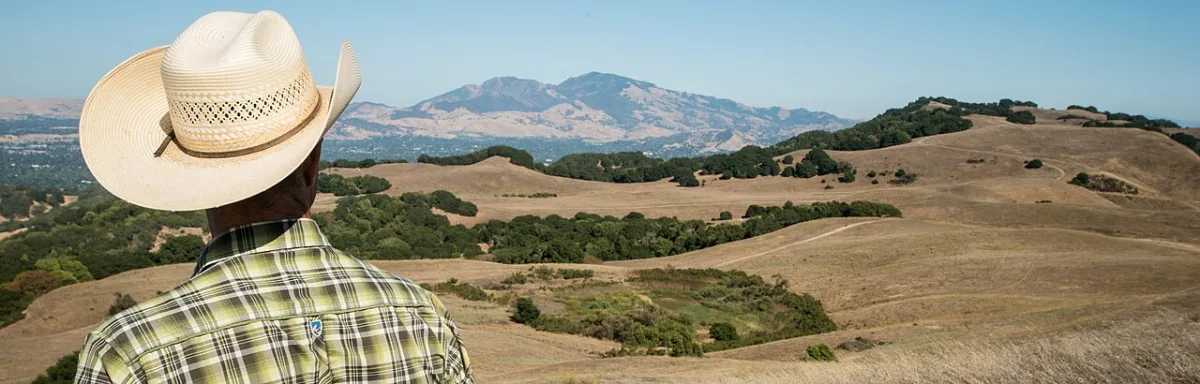
Natural ecological systems (forests, steppes, water bodies) have existed for tens, hundreds, and more years, i.e., they possess a certain stability in time and space. Maintaining the stability of a system requires a balance of substance and energy flows, and of metabolic processes between organisms and their environment. Of course, no ecosystem is absolutely stable or static. The population numbers of some animal and plant species may periodically increase, while others decrease. Such processes have more or less regular periodicity and, on the whole, do not shift the system out of equilibrium.
The state of dynamic equilibrium of an ecosystem is called homeostasis (homeo means same, stasis means state). Homeostatic capacity is a crucial condition for the existence of any ecological system, although its signs and patterns are not identical in different communities.
For example, in a natural ecosystem, homeostasis is maintained by the fact that such a system is open, i.e., it continuously receives information from the environment: plants continuously receive solar energy and a mass of chemical substances.
The situation is different with an anthropogenic ecological system; it cannot be considered open. For example, a wastewater treatment system — an aeration tank. When substances contained in wastewater enter the aeration tank, they are adsorbed by the surface of the activated sludge, i.e., flocculent clusters of bacteria, protozoa, rotifers, etc. With the continuous inflow of wastewater, the substances contained therein accumulate in the aeration tank, while the concentration of activated sludge decreases. Ultimately, the equilibrium state of such an ecosystem is disturbed, the quality of treatment decreases, and the system may cease to function. In order for the aeration tank system to maintain its operating mode, a person is forced to maintain its homeostasis manually. Management consists of constant air injection (aeration) and periodic renewal of the sludge.
Despite the fact that a natural ecosystem is in a state of dynamic equilibrium, it undergoes slow but constant changes over time that are sequential in nature. These changes primarily concern the biocenosis (biota). Such a sequential replacement of one biocenosis by another is called succession (from Latin succedo, I follow).
Successions are a natural phenomenon, although they are often caused by human intervention. They are observed in nature if, during its development, a community changes the environment so that it becomes more favorable for another community, the formation of which makes the environment even less favorable for the first. This is how the gradual transformation of some ecosystems into others occurs.
Primary and secondary successions are distinguished. Primary succession is the process of development and change of ecosystems in previously uninhabited areas. A classic example is the gradual overgrowth of a bare rock with the eventual development of a forest on it. Bare rock is poorly suited for life. Seed with difficulty finds a place suitable for anchoring and germination, and even if they do germinate, the seedlings will most likely die due to a lack of water and the impact of wind and sun. However, mosses can grow in such conditions. Their tiny cells, spores, germinate in the smallest cracks of the rocks; during a drought, mosses enter inactive, dormant states, but do not die. With the slightest moisture, their growth continues, forming something like a carpet on the surface of the rock. It acts like a sieve, trapping particles of rock brought by wind or water. Thus, soil gradually accumulates. Together with the moss cover, it provides a place for the settlement of seed plants, and the moss retains the water necessary for seed germination. Larger plants accumulate and form soil, crumbling the rock with their roots. Finally, its layer becomes sufficient for the development of trees and shrubs. Their falling leaves prevent the growth of mosses and most other small species that began the succession. Thus, a process of replacing mosses with grasses and, finally, a forest, gradually takes place on an initially bare rock.
The restoration of an ecosystem that once existed in a given territory is called secondary succession. A classic example of it is the transformation of a clearing or abandoned arable land into a forest. At first, herbaceous plants appear, then — as a result of seed dispersal — seedlings of trees and shrubs appear, and usually, light-loving and fast-growing deciduous species develop first, and only after a certain time do conifers begin to grow under the deciduous canopy.
Succession ends at a stage when all species of the ecosystem, while reproducing, maintain a relatively constant population, and no further change in its composition occurs. This equilibrium state is called a climax, and the ecosystem is called a climax ecosystem. Different climax ecosystems form under different abiotic conditions. In a dry and hot climate, it will be a desert; in a hot but humid one, it will be a tropical forest. It must be noted that even such systems are not absolutely stable; it is just that all species have reached a state of equilibrium with each other and with the environment in them. This dynamic equilibrium implies constant adjustment and readjustment, as both populations and conditions change from year to year.
In successions, ecosystem changes occur slowly and gradually: it is a more or less orderly process of replacing some species with others, with the ecosystem remaining sufficiently balanced and diverse at all stages. Sudden changes that trigger a population explosion of certain species at the expense of the demise of most others indicate an ecological disturbance. An example of this is the aforementioned discharge of nutrient-rich wastewater into natural water bodies, which causes rapid algal growth. Finally, changes can be so drastic that virtually none of the initial components of the ecosystem are preserved. In such cases, one speaks of its destruction.
Excluding earthquakes, volcanic eruptions, and similar catastrophes, natural ecosystem changes typically proceed gradually, following the succession pattern, whereas human intervention is often sudden and profound, leading to the disturbance or destruction of ecosystems.
Read next
Ecology For students
Fundamentals of ecosystem theory and classification of environmental factors
Ecology For students
Anthropogenic impact on the functioning mechanisms of natural ecosystems
Ecology For students