
Classification of honey bee diseases and their main clinical forms
7 min read
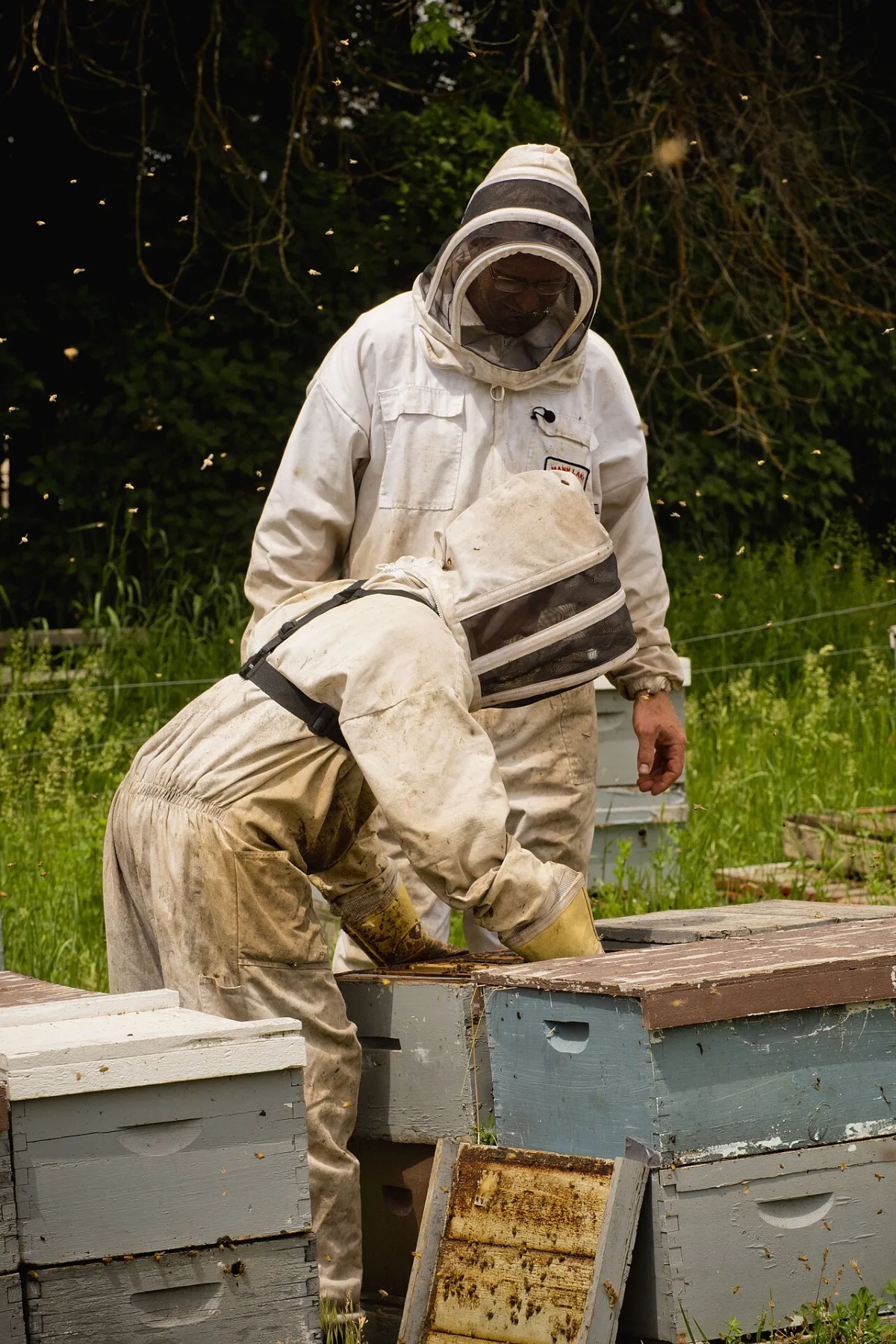
Forms of progression and classification of bee diseases
Bee diseases disrupt the normal functioning of the entire colony, causing structural and functional changes in the insects' organisms. Pathological processes lead to the death of brood and adult individuals, weakening of the colonies, and a sharp decline in their productivity. Without timely intervention, the apiary incurs serious economic damage, even up to the total loss of bee colonies.
Based on the nature of development and symptom manifestation, diseases are divided into three groups. In acute and subacute progression, bees die quickly, and clinical signs are expressed as clearly as possible. Chronic diseases can drag on for months and years, with symptoms being weak or absent altogether.
- Acute and subacute progression: septicemia, American and European foulbrood, parafoulbrood, sacbrood, and chalkbrood.
- Chronic progression: nosemosis, acarapidosis, varroosis, and melanosis.
All bee diseases are divided into two large groups — contagious and non-contagious. Contagious diseases are divided into infectious (caused by microorganisms) and invasive (caused by parasitic animals). The spread of infections is facilitated by transport for honey collection, exchange of breeding stock, swarming, and robbing of weak colonies. Outbreaks are usually recorded in late winter and early spring due to a decrease in bee resistance under the influence of dampness, poor ventilation, and inadequate feeding.
Invasive diseases develop under the influence of climatic conditions, soil, and arthropod vectors. Depending on the pathogen, pathologies are divided into four main groups:
- protozooses (caused by protozoa);
- helminthiases (by helminths);
- acaroses, or arachnoses (by mites);
- entomoses (by insect larvae).
A separate group is represented by hereditary diseases arising from damage to the chromosomes of germ cells under the influence of extreme environmental factors or breeding errors. As a result, queens and drones appear that produce offspring with low viability. In affected colonies, empty and dead brood, patchy brood patterns, malformations of worker individuals, and underdevelopment of internal organs are identified. Such disorders are incurable by conventional methods.
In the event of contagious diseases, quarantine is mandatorily imposed on apiaries. Strict adherence to veterinary and sanitary rules for keeping bees plays an important role in their prevention.
Varroosis: development characteristics and control measures
Varroosis is a dangerous invasive quarantine disease (acarosis) affecting adult individuals and brood. Its pathogen, the mite Varroa jacobsoni, parasitizes in the hive all year round and simultaneously serves as a vector for the colibacillosis pathogen. The diagnosis is established based on inspection and dissection of bees.
| Parameter | Dimensions (mm) |
|---|---|
| Female Varroa jacobsoni mite | 0.9–1.4 x 1.5–1.9 |
The female mite has a brown, transversely oval body with four pairs of limbs, while the smaller males are colored grayish-white or yellowish. The mite reproduces in sealed brood, going through the entire development cycle on pupae. By piercing the pupa's cuticle, the parasite feeds on hemolymph, which causes pathological aging of the bee's blood.
Dispersal is carried out by young female mites, which overwinter on bees between abdominal segments. With the appearance of brood, the females enter it, causing the infestation of the colony to grow and reach its maximum in the autumn. The spread of the disease is facilitated by uncontrolled transport of bee colonies, violation of sanitary keeping rules, and robbing of bees. In cases of severe infestation, bees leave their hives even if there is a sufficient amount of feed.
Varroosis develops gradually and leads to the death of underdeveloped pupae, which makes the brood "patchy" and causes the cell cappings to look concave or have holes. Surviving bees and drones are born small, non-viable, and with deformities — without wings or legs. In affected colonies, the lifespan of queens is shortened, general development slows down, the formation of the winter cluster is disrupted, and bee mortality rises sharply during wintering.
Improper expansion of hives and a poor microclimate in the hive provoke the rapid reproduction of parasites. To suppress the pathogen, carry out comprehensive treatment and strictly observe the temperature regime of the treatments.
- Mite development cycle on a pupa — 8–9 days
- Base temperature for treatments — not lower than 14–16 °C
- Reduction in mite numbers when cutting out drone brood — by 2 times
- Temperature for the use of Folbex VA without brood — not lower than 10 °C
Diagnosis of varroosis is performed by checking for female mites. They are searched for on adult bees, in sealed brood (especially drone brood), on the bottom of the hive, and in mite catchers. For early detection of the parasite in the apiary, a single control treatment of colonies with an acaricide is carried out. The degree of infestation is determined by the number of mites found per 100 individuals.
| Degree of colony infestation | Number of mites per 100 bees or pupae, specimens |
|---|---|
| Weak | up to 10 |
| Moderate | up to 20 |
| Severe | over 20 |
If mites are detected, the apiary and neighboring farms are declared disadvantaged and placed under quarantine. Treatment is carried out in spring (after the nuptial flight), summer (after honey extraction), and autumn. The primary method of control remains fumigation of bees with medicinal smoke.
- Efficiency of drone frames with a bottom board insert — a 2-fold reduction in the number of mites
- Working air temperature for treatments — no lower than 14–16 °С
- Temperature threshold for Folbex VA during the broodless period — no lower than 10 °С
Chemical treatment schemes and biological protection
For chemical mite control, acaricides in the form of thermal tablets or strips are used. Preparations are dosed strictly according to schemes, depending on the strength of the colony and the presence of brood. Fumigation is carried out according to the following rules:
- Phenothiazine: 1 thermal tablet per 5 bee spaces for 3 days, applied twice with an interval of 7 days.
- Folbex: 1 thermal strip per 5 bee spaces applied twice with an interval of 2 days.
- Folbex VA: 1 thermal strip per hive applied 4 times with an interval of 4 days. During the broodless period, the preparation is used twice with an interval of 1 day.
In autumn, the Folbex preparation is not used. Basic treatments are carried out at an air temperature of no lower than 14–16 °С. During the broodless period, the Folbex VA preparation is used at an air temperature of no lower than 10 °С.
Mites more actively infest drone brood, which serves as a biological trap for them. As a non-medicinal measure, beekeepers use drone frames and drone foundation — such brood is systematically removed and burned. In combination with a mite-catching bottom board, this reduces the number of mites by half. De-acarization of equipment is also performed, and the key technological method in controlling varroatosis remains the formation of new broodless nuclei.
Read next
Beekeeping For students
Methods for rearing highly productive queen bees in the apiary
Beekeeping For students
Composition of a bee colony and biological characteristics of individual development
Beekeeping For students