
Methodology and organization of experimental research in agrochemical science
9 min read
From a working hypothesis to a field experiment
Any agrochemical research on a farm begins with a working hypothesis — a scientific assumption that explains the causes of plant development deviations. For example, if rice growing points are affected, young upper leaves turn pale, and veins take on a light shade, a lack of sulfur is assumed based on existing knowledge. To confirm or refute this conjecture, mandatory experimental verification is required.
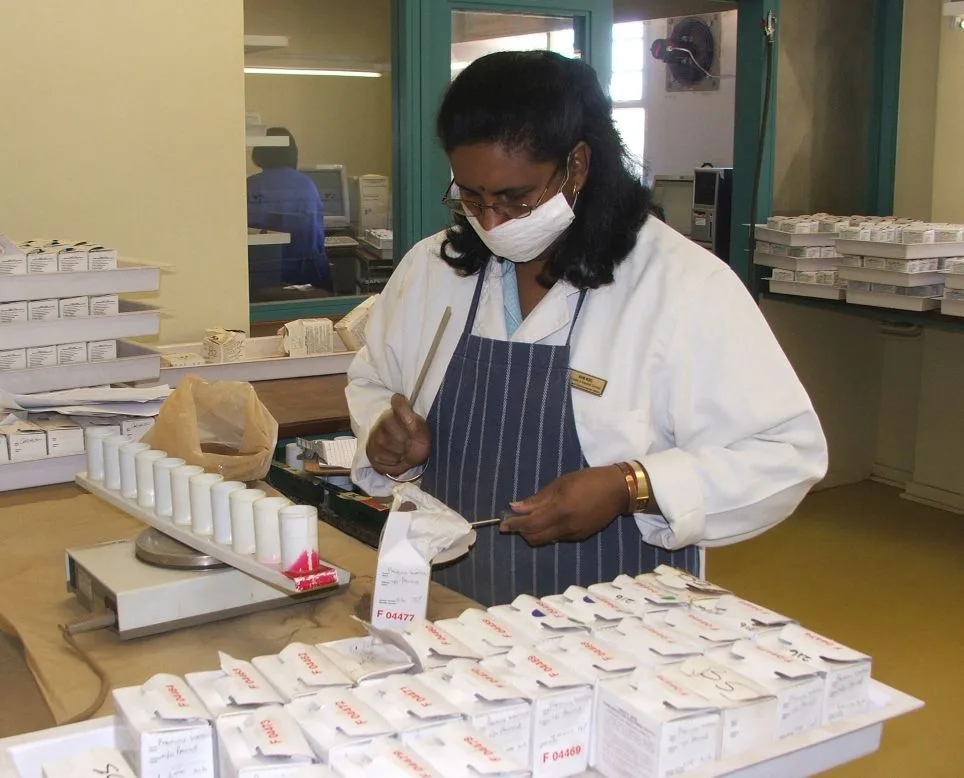
For this purpose, an experiment is set up — a scientifically conducted trial in which an agronomist purposefully influences the study object under strictly controlled conditions. Unlike simple observation, one can study several phenomena at once, dissecting them during the experiment and the analysis of results. At the same time, the specified conditions can be reproduced multiple times when repeating the experiment.
An experiment is the leading method of agrochemical research. Its main advantage lies in the possibility of recreating a phenomenon at the right moment, without waiting for its natural manifestation in nature, and actively influencing it in the direction required by the researcher.
During the experiments, the researcher must conduct accompanying observations. They allow for the recording of qualitative and quantitative changes: dates of phenophase onset, appearance of pests, development of diseases, and dynamics of the nutrient and water regimes of the soil. Quantitative assessment also includes accounting for plant density per unit area or weed infestation of crops.
All measuring instruments — scales, thermometers, colorimeters — must be checked once a year at Standardization and Metrology Centers. The presence of a stamp or calibration certificate on the devices is a mandatory condition for recognizing research results as reliable.
Observation and analysis of crop structure
Observation can also be used as an independent research method, recording qualitative or quantitative characteristics of processes without interfering with them. This approach is most widely used at meteorological stations. Specialists systematically monitor the following natural phenomena:
- air and soil temperature;
- precipitation amount and snow cover depth;
- wind speed.
However, simple observation does not reveal the internal essence of processes, so in agrochemistry, it is necessarily combined with analysis and synthesis. The analysis method allows one to mentally or practically break down the object of study into components for detailed examination. Thus, when studying plant growth, they are divided into individual organs — roots, stems (shoots), leaves, flowers, and fruits.
The analysis of crop structure is always carried out in conjunction with the subsequent synthesis of the obtained data. This allows linking individual signs and drawing well-founded conclusions about the effectiveness of the applied practices. A sequential analysis scheme is used for a detailed assessment of the experimental results.
- Formulation of a working hypothesis based on known knowledge and visual signs.
- Setting up an experiment with purposeful impact on the study object.
- Conducting regular accompanying observations and instrumental measurements.
- Detailed analysis of crop structure with the dissection of plants into individual organs.
- Synthesis of the obtained data to establish patterns and formulate conclusions.
| Elements of the crop structure of grain crops |
|---|
| Number of plants per area |
| Productive tillering |
| Ear (panicle) length |
| Number of spikelets |
| Grain mass per ear (panicle) and plant |
| 1000-grain weight |
How to read field signals: from symptoms to correct conclusions
In an agronomist's work, analysis and synthesis go hand in hand. We break down complex processes into parts to study them, and then combine the data to make the right decisions. For example, knowing how nitrogen fertilizer affects root and stem growth separately, we conclude about the development of the entire plant as a whole. Crop productivity is always assessed in close connection with soil and climatic conditions. As a result, the results of each experimental plot are combined into a general system of recommendations for production.
Diagnostics in the field is often based on the principle of induction — from individual signs to a general conclusion. Observing leaf wilting, we conclude a moisture deficit, and in case of yellowing — a disruption of mineral nutrition. If the highest yield is obtained on one of the experimental variants, its parameters form the basis of production recommendations. This method allows scaling local success to the entire area of crops.
Deduction works in the opposite direction — from general judgments to specific conclusions. For example, in case of plant death in the field, an agronomist immediately puts forward several working hypotheses. To find the exact source of the problem, the most probable causes are consistently analyzed:
- low air and soil temperatures;
- acute moisture deficit;
- lack of essential nutrients;
- damage by diseases and pests;
- soil salinity.
By excluding from this list conditions that do not differ from the long-term average, we find the real cause of crop failure. Such a systematic approach will insure against hasty and erroneous conclusions.
The development of any cultivation technology begins with building an ideal image. The full realization of a crop's potential productivity is taken as a benchmark, which real field indicators are then sought to approach.
Identifying Limiting Factors and Forecasting by Analogy
A field is a complex system where dozens of factors act simultaneously. To understand the cause of low yield, an abstraction method is used — the main limiting factor is isolated, ignoring secondary ones. Depending on the specific conditions of the season, this may be low soil fertility, soil salinity, or unfavorable temperature conditions. Only an isolated study of these factors allows one to understand which of them restricts plant development the most.
After identifying the main problem, one moves on to specification. If it is established that rice productivity is decreasing due to soil salinity, it is necessary to trace the mechanism of this process in detail. It is important to find out whether the salinizing ions block access to nutrients or if they directly poison the plant organism. At this stage, it is determined which specific physiological processes in the soil and plants undergo negative changes.
Rely on the method of analogy when assessing the risks of introduction. If the Kulon rice cultivar with a growing season of 135 days does not ripen in the climatic conditions of Kuban, then any other cultivars with a similar growing season are guaranteed not to mature here either.
To investigate hidden and complex processes, a modeling method is used. It is based on the principle of analogy, where a difficult-to-study object is replaced by its simplified working copy. For modeling to be effective, the created analogue must necessarily reflect the key characteristics of the studied original under real field conditions.
Before implementing a new technology on a farm, it must be designed. In agrochemistry, modeling is used for this purpose. It can be physical, when a real object is recreated (for example, a model of soil or a plant cell), or mathematical, when the yield of a fruit or berry crop is calculated using equations depending on life factors. The simplest example of modeling in practice is drawing up an experimental layout, plotting plot sizes, and planning the placement of variants on a plan.
Special attention is paid to modeling during introduction — the introduction of cultivated species and plant cultivars into regions where they have not previously grown. This process requires an accurate comparison of climatic and soil data. Preliminary calculations help to assess the biological potential of the crop and minimize risks for the farm.
Testing Methods: From Laboratory to Production Field
At the heart of any research work lie two main general scientific methods — observation and experiment. Observation helps to record changes in soil and plants, while experiment allows for active intervention in their nutrition processes. To obtain reliable results, specific types of experiments are consistently applied in agrochemistry:
- Laboratory;
- Vegetation;
- Lysimetric;
- Field.
For a practicing agronomist, the field experiment is of the greatest importance. It completes the cycle of exploratory research and transfers theory into real soil and climatic conditions. A field experiment quantitatively evaluates the agrotechnical and economic effect of a new practice, providing objective data for its implementation in production.
A field experiment is the only way to obtain reliable economic performance indicators for a new fertilizer or technology in relation to the specific soil type of your farm.
Read next
Agrochemistry For students
Methodology of planning and technique of conducting field agrochemical experiments
Agrochemistry For students
Methodological requirements for the organization and conduct of field agrochemical experiments
Agrochemistry For students