
Physical principles of soil specific resistance during plowing
4 min read
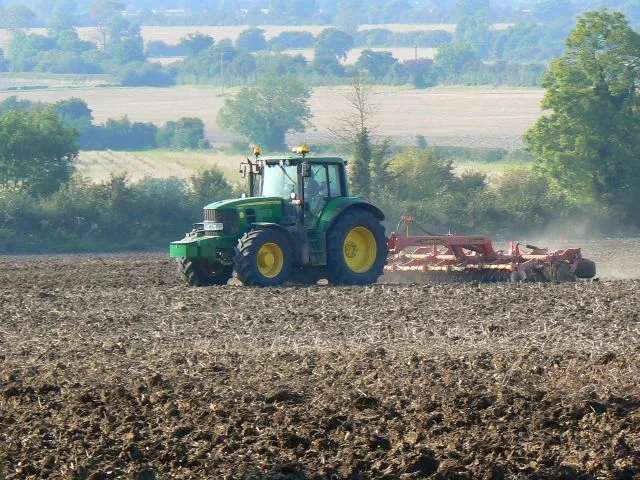
The specific resistance of soil during plowing directly determines a farm's diesel fuel expenses, the required tractor power, and the tillage depth. From a physical perspective, a plow expends energy overcoming three forces: the friction of soil particles against each other, their internal cohesion, and the adhesion of soil to metal. Understanding how these forces change depending on soil type and weather helps an agronomist predict traction loads when moving from one field to another.
How mechanical composition and moisture change plow resistance
The mechanical composition of the soil sets the baseline level of resistance that will be encountered in a specific area. Clay and heavy loam soils require overcoming powerful molecular cohesive forces. The higher the silt and clay fraction content, the more energy the tractor spends on plowing, all other conditions being equal.
- Sandy and sandy loam soils: lack a strong structure, their particles are weakly bonded, so the energy expenditure for their displacement is minimal.
- Clay and heavy loam soils: possess a massive specific surface area of particles, which forces the tractor to work at maximum capacity.
Moisture is the most variable factor, quickly shifting soil from one physical state to another. In a dry state, the earth behaves like a solid, and the tractor spends energy breaking strong bonds between dry clods. As moisture increases moderately, the water begins to act as a lubricant, reducing internal friction and facilitating the deformation of the furrow slice.
Minimum soil resistance to plowing is observed when it is in a state of physical maturity. Within this range, the plasticity of the furrow slice is at its maximum, and the cohesive forces between particles are at their minimum.
If there is too much moisture in the field, water fills all the pores, and the soil acquires the properties of a viscous medium. Further increases in moisture beyond the norm cause the earth to actively stick to the plow's working components.
Waterlogging sharply increases adhesion (the sticking of soil to metal). This increases the contact area and the soil-to-metal friction coefficient, causing a sudden spike in traction resistance and excess fuel consumption.
How to use resistance metrics for field diagnostics
A tractor's traction effort fluctuates as it moves across a field due to the heterogeneity of the soil cover. A change in engine load is a machine's direct reaction to local changes in density or moisture. Besides natural composition, resistance is strongly influenced by anthropogenic soil compaction caused by heavy machinery wheels.
In compacted soil, particles are packed more tightly, the number of pores is minimal, and the cohesive forces between particles increase. An increase in resistance in a specific area of a field serves as a reliable indirect indicator of problems for an agronomist. By using readings from the tractor's traction load sensors, hidden soil defects can be identified without manual sampling.
If resistance in an area increases sharply, it signals two possible issues:
- local soil over-compaction (e.g., on headlands or tramlines);
- moisture deviation from the optimal agrotechnical range.
To compensate for the combined influence of these factors and protect equipment from overloads, it is necessary to promptly adjust the operating mode. Timely regulation allows for the preservation of seedbed quality and saves on lubricants and fuel.
- Identify the cause of increased resistance in the field area.
- Adjust the depth of the plow's working components.
- Regulate the unit's operating speed.
Read next
Soil and tillage For students
Mechanical degradation of soil structure during intensive tillage

Economics For students
Economic efficiency of organizing production processes in agriculture
Farm machinery For agronomists