
Operational planning and management of irrigation regimes for crops
4 min read
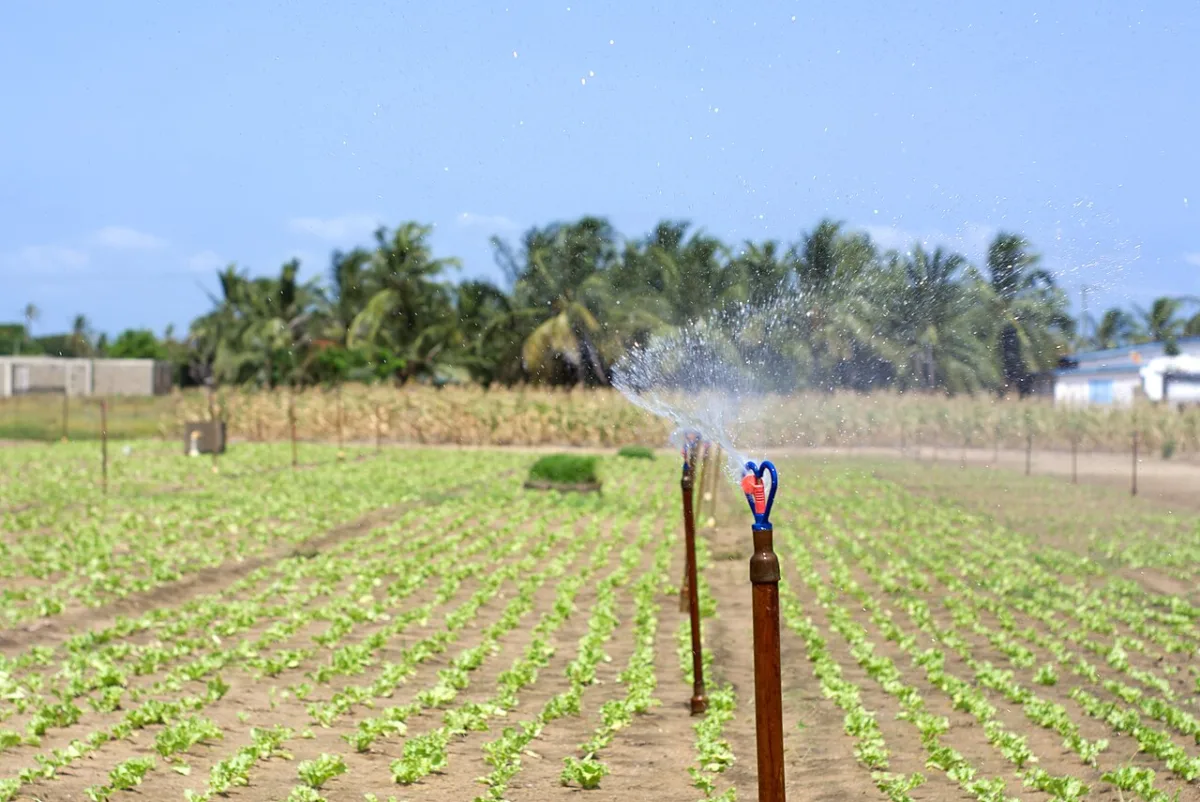
The Role of Operational Planning in Irrigation
Many years of observational experience at the FSBSI VNIIR "Raduga" indicate that, regardless of the organizational form of the engineering service operating on-farm irrigation systems (NPO "Poliv", UOS, etc.), the yield of irrigated crops depends primarily on the extent to which the irrigation regime actually implemented in the fields corresponds to the optimal water requirements of the cultivated crops.
Only through timely and high-quality irrigation can the target level of productivity for irrigated lands be achieved. Under production conditions, achieving this level is ensured not only by proper irrigation regime planning but also by its timely adjustment, taking into account the prevailing meteorological situation, as well as organizational, economic, and other conditions.
Based on an analysis of research conducted in this field and taking into account the developments of FSBSI VNIIR "Raduga," the following solution scheme is proposed:
| Regulatory and reference information for the surrounding natural zone | Meteorological data for a 40-60-year period from a weather station | Assessment of natural resource potential, climate forecast for the next three years |
| Expected natural moisture availability for the current year (expectation year) | Information on irrigated plots: crop, start of the growing season | Calculation of irrigation rates by irrigation plots |
| Information on irrigated plots: plot size, characteristics of sprinkler machines (SM), water losses in the supply pipeline (determined by the configuration of the irrigation system) | Information on water for the growing season | Irrigation schedules |
| Information from satellite monitoring on crop conditions | Operational adjustment of irrigation regimes | Current and forecast meteorological information |
| Adjusted irrigation schedules for the next ten days | Fig. 5. Algorithm for management and operational water supply to the FARM | Adjusted schedule and adjustments to the volumes of consumed water resources during the irrigation process |
| Seasonal accounting of water supply from the irrigation network to the FARM |
Stages of Irrigation Regime Management
- for an irrigation object (crop rotation, farm), based on the bioclimatic method of determining water consumption, irrigation regimes are developed for each crop in the crop rotation for a period of at least 45 years of observations;
- for the upcoming expectation year, a planned irrigation regime is selected;
- based on the selected irrigation regime and the technical and operational parameters of the irrigation machines, in relation to specific soil and relief conditions, operational schedules for irrigation (schedules for the operating mode of irrigation machines) are developed for the upcoming season;
- at the stage of implementing the operational irrigation schedules, taking into account changes in soil moisture, meteorological conditions, organizational, economic, and other factors, forecasting of irrigation dates for the next five to ten days and adjustment of irrigation regimes are performed.
The main task at the stage of implementing operational irrigation regimes consists of establishing the primary factors that necessitate adjustments to the irrigation regime, accounting for them, using technical means to collect and evaluate the necessary information, and making a decision regarding the necessity and extent of the adjustment.
For the operational adjustment of operational irrigation regimes, a computational method is proposed, based on the evaluation of the water balance equation applied to the soil layer of active moisture exchange. The revenue components of the balance (precipitation, irrigation) are accounted for by direct measurement, while the expenditure part of the equation (total evaporation from the field) is calculated using meteorological data.
Total moisture evaporation from the field is determined by the bioclimatic method, which has undergone many years of verification under production conditions.
The implementation of operational irrigation regimes and their optimization (based on operational adjustment) consist of the following:
• adjustment and management of irrigation regimes are carried out according to the "demand" of the irrigated plots served by a sprinkler machine;
• on irrigated plots, soil moisture is measured at the beginning of the growing season down to a depth of three meters (or to the capillary fringe in the case of shallow groundwater) and subsequently every 1-1.5 months in order to monitor changes in soil moisture reserves using the calculation method;
• on each crop rotation plot, atmospheric precipitation is systematically measured, and control measurements of implemented irrigation rates and the uniformity of their distribution across the area and depth are performed;
• systematic collection of current and forecast meteorological information regarding temperature, humidity, wind speed, and atmospheric precipitation is performed;
• information is collected regarding crop conditions, the progress of agrotechnical measures, and the readiness of irrigation equipment, the irrigation network, and pumping stations;
• the obtained information is processed, and water balance calculations are performed for the current and 5- or 10-day forecast periods;
• based on the data obtained, the current situation is assessed, and a decision is made regarding the advisability and extent of adjusting the irrigation regime for agricultural crops.
Currently, the FSBSI VNIIR "Raduga" has developed a program for the operational adjustment of operational irrigation regimes, taking into account prevailing and forecast weather, organizational, economic, soil, climatic, and environmental conditions.
The proposed development will reduce material-technical and energy costs by 20-25%, irrigation rates by 10-20%, thereby ensuring water resource savings of 20%. The yield increase will range from 7 centners/ha for perennial grasses to 14 centners/ha for vegetables.
Read next
Irrigation For agronomists
Calculation of the irrigation regime for alfalfa based on meteorological data from Kolomna
Irrigation For agronomists
Methodology for planning environmentally safe irrigation regimes for agricultural land
Irrigation For agronomists