
Rules for designing and placing greenhouses on a home garden plot
9 min read
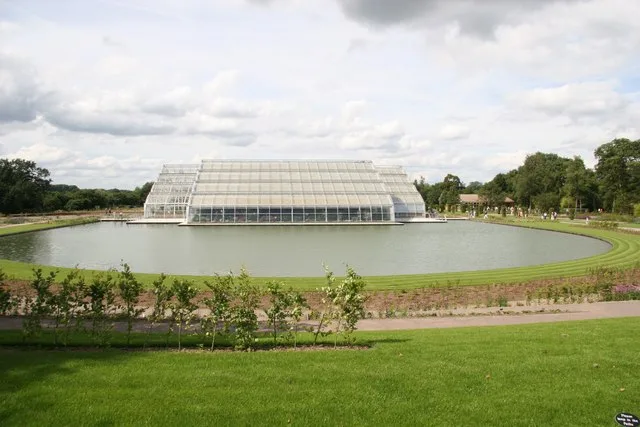
Unlike hotbeds and film covers, greenhouses not only create favorable conditions for plant development but also ensure comfortable conditions for the worker. Of course, this is a more expensive and complex structure; however, in a home garden, a "serious" gardener should have at least a small heated greenhouse.
When positioning a greenhouse on a site, it is necessary to ensure the required light regime, as illumination significantly affects the yield of most vegetable crops. In relation to most vegetable crops, this means that an increase in illumination leads to a corresponding increase in their yield. Plants are especially sensitive to a lack of natural sunlight in the winter months. Therefore, very often in winter, greenhouses are occupied by forcing leafy greens, and most of the space is equipped with special artificial lighting sources for growing transplants of main vegetable crops.
It is quite obvious that the requirements for the light regime depend fundamentally on the duration of the greenhouse's operation. In winter greenhouses, it is necessary to ensure the maximum possible use of solar radiation, while in spring ones, it is necessary to avoid overheating due to a decrease in overall light transmittance.
As you know, in winter the angle of incidence of sunlight is about 15°, so the maximum penetration of sunlight into the greenhouse will be provided by slightly inclined side walls. Better lighting conditions are also achieved in a greenhouse with unequal roof slopes: 60-75° for the south slope and 30° for the north one.
When choosing the location and type of greenhouse, changes in illumination depending on the season are taken into account. In winter, rays fall only on the wall of the greenhouse facing south, while in summer, the end walls face the sun in the morning and evening.
Winter greenhouses are oriented with their ridges in the east-west direction, and spring ones with their ridges north-south. With this arrangement, winter greenhouses provide the best lighting conditions in the winter months, while spring ones have a more smoothed light regime during periods of possible overheating.
When choosing a site for building a greenhouse, one should pay attention to protection from prevailing winds. This circumstance is especially important to consider when growing plants in winter, since strong wind increases heat losses.
If there is no place on the site sufficiently protected from the wind, it is advisable to enclose the greenhouse with a fence or a hedge 1.8-2 m high. It is better to place such protective structures taking into account the cardinal directions:
- On the north, northeast, or northwest side — the distance to the greenhouse should not be less than three times its height.
- For protection against strong southern, southeastern, or southwestern winds — at a distance 4-5 times its height.
A greenhouse should be built on a well-drained site with a low level of groundwater; in some cases, it is recommended to carry out drainage. In addition, the site must have a minimal slope to reduce the volume of earthworks; this is very important when building greenhouses of large areas.
Modern industrial-type greenhouses are assembled from factory-made parts, which significantly simplifies and speeds up their installation. Most structural elements are standardized, which allows them to be used in various types of greenhouses.
The main structural elements of greenhouses are:
- Foundation
- Plinth
- Posts
- Frame trusses
In winter glass greenhouses, the plinth must have a height of 0.3 m, and in spring film ones — 0.1 m. A structural slope of 0.03 is provided for water runoff along the roof gutters.
Steel structural elements of greenhouses are made from special bent lightweight profiles. The elements to which glass or film is attached — glazing bars — are often made of aluminum and its alloys.
Sealing of greenhouses is of great importance, depending on the methods of fastening glass and film. In greenhouses for individual use, with a glass covering over metal surfaces, a T-section glazing bar is used; the glass is fastened with clips made of tin or aluminum strips. Various methods of glazing sealing are shown in Figure 18.
Let us also consider such an important issue as the attachment of frames to the frame. Locking devices are often used for this. On the walls and on the roof of the greenhouse, they are done differently. On the roof, they must be strong, holding the frames by all their corners. This is because the wind force tearing off the frames on the roof is much more noticeable than on the walls. Devices locking the frames on the walls should be made not only reliable but also as simple and convenient to use as possible, since these frames have to be removed and installed almost every day to ensure a comfortable temperature in the greenhouse.
The locking mechanism for frames on greenhouse walls is shown in Fig. 19.
It consists of tongues screwed to the beam and protruding 2-3 cm below it, and slightly tapered bolts inserted into sockets screwed to the bottom plate beam. The tongues and sockets for the bolts can be made of wood or metal strip. The bolts are made of wood.
To insert a frame into the greenhouse wall, remove the bolt from its socket, guide the frame along the battens under the tongue until it rests against the beam, slide it into place until it stops, lower it onto the bottom beam, and secure it with the bolt by placing it into its socket. To remove the frame, perform all operations in reverse order.
The method of securing frames on the roof is shown in Fig. 20.
Selection and characteristics of light-transmitting materials
Glass and various types of polymer films are used for covering modern greenhouses. Each material has its own physical properties, which directly influence the microclimate in the structure and the farm's economics. When choosing a cover, it is important to compare its light transmission, weight, and durability with the load-bearing characteristics of the supporting frame.
| Covering material | Light transmission | Specific radiation properties | Thickness and weight |
|---|---|---|---|
| Sheet window glass | 83–85% of visible spectrum | Transmits about 45% of UV rays, 85% of short-wave IR, and no more than 10% of long-wave IR radiation | Thickness — 4 mm. Mass per 1 m² — 10 kg |
| Polyethylene (PE) film | 70–80% of sunlight | Elastic, frost-resistant, resistant to acids and oxidizing agents | Thickness — 0.1–0.2 mm. Lightweight |
| Polyvinyl chloride (PVC) film | High light transmission | Transmits up to 10% in the infrared range, effectively retaining heat in the greenhouse | Increased service life compared to PE film |
- Glass width for hangar-type greenhouses — 600 mm
- Glass width for block-type greenhouses — 750 mm
- Film roll width — from 0.8 to 8 m
- Service life of PE film — 4–5 seasons
Polyethylene film is supplied in rolls as a sheet, tube, or semi-tube. Along with PE films, polyvinyl chloride and ethylene-vinyl acetate copolymer covers are used. Winter stationary greenhouses are traditionally made of glass: they are more expensive than film ones but require practically no annual assembly and disassembly of the cover before the start of the season.
Film on a greenhouse roof degrades about twice as fast as on vertical walls due to direct exposure to the sun. Design frames to be interchangeable so that you can swap their positions each season and extend the service life of the cover.
Any type of film is prone to shrinkage due to the gradual weathering of plasticizers. In the north, this process is more intensive in winter, and in the south — in summer. To prevent sheet tearing from tension, use a cellular frame construction.
Rules for frame installation, glazing, and film welding
Thermal welding is used for the airtight connection of individual film sheets. The simplest method is to compress the edges of the sheets between wooden slats with a 1–2 cm overlap and run an open flame along the edge. The film can also be welded with an iron, soldering iron, or thermal roller on a flat surface, smoothing the seam through two layers of paper along a guiding wooden slat.
Correct fixation of the frames on the rafters will prevent the cover from being blown off during gusty winds. Tying is carried out in calm weather, using strong twine or clothesline. For each frame, prepare two pieces of rope 40 and 60 cm long.
- Screw screws into the inner edges of the frame's side rails at a distance of 15 cm from their ends.
- Place the frames on the roof and screw the support screws into the rafters strictly below the lower frame screws, and at the greenhouse ends — additionally below the top ones.
- Screw guide screws into all rafters 15–20 cm above the upper frame screws.
- Tie the placed frames to the rafters, first from below with 60 cm pieces of twine, then from above — with 40 cm pieces.
- Wrap the cords around the screws and secure them with a quick-release reef knot (bow) for rapid disassembly.
Greenhouse vents are equipped with reliable locking devices, and doors must be secured from the inside and outside with window hooks. When building a factory-type glazed greenhouse made of T-beams or paired angle bars, the glass is secured to the frame using metal clips and special putty.
Glazing of the assembled frame is performed strictly in a specific sequence to avoid accidental damage to the material during installation.
- Lay and secure the glass on the greenhouse roof.
- Glaze the side walls of the structure.
- Install glass into the ventilation vents (transoms).
- Insert glass into the door openings.
At the end of the season, the film cover is carefully dismantled. The film must be thoroughly washed to remove dirt, dried, and any accidental punctures or cuts should be sealed, after which it should be folded and placed in storage in a dry, dark room until the following spring.
Read next
Greenhouses and covers For gardeners
Selection, operation and maintenance of film greenhouses in the home garden
Greenhouses and covers For gardeners
Building a frame greenhouse with a gable roof with your own hands
Greenhouses and covers For gardeners