
An overview of determinate tomato cultivars for early harvest in greenhouses
6 min read
Low-growing determinate cultivars for early harvest
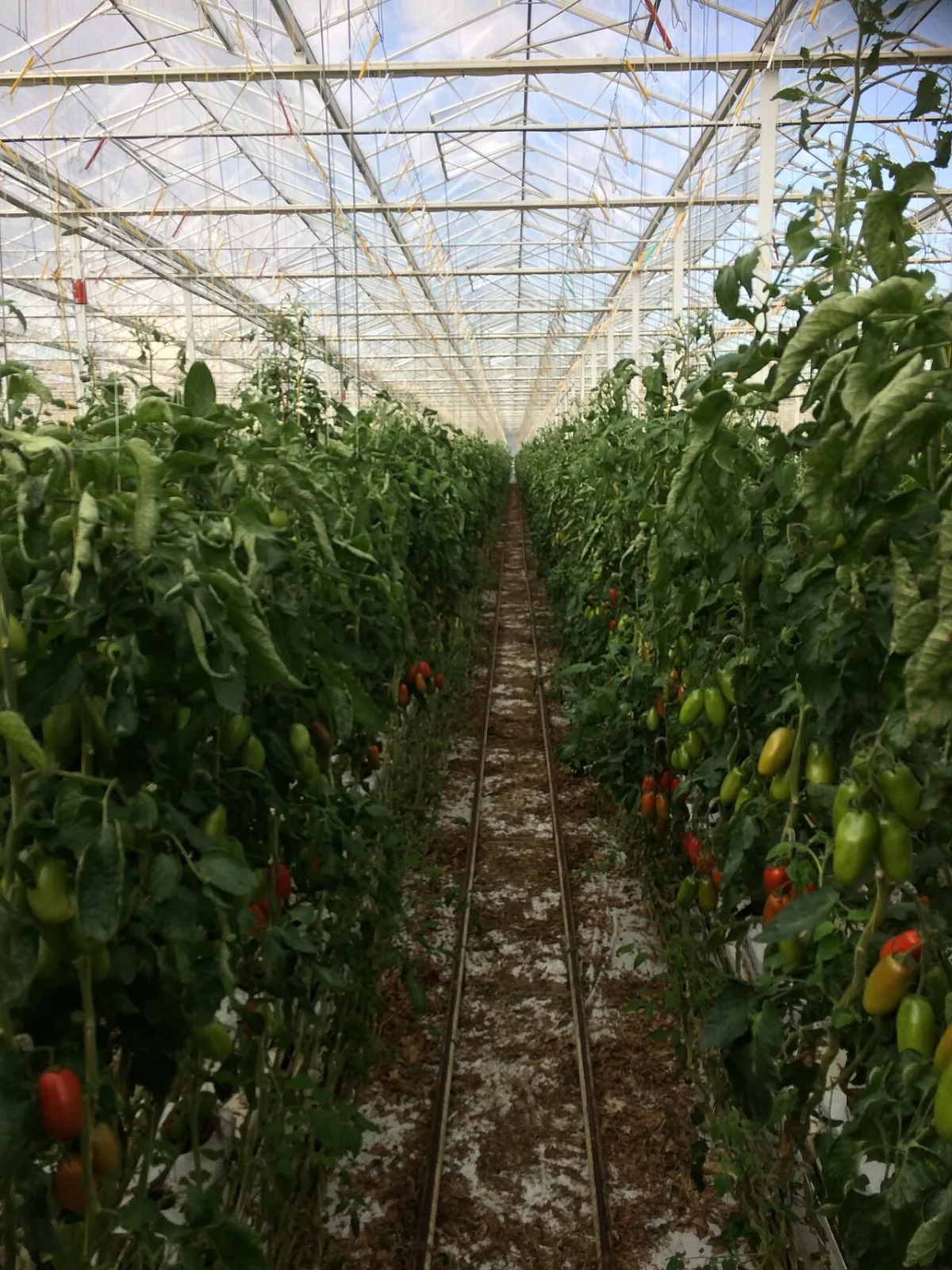
Low-growing determinate tomatoes allow for the first harvest at an ultra-early time and optimize the use of greenhouse space. These plants do not require complex pruning or staking, which significantly reduces labor costs. Thanks to a uniform yield, they manage to finish fruiting before the peak of late blight development. Some of them are capable of consistently setting fruit even during sharp spring cold snaps.
The cultivars "Belyi Naliv 241" and "Dana" have weak resistance to late blight. In years with a wet and cool summer, the risk of bush infection increases, so these tomatoes require preventive fungicide applications.
| Cultivar | Bush characteristics | Ripening period (growing season) | Fruit weight, g | Yield and planting density | Features and purpose |
|---|---|---|---|---|---|
| Barnaulsky | Cold-resistant | Early-ripening | 35–45 | Good yield in unfavorable years | Red, oval fruits. Sets fruit at a temperature of 10–12 °C. Intended for whole-fruit canning. |
| Belyi Naliv 241 | Low-growing, up to 65 cm | Early-ripening | 80–130 | Up to 70% of mature fruits in the first month of harvesting | Fruits are round, orange-red, with good taste. Whitish at technical maturity, they ripen quickly after picking. Used for salads. |
| Dana | Determinate | Early-ripening | Medium size | — | Domestic breeding. Fruits are flat-round, smooth, with good taste. Average resistance to diseases. |
| Dubok | Height up to 75 cm | — | 120–140 | Abundant fruiting, uniform yield | Red fruits. Cultivar is resistant to late blight. |
| Karobetta | Height up to 70 cm | — | Up to 100 | High-yielding | Bulgarian breeding. Orange fruits with high carotene content. Versatile application. |
| Kievsky 139 | Semi-determinate, up to 70 cm | 110–115 days | 90–115 | Up to 3 kg per bush. Planting — 3–4 bushes per 1 m² | Fruits are round, red with a crimson tint, fleshy, tasty. Does not tolerate excessive soil moisture well. Relatively resistant to diseases. |
| Moldavsky ranniy | Determinate | — | Up to 100 | — | Fruits are flat-round, orange-red, with good taste. Quite resistant to diseases. Used fresh and for processing. |
| Nevsky | Dwarf | Early-ripening | 40–60 | Good yield with dense planting | Fruits are flat-round, light red, smooth or slightly ribbed. Valued for uniform ripening. |
| Nemetsky kustovoy | Low-growing standard (shtamb) | 100–110 days from emergence to fruiting | Medium size | Up to 1.8 kg per bush. Placement of 5–6 plants per 1 m² | Fruits are round, very even, red. Early-ripening cultivar. |
Tall and large-fruited cultivars for greenhouses
Tall indeterminate cultivars are suitable for extended production cycles in greenhouses and require constant care. They effectively use vertical space and form large fruits with excellent market qualities. When growing these tomatoes, it is important to strictly observe planting density and monitor the phytosanitary state. Most large-fruited cultivars are intended for salads and require manual suckering (removal of side shoots).
- Growing season of "Gigant Novikova" — 120–125 days
- Maximum fruit weight of "Mikado" — 1200 g
- Maximum yield of "Anna German" — up to 6 kg per bush
- Storage life of the "De-Barao" cultivar — up to two months
- Bush height of the "Kardinal" cultivar — up to 1.8 m
The dense skin of the fruits of the "De-Barao" cultivar allows harvesting tomatoes green for subsequent ripening. In a cool room, such a harvest retains its market appearance and taste properties for up to two months.
- Wait for the appearance of the first fruit sets on the bushes of the "Mikado" cultivar.
- Remove the lower leaves up to the level of each next tier of fruits to stop the drain of nutrients.
- Perform regular suckering to avoid shading the fruits with large foliage.
- Cut the top of the plant in the first days of August to allow the already formed tomatoes to ripen.
| Cultivar | Bush type and height | Ripening period / growing season | Fruit weight, g | Yield | Features and purpose |
|---|---|---|---|---|---|
| Anna German | Indeterminate, up to 2 m | — | About 90 | Up to 6 kg per bush | Amateur breeding. The first inflorescence is formed above the 9th–11th leaf. Yellow lemon-shaped fruits, up to 30 fruits per inflorescence. Resistant to diseases. For pickling and canning. |
| Volgogradsky 5/95 | — | Medium-late | 80–100 | High marketability of fruits | Fruits are flat-round, with a yellow-green patch of hardened flesh at the base. Heat-resistant, tolerates transport well. Average resistance to diseases. |
| Gigant Novikova | Tall, leafy | 120–125 days from emergence to fruiting | 400–1200 | High | Amateur breeding. Large flat-round fruits of crimson color. Resistant to diseases. Used for salads. |
| De-Barao | More than 2 m | — | 60–80 | High | Brazilian breeding. First inflorescence above the 10th–12th leaf, subsequent ones every 2–3 leaves. 5–6 oval fruits in the inflorescence. Shade-tolerant, cold-resistant, slightly affected by diseases. One of the best pickling cultivars. |
| Biyskie krupnye | Tall, powerful bush | — | 300–900 (on the first and second inflorescences) | High (first inflorescence yields 5–7 fruits) | Amateur breeding. Fruits are even, sugary, with a watermelon-like pattern. The first inflorescence sets completely; subsequent inflorescences are smaller. For fresh consumption and juice preparation. |
| Kardinal | Indeterminate, up to 1.8 m | — | 500–600 (first inflorescence) | High | Fruits are large, flat-round. The first tier sets in the form of a crown around the trunk; the second tier is slightly smaller. Very resistant to diseases. For fresh use and pickling. |
| Mikado | Tall, heavily leafy | — | 900–1200 (first fruits) | High-yielding | One of the best in taste qualities. The first fruits resemble the "Bull's Heart" cultivar in shape. Requires intensive suckering due to strong leaf development. |
Late-maturing amateur cultivars for extending the harvest period
For an uninterrupted supply of greenhouse tomatoes until late autumn, early plantings are supplemented with reliable late cultivars. Amateur breeding offers two contrasting yet productive options for these purposes: the low-growing cultivar Raketa and the large-fruited giant Rositta. When planting them in a greenhouse, it is important to consider their individual growth rates and nutritional requirements, as both crops reach their full potential in the second half of the summer.
The cultivar Raketa (also known by the common name "dwarf De-Barao") is valued for its resistance to disease combined with a compact bush size. Until July, the plants remain quite short, but in mid-summer, they begin to grow intensively and form fruit set on a mass scale. As a result, by the beginning of August, the bushes are completely laden with dense, long-storing fruits, which are excellent for pickling and late-season consumption.
The tall, late-maturing cultivar Rositta requires experience from the agronomist and the provision of abundant nutrients, so it is not recommended for novice vegetable growers. The effort spent on its cultivation is rewarded by the high flavor quality of its large, sweet, raspberry-colored fruits. In shape, they are similar to the fruits of the "Oxheart" cultivar and contain very few seed. Based on a combination of traits, this is one of the most valuable large-fruited cultivars.
- Bush height of the Raketa cultivar — about 0.5 m
- Yield of the Raketa cultivar — up to 8–10 kg per bush
- Fruit weight of the Rositta cultivar — more than 500 g
When selecting an assortment for protected ground, the key factor remains the climatic adaptation of the plants. For each specific farm, it is more reliable to use a proven local cultivar range. Any non-adapted novelties should be introduced gradually to avoid losing the overall yield of the division.
Do not plant exotic tomato cultivars in large volumes without prior consultation with colleagues who have already grown them in your area. Without established technology, such novelties rarely bring the expected harvest in the very first season.
Read next

Seeds and varieties For agronomists
The Carolina horsenettle is a dangerous quarantine weed and its characteristics
Fruit growing For agronomists
Characteristics of immune and scab-resistant apple cultivars
Greenhouses and covers For agronomists