
The role and chemical properties of natural oligosaccharides in plants
5 min read
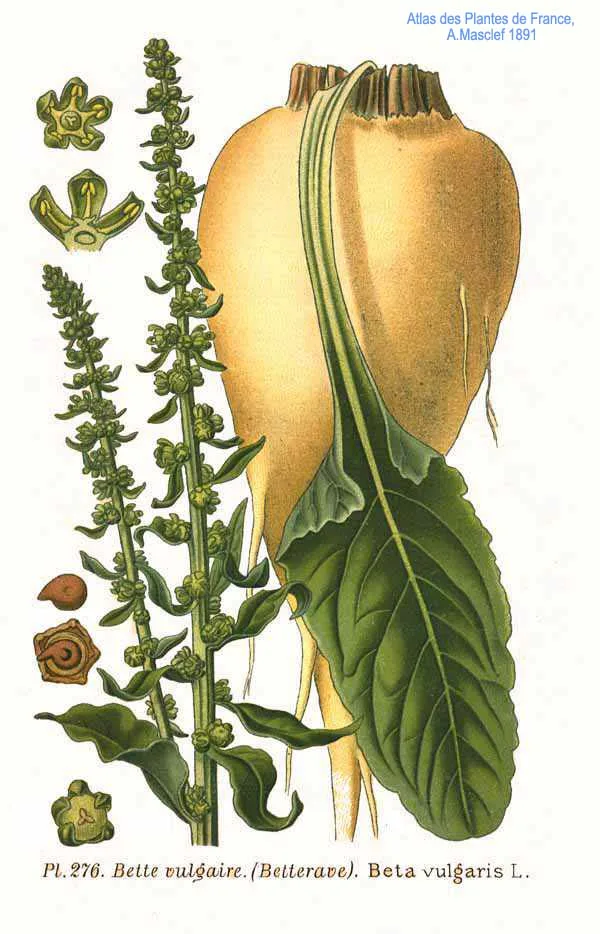
Oligosaccharides are water-soluble crystalline carbohydrates that often have a sweet taste. In plant tissues, these substances perform key functions, participating in energy storage and transport. The following compounds are most widely represented in the plant world:
- sucrose;
- melibiose;
- lactose;
- maltose;
- trehalose;
- gentiobiose;
- cellobiose;
- raffinose.
Sucrose: transport and energy storage in plants
Sucrose is formed during photosynthesis and serves as the main transport carbohydrate in plants. It is in this form that carbon and energy move from leaves to growth points and storage organs—fruits, seeds, and root crops. The speed of sucrose movement through vascular bundles is 20–30 cm/h.
- Speed of sucrose movement through the plant — 20–30 cm/h
- Specific rotation of maltose — +130.4°
- Specific rotation of cellobiose — +34.6°
- Lactose content in milk — 4–5%
Chemically, sucrose is built from α-D-glucose and β-D-fructofuranose, connected by an α1→β2 bond. This oligosaccharide is chemically inert because it does not contain a free glycosidic hydroxyl group. At the same time, the molecule is highly sensitive to acid hydrolysis, under the influence of which it decomposes into a mixture of glucose and fructose—invert sugar.
A synthetic method for producing sucrose has not been developed, so it is extracted exclusively from plant raw materials—sugar beet or sugarcane. Livestock animals are not capable of synthesizing this carbohydrate. Sucrose accumulation in various crops occurs unevenly.
The chemical inertness of sucrose allows the plant to transport energy over long distances from the leaves to the roots and fruits without losses.
| Crop | Sucrose content, % | Crop | Sucrose content, % |
| Wheat | 0.19–0.57 | Strawberry | 0.4 |
| Rye | 0.41 | Sugar beet | 16–23 |
| Apple | 3.0 | Carrot | 2–6 |
| Peach | 2.7–12.0 | Tomatoes | 0.5–0.8 |
| Lemon | 0.9 | Watermelon | 1.2–3.2 |
| Melon | 1.3–11 | Pumpkin | 0.6–6.0 |
| Pear | 0.5–5.1 | Plum | 0.9–8.3 |
| Apricot | 3.7–15.8 | Orange | 1.0–6.0 |
Maltose, lactose, and cellobiose: functions in the life cycle
Maltose (malt sugar) consists of two α-D-glucose residues connected by an α(1→4) bond. In the free state, it is found in plants in insignificant amounts. This oligosaccharide is mass-produced during the breakdown of starch by amylase enzymes, which occurs during the germination of barley grains. The specific rotation of maltose in aqueous solutions is +130.4°; it is fermented by yeast in the presence of glucose.
Lactose (milk sugar) has been detected in plants in pollen tubes. The molecule is built from β-D-galactose and α-D-glucose connected by a β(1→4) bond. Possessing a free hemiacetal hydroxyl, lactose reduces Fehling's solution, exhibits mutarotation in aqueous solutions, and rotates the plane of polarized light to the right. At the same time, lactose is 4–5 times less sweet than sucrose.
Cellobiose serves as a structural link of cellulose and consists of two D-glucose residues with a β(1→4) bond. In free form, it is rare, for example in tree sap, and its specific rotation is +34.6°. This carbohydrate crystallizes well and is soluble in water, and the enzyme that breaks it down, cellulase, is found in malt, germinating seeds of oats, barley, and spinach.
Raffinose (melitriose) directly affects the yield of finished products during sugar beet processing. In healthy root crops, its content is low—from 0.2 to 1% relative to sucrose (which makes up to 20% of the root mass). However, during beet storage, the amount of raffinose in root tissues increases. This is a technological problem: during sugar crystallization, raffinose does not provide a sweet taste and passes completely into molasses, reducing the yield of pure product. In nature, this trisaccharide also accumulates in cottonseed and dried secretions (manna) of eucalyptus, and crystallizes in the form of long needles with five water molecules.
Monitor the temperature regime and storage periods of sugar beet in piles. The accumulation of raffinose in root crops leads to its transition into molasses and directly reduces the yield of commercial sugar at the factory.
- Sucrose in beet root crops — up to 20%
- Raffinose content — 0.2–1% of sucrose mass
- Trehalose content in yeast — up to 18% of dry matter
Agronomic significance of melibiose, trehalose, and gentiobiose
Melibiose is part of raffinose, but it is found in the sap of some plants in a free state. In the molecule of this disaccharide, the pyranose forms of glucose and galactose are connected by the primary alcohol group of glucose and the glycosidic hydroxyl of galactose. Melibiose (6-gluco-α-galactoside) contains a free glycosidic hydroxyl and is fermented by bottom-fermenting yeast. Another oligosaccharide, trehalose (mushroom sugar), accumulates in fungi, algae, and higher plants of the Selaginella genus. Agronomists know this sugar from crop infection analysis: trehalose is found in high concentrations in ergot sclerotia, and in baker's yeast, its content reaches 18% dry matter.
Gentiobiose is a component of plant glycosides, such as amygdalin and crocin. In its bound form, this disaccharide accumulates in the roots of various species of gentian (Gentiana). Upon hydrolysis, gentiobiose forms two molecules of D-glucose connected by a bond between the glycosidic hydroxyl of one molecule and the sixth carbon atom of the other. This disaccharide is 6-glucose-β-D-glucopyranoside. In laboratories, the structure of these carbohydrates is determined by their chemical activity: melibiose and gentiobiose contain a free glycosidic hydroxyl, reduce Fehling's solution, and exhibit mutarotation.
| Oligosaccharide | Specific rotation of aqueous solution, degrees | Reaction with Fehling's solution | Products of complete hydrolysis |
|---|---|---|---|
| Raffinose | +105.2 | Does not reduce | Glucose, fructose, galactose |
| Melibiose | +129.5 | Reduces | Glucose, galactose |
| Trehalose | +178.3 | Does not reduce | Two molecules of glucose |
| Gentiobiose | — | Reduces | Two molecules of D-glucose |
Read next
Agrochemistry For students
Physicochemical properties of carbohydrates and their role in agricultural chemistry
Agrochemistry For students
Classification and chemical structure of oligosaccharides in plant organisms

Agrochemistry For students