
The influence of soil acidity on the efficiency of calcium fertilizer application
10 min read
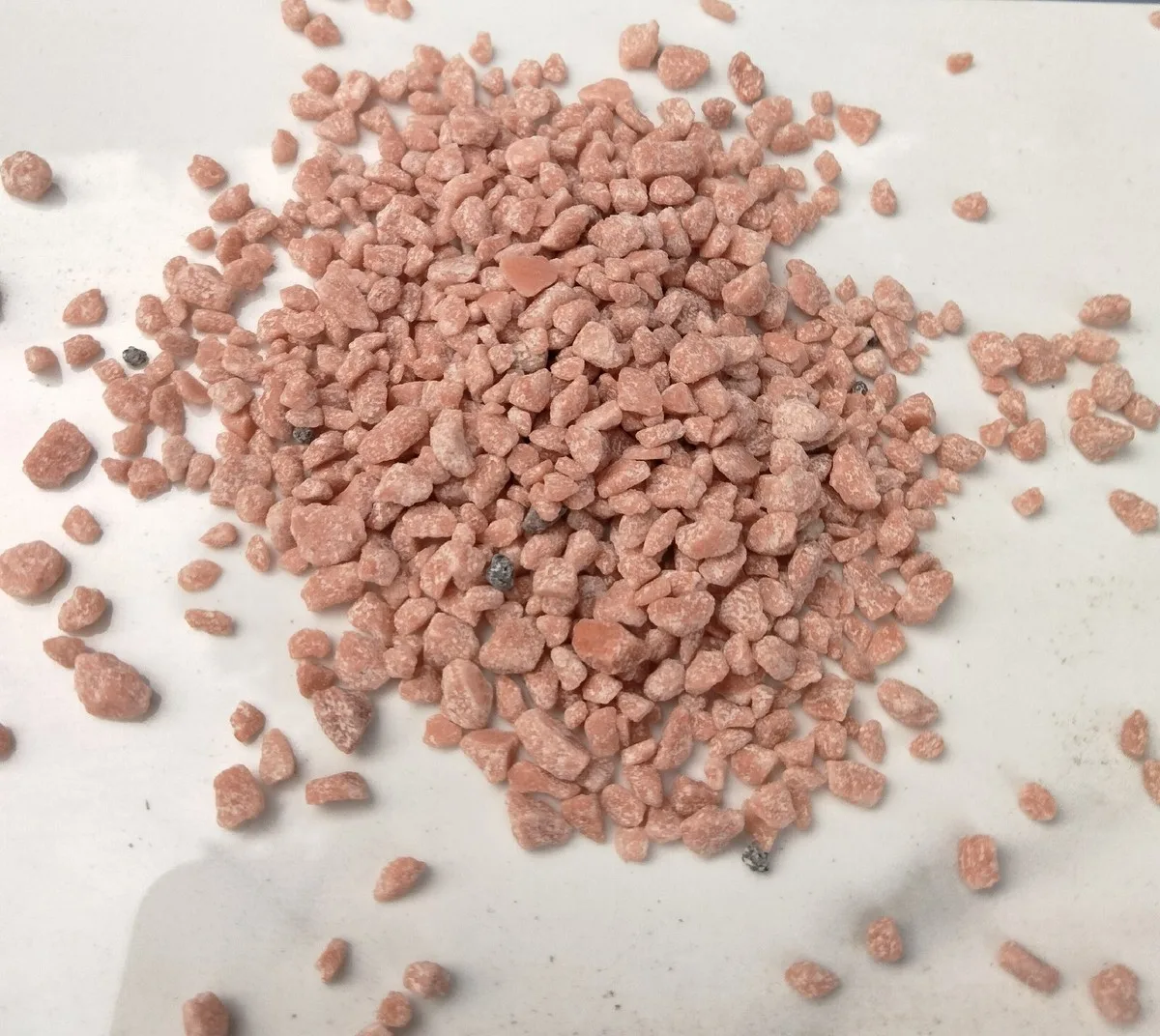
About 34% of all arable land in the Russian Federation suffers from a calcium deficiency and requires reclamation liming. These are primarily sod-podzolic and grey forest soils of the Northern, North-Western, Central, Volga-Vyatka, and Far Eastern economic regions. Acidity here is a natural genetic property associated with carbonate-free soil-forming rocks. The application of calcium fertilizers allows not only for the neutralization of excessive acidity but also for providing plants with available calcium.
- Proportion of arable land needing liming — 34%
- CaCO₃ consumption for neutralization of 1 mmol of H⁺ — 50 mg / 100 g of soil
- Conversion factor for CaO application rate — 0.56
- Conversion factor for Ca(OH)₂ application rate — 0.74
Sensitivity of crops to soil acidity
Agricultural crops react differently to the soil solution reaction and the application of calcium fertilizers. Based on their level of sensitivity and responsiveness, they are divided into five main groups. These characteristics determine the feasibility of conducting liming for a specific crop in a crop rotation.
| Group | Reaction to soil acidity | Crops | Optimal pH |
|---|---|---|---|
| I | Most sensitive to the soil reaction in the plough layer; respond very well to liming. | Cotton, winter wheat, beet, hemp, cabbage, onion, garlic, celery, clover, alfalfa, sweet clover, ryegrass, orchard grass, brome grass, currant. | 6.5–7.2 |
| II | Sensitive to high acidity; respond well to liming. | Spring wheat, barley, pea, soybean, faba bean, bean, maize, swede, turnip, cucumber, lettuce, pumpkin, vetch, meadow foxtail, meadow fescue, bluegrass, apple, plum, cherry, strawberry. | 5.7–7 |
| III | Less sensitive to high acidity; respond positively to liming. | Oats, winter rye, buckwheat, radish, carrot, radish, tomato, timothy grass, pear, raspberry. | 5.3–6 |
| IV | Easily tolerate moderate acidity, but react poorly to imbalances in calcium, potassium, magnesium, and boron. | Potato, flax. | 4.8–5.7 |
| V | Tolerate high acidity well; have a low need for liming. | Lupine, serradella, gooseberry, sorrel, tea bush. | 4.5–5 |
When growing crops of group IV (potatoes, flax), it is necessary to strictly control the balance of nutrients, and for flax — additionally limit nitrogen fertilizer application rates.
Calculation of calcium fertilizer application rates
External signs on plants provide only a rough idea of the soil condition and are not suitable for the precise calculation of amendment rates. The most reliable method is conducting long-term field experiments in a specific region. In analytical practice, the calcium fertilizer rate is calculated based on the hydrolytic acidity (Hr) value, expressed in moles of H⁺.
The required application rate is influenced by a complex of factors:
- pH of the salt extract, hydrolytic acidity, and the degree of base saturation of the soil;
- biological characteristics of the cultivated crops;
- type and particle-size distribution of the soil;
- depth of the plough layer and its bulk density;
- systematic application of physiologically acidic mineral fertilizers;
- calcium losses from the soil due to leaching and the residual effect of previous liming.
-
Determine the base rate of CaCO₃ based on hydrolytic acidity
To neutralize 1 mmol of H⁺ cations, 1 mmol of equivalents of Ca²⁺ is required, or 50 mg of CaCO₃ per 100 g of soil (calculated as: Ca — 40, C — 12, O — 16 × 3 = 48; 40 + 12 + 48 = 100; 100 : 2 = 50). The calculated rate of pure dry calcium carbonate (D, t/ha) is calculated using the formula:
D = (Hr × 50 × 10 × 3 000 000) / 1 000 000 000 = Hr × 1.5where 10 is the conversion factor for 100 g of soil into kg; 3,000,000 is the mass of the plough layer (kg/ha); 1,000,000,000 is the conversion of mg into tons.
-
Adjust the rate for the form of the active ingredient
If the active ingredient of the amendment is not expressed as CaCO₃, multiply the obtained rate D by the coefficient:
- by 0.56 — when using calcium oxide (CaO);
- by 0.74 — when using calcium hydroxide (Ca(OH)₂).
-
Calculate the physical application rate of the fertilizer
Taking into account humidity, active ingredient content, and particle-size distribution of the amendment, use the formula:
Physical rate (t/ha) = (D × 1 000 000) / (M × (100 - w) × (100 - p))where M is the content of the active ingredient (%); w is the humidity (%); p is the content of particles larger than 1 mm (%).
Most calcium fertilizers contain CaCO₃, which is practically insoluble in pure water. In the soil, under the influence of carbon dioxide and moisture, it gradually turns into soluble calcium bicarbonate, which dissociates to form Ca²⁺ and OH⁻ ions. Free calcium cations displace hydrogen from the soil adsorption complex, neutralizing the acidity of the soil solution.
The neutralization reaction is described by the equations:
CaCO₃ + H₂O + CO₂ = Ca(HCO₃)₂
Ca(HCO₃)₂ + 2H₂O = Ca(OH)₂ + 2H₂O + 2CO₂
Ca(OH)₂ ⇄ Ca²⁺ + 2OH⁻
How and why soil loses calcium
Leaching of calcium (decalcification) triggers the process of degradation of podzolized soils and leached chernozems. A decrease in the reserves of this element in the soil adsorption complex leads to acidification of the soil solution, an increase in hydrolytic acidity, and the loss of organic matter. As a result, the agrophysical properties of the soil deteriorate; it loses its structure and becomes compacted. For an agronomist, this means a reduction in the efficiency of all subsequent technological operations in the field.
- Annual losses from leaching — 50–300 kg/ha
- Average CaO removal with harvest — 40–80 kg/ha
- Maintenance liming rate — 200–800 kg/ha
The primary route for calcium loss is its leaching by percolating water into the subsoil horizon. This process is more active in regions where annual precipitation exceeds evaporation and plant transpiration. The intensity of losses depends heavily on soil texture: on light soils, calcium leaches faster than on heavy ones. The leaching rate is also influenced by fertilizer application rates, acidity, and the set of crops in the crop rotation.
The second route is calcium removal with the harvest. On average per year, plants remove 40–80 kg/ha of CaO, which is equivalent to 0.7–1.4 c/ha of CaCO3. Grain crops remove the least amount of calcium, whereas forage crops and vegetables are characterized by maximum removal. The situation is aggravated by the modern structure of fertilizer application: the shift to concentrated ammonium phosphates instead of superphosphate has deprived the soil of a constant accompanying source of calcium.
Systematic application of physiologically acidic nitrogen and potash fertilizers sharply increases calcium mobility and accelerates its leaching. For example, when applying nitrogen at a rate of N100 in the form of ammonium sulfate, 250–290 kg/ha of CaO is leached from the arable layer. When using the same nitrogen rate in the form of ammonium nitrate, losses are lower but still significant — 70–90 kg/ha of CaO.
How to compensate for the deficiency: maintenance liming
To eliminate the deficiency, maintenance liming is applied. This is a system of constant calcium application to maintain its positive balance in the arable horizon on soils with an optimal pH level. Calcium from lime fertilizers neutralizes free organic and nitric acids, coagulates soil colloids, and improves soil structure. As a result, heavy soils are easier to till, no crust forms on them, and toxic aluminum and manganese transition into an inactive state.
When applying calcium fertilizers, acidity neutralization occurs in the soil. Calcium displaces hydrogen from the soil adsorption complex, and carbonates neutralize free acids. The chemistry of these processes is described by the following equations:
[SAC]2H + Ca2+ + 2HCO3– ⇄ [SAC]Ca + 2H2CO3
[SAC]2H + Ca2+ + 2OH– ⇄ [SAC]Ca + 2H2O
CaCO3 + 2HNO3 → Ca(NO3)2 + H2O + CO2
When calculating the maintenance liming rate using the elementary balance method, optimal doses are usually 200–800 kg/ha. Adjust this rate upward if an intensive nitrogen nutrition system is used in the field.
To compensate for the acidifying effect of mineral fertilizers, it is necessary to provide for an additional consumption of ameliorant. The influence of nitrogen and potash fertilizers on calcium leaching should be taken into account in advance when planning the nutrition system. Below are the normative volumes of calcium carbonate required to neutralize various types of fertilizers.
| Mineral fertilizer (per 1 c) | CaCO3 consumption for neutralization, c |
|---|---|
| Anhydrous ammonia | 2.2 |
| Ammonium chloride | 1.4 |
| Ammonium sulfate | 1.25 |
| Urea | 1.2 |
| Ammonium nitrate | 0.75 |
| Ammonia water | 0.5 |
| Double superphosphate | 0.1 |
To carry out liming, an agronomist can use various types of calcium fertilizers. The choice of a specific ameliorant depends on its availability in the region and logistics. According to the production method, all calcium-containing materials are divided into two main groups:
- industrial (limestone flour, slaked lime);
- local (calcareous tuff, dolomite flour, calcareous muck, marl, chalk, calcareous peat).
Various ameliorants and fertilizers are used to neutralize excess acidity and replenish calcium reserves in the soil. Their choice depends on the chemical composition, rate of action, and the presence of accompanying elements. All lime materials can be divided into five main groups:
- Unburnt limestones — contain calcium in the form of CaCO₃ (chalk, ground limestone, marl, dolomite).
- Burnt or quicklime — consists mainly of CaO and Ca(OH)₂, contains 60–75% of the active ingredient.
- Slaked lime — its neutralizing component is Ca(OH)₂.
- Basic slags — by-products of metallurgy (blast furnace and open-hearth slags), containing mainly calcium silicates.
- Simple and complex calcium fertilizers — Calbit C, calcium nitrate and calcium ammonium nitrate, sodium nitrate, calcium metaphosphate, superphosphate, calcium cyanamide.
According to magnesium content, fertilizers are divided into magnesium-containing and those poor in magnesium (or containing none at all). On acidic soils with magnesium deficiency, it is advisable to choose limestones with magnesium in their composition, such as dolomite. Cheaper industrial wastes can also be used as available sources of calcium. These include metallurgical slags (electric smelting, blast furnace, open-hearth), defecate (waste from sugar beet production), cement dust, ash, serpentinites (waste from the asbestos industry), and waste from sulfur ore production.
| Fertilizer | Main component | Associated compounds | CaO content, % | Ca content, % |
|---|---|---|---|---|
| Ground limestone | СаСО₃ | MgСО₃ | 45 | 32.0 |
| Marl | СаСО₃, MgСО₃ | — | 45 | 32.0 |
| Dolomite | СаСО₃, MgСО₃ | — | 45 | 32 |
| Quicklime | СаО | MgО | 75 | 53.5 |
| Mixture of slaked or unslaked lime with limestone | СаО, MgО, СаСО₃ | MgСО₃ | 60 | 45.0 |
| Slaked lime | Са(ОН)₂ | MgО | 65 | 46.5 |
| Blast-furnace slags | Calcium silicates | Magnesium silicates | 45 | 32.0 |
Standard mineral fertilizers can also serve as a calcium source for plants. Calcium ammonium nitrate, calcium cyanamide, Thomas phosphate, and thermophosphates contain calcium in a readily available form, and it acts as a base. However, due to the relatively low application rates, these fertilizers cannot significantly change the pH level in acidic soils.
| Fertilizer | Formula | Calcium content, % | Neutralizing effect |
|---|---|---|---|
| Calcium ammonium nitrate | СаСО₃ | 8–12 | + |
| Calcium cyanamide | CaCN₂, CaO | 43 | + |
| Superphosphate | CaSO₄, Ca(H₂PO₄)₂ | 19 | - |
| Triple superphosphate | Ca(H₂PO₄)₂ | 14 | - |
| Thermophosphates | — | 29 | + |
| Thomas phosphate slag | Ca₅(PO₄)₂SiO₄ | 28–32 | + |
| Rock phosphate | Ca₁₀(PO₄)₆F₂ | 36 | - |
| Calcium nitrate | Ca(NO₃)₂ | 20 | - |
| Calcium metaphosphate | Ca(PO₃)₂ | 18 | - |
| Dicalcium phosphate | CaHPO₄ | 23 | - |
Foliar top dressing for calcium deficiency prevention
Due to pronounced soil decalcification, calcium becomes a deficient nutrient. During critical stages of the growing season, soil application cannot quickly compensate for the shortage, therefore urgent foliar applications are necessary.
To prevent physiological disorders in decalcified soils, the specialized liquid fertilizer Calbit C is used. It helps protect crops from a wide range of diseases caused by calcium deficiency:
- bitter pit in apples;
- blossom-end rot in tomato, sweet pepper, watermelon, and melon fruits;
- pulp browning, as well as dry and wet bacterial rot in potatoes;
- tipburn in melons, lettuce, and chicory;
- cracking in cherry, peach, plum, mandarin, and nectarine fruits;
- stem necrosis.
- CaO content in Calbit C — 15%
- Application rate for vegetables — 200–300 ml/hl
- Application rate for fruit crops — 80–100 ml/hl
The timing of foliar treatments with Calbit C depends on the crop being grown and its growth stage. Each treatment must be tied to specific critical stages of harvest formation:
| Crop | Dosage | Frequency and phase of treatment |
|---|---|---|
| Apple, pear | 80–100 ml/hl | 20 days after flowering, then every 15–20 days until the pre-harvest stage |
| Stone fruits | 80–100 ml/hl | Every 15–20 days after fruit set |
| Vegetables | 200–300 ml/hl | After flowering, three treatments every 15–20 days until maturation |
| Ornamentals | 200–300 ml/hl | Every 15–20 days |
| Grape and kiwi | 80–100 ml/hl | After fruit set every 15– |
Calbit C is not toxic to plants and is compatible with most pesticides. However, it is strictly forbidden to mix it in the same tank with phosphorus fertilizers.
Read next
Agrochemistry For students
Liming as a method of reclamation and improving soil fertility of acidic soils
Agrochemistry For students
The effect of cation composition and exchange capacity on soil fertility
Agrochemistry For students