
The effect of mineral fertilizers on the water regime and water exchange of agricultural crops
5 min read
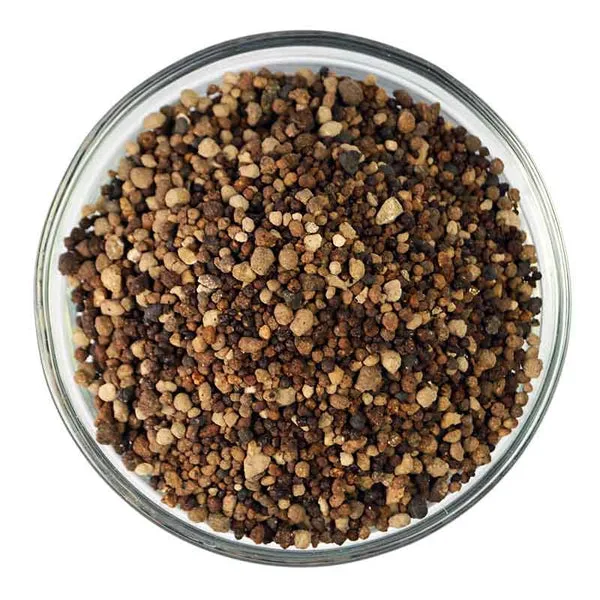
Mineral salts directly govern the water balance and water exchange of plants. Upon entering a cell, free ions interact with water molecules: some suppress their mobility, while others accelerate it. Most nutrient ions bind water around them. Depending on the air temperature and the composition of accompanying cations, these processes can either organize or disorganize the structure of water within the cell. This balance of charged ions determines how easily moisture moves through tissues and how actively the roots draw it from the soil through osmotic pressure.
With balanced mineral nutrition, plants use water more economically. Their leaves' water-holding capacity increases, evapotranspiration decreases, and the intensity of photosynthesis rises.
The influence of nitrogen, phosphorus, and organic matter on moisture consumption
Biopolymers—proteins, enzymes, nucleic and amino acids, lipids, and carbohydrates—play the primary role in water retention. They influence the mobility of water molecules more strongly than free salts. The maximum protein content is observed in young leaves, but as biomass increases, as they age, or under stress, their levels decline. The plant begins to consume proteins for respiration or redirects nitrogen to reproductive organs.
Improving nitrogen nutrition with sufficient irrigation stimulates the accumulation of biopolymers and osmotically active substances. This increases tissue hydration, although it does not always directly increase the ability of leaves to retain moisture during a drought. If you apply high rates of organic fertilizers, the vegetative mass expands rapidly, causing a rise in total soil moisture consumption for transpiration. However, the water-use efficiency coefficient per unit of commercial harvest decreases, as fertilized plants photosynthesize much more intensively.
Phosphorus in the soil solution works in synergy with nitrogen and potassium. Upon entering the roots, the phosphate ion accelerates the formation of biopolymers and osmotically active substances. This helps optimize the plant's water regime.
Phosphorus deficiency blocks the processes of photosynthesis and respiration, disrupts electron transport and phosphorylation. Due to the lack of phosphorus-containing organic compounds, cellular structures are damaged and energy metabolism is disturbed.
Potassium — the basis for osmoregulation and water saving
Potassium is a key element for maintaining water balance. As the main intracellular cation, it regulates osmotic pressure and concentrates in young, growing organs. Potassium increases the hydrophilicity of cellular colloids, which helps leaves retain moisture and reduces daytime water deficit, especially during periods of high solar radiation.
In addition to moisture control, potassium is critically important for biochemical processes:
- Nitrogen uptake and protection against toxicity. Potassium helps the plant quickly process ammonia nitrogen, stimulating the conversion of carbohydrates into amino acids and proteins. This prevents cell poisoning by free ammonia.
- Nitrate metabolism. The assimilation of nitrates (NO3–) requires their reduction in both roots and leaves. This process within the cell directly depends on the potassium concentration. Without a sufficient amount of this cation, nitrogen uptake slows down.
- Energy balance. Potassium ions catalyze the work of enzymes that transfer phosphate residues to ADP for the synthesis of ATP. Under potassium deficiency, the cell's energy metabolism deteriorates sharply. This directly impacts the productivity of crops.
Potassium regulates the processes of nutrient uptake by plants, activates enzyme processes of photosynthesis, respiration, the formation of proteins, carbohydrates, fats, and also the plant's water exchange. The potassium ion maintains enzymes and metabolites in a dissociated state. Under the influence of this element, the speed of enzymatic catalysis can increase significantly. Potassium activates over forty enzymatic reactions; in particular, it is necessary for the formation of ATP, nitrate reductase, pyruvate kinase, CoA synthetase, messenger RNA, and other vital organic compounds. A lack of this element is accompanied by the decay of mitochondria and difficulty in CO2 fixation during photosynthesis, as well as the inhibition of monosaccharide polymerization into polysaccharides. The presence of potassium in a plant enhances the hydrophilicity of cell biocolloids and increases its water-holding capacity. High cell hydration contributes to the stability of protoplasmic structures and membrane permeability. The decisive role in changing the turgor and volume of guard cells belongs specifically to potassium and its accompanying anions. During stomatal opening, K+ moves from adjacent cells into the guard cells. A direct correlation has been established between the potassium concentration in guard cells and the size of the stomatal aperture. Potassium increases plant resistance to soil salinity and various stresses caused by drought, frost, and unfavorable winter conditions. At the same time, the stability of cellular structures and the action of their repair mechanisms are strengthened, ensuring the restoration of the plant organism's functions. The potassium ion helps enhance photosynthesis and the migration of assimilates to the root system; thus, roots penetrate into deeper soil horizons and extract water more easily. Sufficient potassium content stimulates cell wall thickening, which prevents lodging, the entry into tissues, and the development of disease pathogens, and also increases plant productivity.
Read next
Agrochemistry For students
Chemical composition of crops and formation of harvest quality
Agrochemistry For students
The physiological role and biochemical functions of boron in plants
Agrochemistry For students