
Scientific foundations of soil fertility and methods of quantitative assessment
10 min read
The Nature of Soil Fertility: From Soil Formation to Harvest Management
Soil fertility is a key property of the soil, determining its ability to be not just a substrate, but a habitat and the main mediator in providing plants with nutrients, water, air, heat, and light. In agronomic practice, soil fertility guarantees the possibility of industrial production and determines the soil's resistance to degradation. Unlike the parent rock, the soil cover is highly dynamic and reacts clearly to changing conditions. It is human economic activity that has the strongest influence on the current level of soil fertility.
In an agronomic sense, soil fertility is the ability of the soil to serve as a source and mediator in providing plants with terrestrial life factors, to support production efficiency, and to withstand destructive factors.
The concept of what determines the productivity of lands evolved in parallel with practical farming. In ancient times, yield was associated with the presence of "fat," "salts," or water in the soil, and qualitative differences in soils were taken into account for taxation and the establishment of crop rotation. Practical classification of lands by productivity level was used even in ancient civilizations:
- In Ancient Egypt, they distinguished between "wheat" (flood-prone), "wetland" (for hydrophilic crops and wheat), and "steppe" (not flooded by the Nile) soils, and also separately noted lands for orchards and vineyards.
- In China, as early as the IV century B.C., soils were classified by color into "white," "blue," and "yellow," which corresponded to high, medium, and low levels of soil fertility.
Modern science views soil fertility as the result of natural soil formation and agrotechnical influence. The productivity of agricultural crops is assessed by the combination of soil properties and actual yield. The basis of this process is the planetary mechanism of substance capture by living matter, and the main task of agronomy is scientifically grounded increase in soil fertility under arable land use.
Quantitative Assessment and Mathematical Models of Soil Fertility
For practical planning of yield and application of fertilizer, two main ways of quantitative assessment of soil fertility are used. The first approach is based on the use of rating scales, the second on mathematical modeling of the relationship between soil properties and plant productivity. Both methods allow for the conversion of qualitative indicators of the soil cover into specific calculated values.
All principles and methods used in regional soil ratings are reduced to two directions:
- Assessment based on quantitative accounting of soil property indicators that directly correlate with yield.
- Compilation of rating scales based on yield data, linked to specific groups and varieties of soils.
The second way of establishing the relationship between the harvest and soil properties is based on the use of regression models. In research and agronomic practice, two forms of defining the fertility function are used:
- Polynomial form: y = a0 + a1x1 + b1x12 + a2x2 + b2x22 + … + c1x1x2
- Multiplicative form: y = a0q1(x1)q2(x2)…qn(xn)
In the equations provided, x1…xn denote the factors of soil fertility, a0, a1, b1, c1 are empirical coefficients, and q1…qn are functions determining the influence of individual factors on the harvest.
The multiplicative form of defining the function has an advantage over the polynomial one: its partial functions q1(x1), q2(x2) possess generality for various soil-ecological conditions, while the empirical coefficients of the polynomial function are strictly tied to the specific conditions of the experiment.
Crop Selectivity: Why There Are No Absolutely Infertile Soils
The concept of soil fertility is always specific and tied to the biological requirements of the cultivated crop. Soil is considered fertile if it provides plants with water and nutrients in optimal volume. A lack or excess of any factor limits yield or leads to the death of crops. There are no absolutely infertile soils — any type of soil possesses properties favorable for certain types of plants.
The ecological requirements of crops regarding physical-chemical properties, reaction of the medium (pH), and soil texture differ significantly. When selecting fields for crop rotation, it is necessary to take into account the suitability of plants for soil conditions:
- Heavy structural soils are optimal for grain crops.
- Light soils are preferable for potatoes, melons, and sweet cherries.
- Serozems are favorable for cotton but infertile for potatoes.
- Sod-podzolic soils are suitable for potatoes but unfavorable for wheat.
- Acidic soils are necessary for the growth of tea and lupine.
- Slightly alkaline soils are optimal for alfalfa.
- Solonchaks are suitable for the growth of saltworts that are unable to grow in other conditions.
A high level of soil organic matter and nutrients significantly degrades the quality of vineyard and tobacco produce. At the same time, sugar beet, hemp, and vegetable crops are extremely demanding regarding high soil fertility.
Types of fertility: from natural potential to economic return
In agronomy, a distinction is made between natural, artificial, and economic fertility. Natural (inherent) fertility is formed without human intervention under the influence of natural soil-forming factors. It is characteristic of virgin lands and is estimated by the annual increase in natural phytomass. For example, the natural potential of chernozems significantly exceeds the indices of sod-podzolic soils.
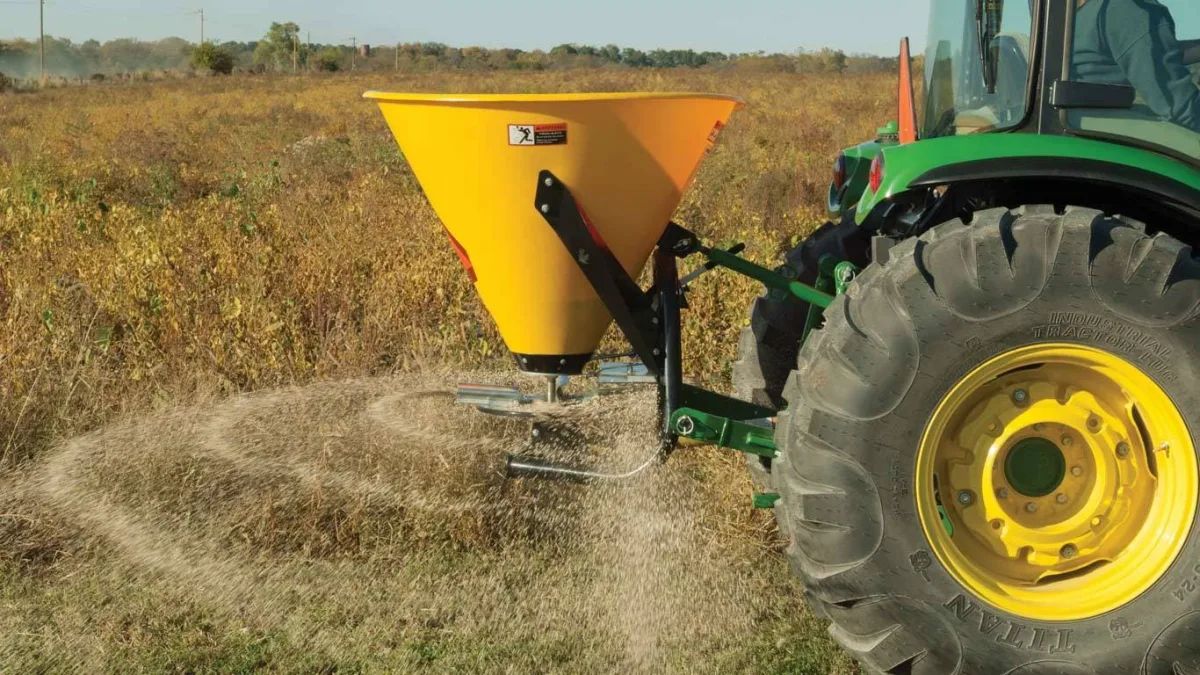
Artificial fertility is formed on cultivated lands as a result of human economic activity. Its level is determined by the degree of mechanization, the availability of technologies, and the ability to neutralize unfavorable chemical properties of the soil, while creating optimal water and air regimes. The main methods for creating artificial fertility are:
- ploughing and periodic mechanical tillage;
- implementation of land reclamation works;
- application of mineral, organic, and bacterial fertilizers.
Effective (economic) fertility represents the actual realization of natural and artificial fertility in production. Its assessment takes into account not only soil properties but also the location of the site, logistics, and the specialization of the farm. Soils rich in humus and nutrients, if located in remote areas, may be inferior in economic value to poorer but conveniently located fields. Similarly, highly specialized soils in regions where specific crops are grown are valued higher than lands with better general characteristics.
- Annual phytomass increase on virgin land — from 10 to 300 centners/ha of dry matter
- Phytomass of cultivated plants (European part of the Russian Federation) — from 50 to 180 centners/ha of dry matter
Potential fertility is the total soil fertility determined by its properties, both those acquired during the process of soil formation and those created or modified by humans. The word "potential" implies something possible, existing in potency, hidden, and not manifest. Therefore, when discussing potential fertility, this term should be understood as the possible fertility of the soil that may manifest under certain environmental and technological conditions. Due to this type of fertility, there are many examples where the yield of certain crops on sod-podzolic soils can already exceed the yields obtained on chernozems.
Effective fertility is the part of potential fertility that is realized as a plant harvest under given climatic (weather) and technical-economic (agrotechnological) conditions.
It depends on the degree of mobilization of potential fertility elements through agrotechnical practices and on the effectiveness of additional growth and development factors introduced for plants. Effective fertility is a labile indicator. It can change depending on weather conditions, both in a multi-year cycle and during the growing season of plants.
Relative fertility is soil fertility in relation to a specific group or species of plants. As noted above, soil that is fertile for some plants may be barren for others. For example, one cannot expect high wheat yields on acidic soils, whereas the biological characteristics of oats and lupine allow them to be sown in such areas; marsh soils are highly fertile for marsh vegetation, but other plant species can practically not grow there. Therefore, an agricultural production grouping of soils is carried out, based on which the structure of sown areas is determined and ecological-contour crop rotation is designed. These crop rotations most fully take into account the relationships and dependencies between biological characteristics and soil properties.
Economic fertility is the economic assessment of soil in connection with its potential fertility and the economic characteristics of the land plot.
The optimal level of fertility for any given soil is determined by a combination of its properties and indicators under which all factors vital for plants can be most fully utilized and the potential capabilities of the cultivated agricultural crops can be realized.
The main indicators of soil fertility include:
1) agrochemical — humus, pH of aqueous and salt suspensions, indicators of the soil adsorption complex: sum of exchangeable bases, hydrolytic acidity, exchange capacity, base saturation (S, Hg, T, V), total content and forms of compounds of macro-, meso-, and micronutrients necessary for plant nutrition;
2) agrophysical — particle-size distribution, structural state, bulk density and total soil porosity, its water, air, and thermal properties and regimes;
3) biological — total number of microorganisms and their individual groups, enzymatic activity, ammonifying and nitrifying capacity, intensity of cellulose decomposition in the soil, and soil "respiration";
4) hydro-ameliorative – groundwater level and its mineralization;
5) crop yield level.
Read next
Agrochemistry For students
The fundamental principles of genetic soil science in agrochemistry and agriculture
Agrochemistry For students
The laws of return of nutrients and tolerance in soil fertility
Agrochemistry For students