
Cereal straw as an effective source of organic matter and nutrients
9 min read
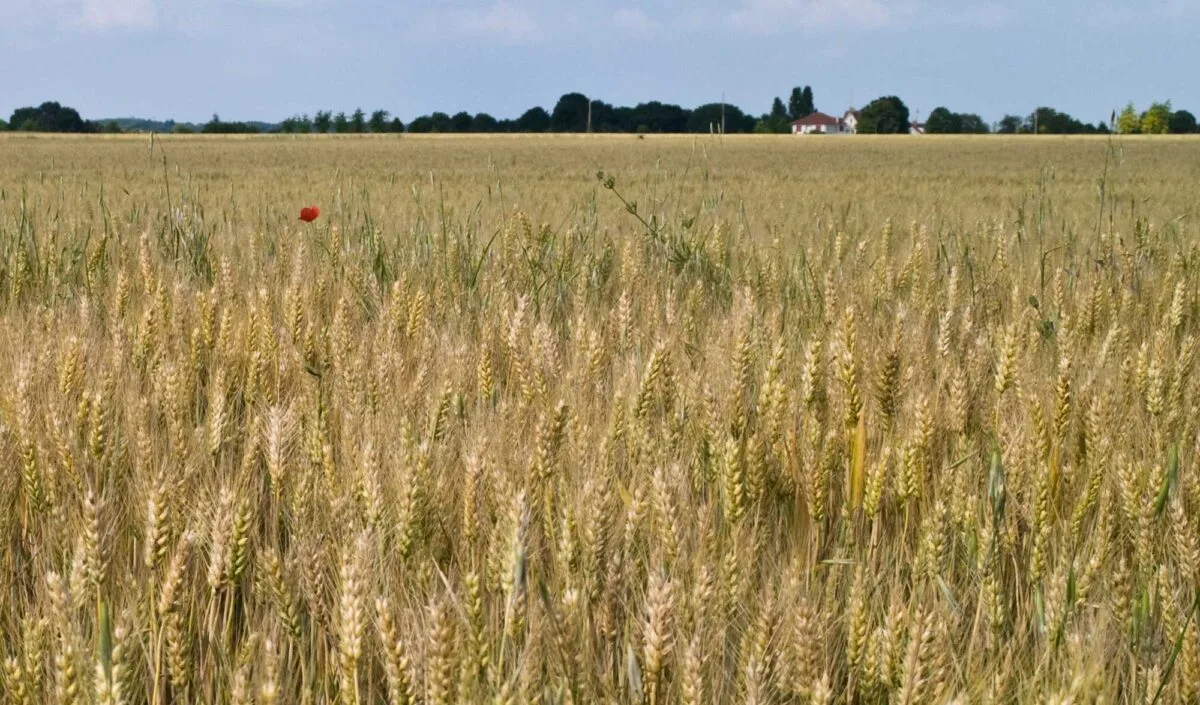
Straw of grain crops is an accessible source of organic matter for regulating the humus balance in the soil. In terms of total organic content, it is practically on par with manure. However, unlike manure, the nutrients in straw are firmly bound in complex plant polymers.
Organic compounds in straw are chemically stable. They cannot be directly absorbed by plants and only transform into an available form after decomposition by soil microflora.
Straw composition: how much nutrition returns to the soil
Straw consists mainly of three groups of organic compounds: cellulose, hemicellulose, and lignin. Cellulose serves as the basis for cell walls and gives the molecule a stable fibrous form. Hemicellulose acts as a binding material for cellulose fibrils, while lignin provides strength, stem stiffness, and disease resistance. Straw also contains proteins, waxes, and ash elements, the ratios of which depend on soil and climatic conditions.
| Crop | Hemicellulose, % of dry matter | Cellulose, % of dry matter | Lignin, % of dry matter | Crude protein, % of dry matter | Dextrins, % of dry matter | Ash, % of dry matter |
|---|---|---|---|---|---|---|
| Barley | 27 | 44 | 7 | 3.7 | 1.4 | 5.6 |
| Oats | 16 | 41 | 11 | 4.7 | 2.0 | 4.8 |
| Rice | 33 | 7 | 2.8 | 0.6 | 5.7 | 26 |
| Wheat | 36 | 39 | 10 | 3.0 | 0.7 | 3.4 |
Ploughing straw back into the soil returns a valuable complex of macro- and micronutrients. With four tons of cereal straw, a field receives a substantial volume of nutrients. This allows for the adjustment of application rates of mineral fertilizers for subsequent crops in the crop rotation.
- Organic matter from 4 t/ha — 3200 kg/ha
- Nitrogen from 4 t/ha — 14–22 kg/ha
- Phosphorus from 4 t/ha — 3–7 kg/ha
- Potassium from 4 t/ha — 22–55 kg/ha
- Calcium from 4 t/ha — 9–37 kg/ha
- Magnesium from 4 t/ha — 2–7 kg/ha
| Nutrient | Input from 4 t/ha of straw |
|---|---|
| Organic matter | 3200 kg/ha |
| Nitrogen | 14–22 kg/ha |
| Phosphorus | 3–7 kg/ha |
| Potassium | 22–55 kg/ha |
| Calcium | 9–37 kg/ha |
| Magnesium | 2–7 kg/ha |
| Sulfur | 5–8 g/ha |
| Boron | 24 g/ha |
| Copper | 12 g/ha |
| Manganese | 116 g/ha |
| Molybdenum | 1.6 g/ha |
| Zinc | 160 g/ha |
| Cobalt | 0.4 g/ha |
How straw decomposes: stages and the role of microflora
Mineralization of straw in the soil occurs gradually. The succession of microorganism groups is strictly determined by the sequential destruction of various organic compounds. Each stage of processing requires the participation of specialized microflora.
- Decomposition of easily accessible components. First, simple sugars, proteins, and pentosans are broken down. During this period, non-spore-forming bacteria (mainly of the genus Pseudomonas), as well as Mucorales and pycnidial fungi, actively develop.
- Decomposition of pectin substances. Later, microorganisms specializing in pectins join the process. These include fungi of the genera Mucor, Aspergillus, and bacilli such as Bac. subtilis, Bac. mesentericus.
- Intensive breakdown of cellulose. Following pectins, the breakdown of cellulose and related compounds begins. At this stage, typical cellulose-decomposing microflora (Cytophaga, Cellvibrio) forms, and Mucorales are replaced by the genera Penicillium, Aspergillus, and Trichoderma.
Cellulose has a longer and deeper impact on the biological balance of the soil than pentosans and proteins. Its destruction involves representatives of various systematic groups. These include higher and microscopic fungi (including Mycochytridiaceae), myxobacteria, aerobic bacteria Cellvibrio and Cellulomonas, as well as actinomycetes and anaerobic bacteria.
Fungi of the genera Dematium, Phoma, Penicillium, Stachybotrys, Monotospora, Haplographium, and Trichoderma are directly involved in the breakdown of cellulose. In more fertile soils, fungi of the genus Chaetomium are found. Deuteromycetes of the genera Alternaria and Fumago also actively participate in this process.
The rate of cellulose destruction depends directly on the soil type and its condition. The activity of cellulose-decomposing microflora increases along the genetic series of soils — from podzols to sod-podzolic, gray forest soils, and chernozems. Microorganisms of chernozems and brown forest soils possess the highest cellulose-decomposing activity. In podzolic soils, this process is the least active.
Nitrogen compensation and direct incorporation of straw into the soil
Almost all types of straw, with the exception of grain legumes, have a very wide carbon to nitrogen (C:N) ratio. The rate of decomposition of plant residues depends directly on this balance: the narrower the ratio, the faster the straw will be processed in the field. If straw is ploughed in its pure form, soil microflora will take up available nitrogen for its own development. As a result, crops will face nitrogen deficiency in the first year, which will lead to a decrease in yield.
- Compensatory nitrogen — from 3.5 to 15 kg per 1 t of straw
- Straw chopping length — 5–10 cm
- Primary incorporation depth — 5–8 cm
- Nitrogen during field incorporation — 40–60 kg/ha
To avoid nitrogen deficiency, straw is incorporated according to specific rules. This method shows the greatest return in zones with sufficient moisture on heavy soils. During grain harvesting, the straw is shredded to 5–10 cm and spread evenly across the field. Then, nitrogen fertilizer is applied at a rate of 40–60 kg/ha of active ingredient (phosphorus is also added if necessary), after which disking or stubble cultivation is performed immediately to a depth of 5–8 cm.
Do not plough fresh straw directly to a depth of 25–30 cm. In deep layers without access to a sufficient amount of oxygen, decomposition processes virtually stop. Wait until the straw in the top layer has visibly decomposed, and only then perform winter ploughing to the full depth.
There are alternative ways to manage straw without preliminary shredding. If straw is left in windrows, the calculated rate of nitrogen fertilizer is distributed across the field, followed by flat-cutting tillage to a depth of 12–15 cm across the windrows. Also, the incorporation of shredded straw combines perfectly with the application of liquid manure. In this case, it is ploughed in immediately after the manure distribution, and it is mandatory to use combine shredders for uniform soil coverage.
| Crop | Straw application rate, t/ha |
|---|---|
| Winter crops | 3–5 |
| Spring crops | 2–3 |
Preparation of bedding manure and composts
A traditional method of straw disposal is its use in animal husbandry to produce bedding manure. The technology consists of three sequential steps. First, the straw after threshing is transported to the field edges or directly to the farms. Then it is stacked in ricks for storage and used as feed and bedding for livestock during the housing period.
Another effective method is the production of composts on special sites. For this, straw is shredded by a combine or delivered to piles in cocks. Mineral fertilizers are best applied directly into the compost mass: there, they are processed faster by microflora and become part of available humus compounds.
Safety rules for composting: do not use weeds with seeds so as not to infest the fields. It is forbidden to add potato haulms with late blight and vegetables affected by fungal diseases to the piles. However, plants with viral or bacterial pathogens can be used — the causative agents of these diseases are completely destroyed by high temperatures during composting.
To prepare high-quality organic fertilizer, it is important to form the stack correctly. The basic laying method begins with the preparation of a straw bed:
- Lay the shredded straw in a 4 m wide strip along the length of the site and compact it with a crawler tractor to a thickness of 50–70 cm.
- Transport slurry onto the bed and layer it with straw in a 10:1 ratio by weight.
- Increase the stack height to 2.0–2.5 m depending on the initial moisture of the manure.
In the cold season, the focal composting method is used. A straw bed 10 m wide and 20–30 cm thick is laid on the site, compacted with a tractor, after which liquid manure and shredded straw are delivered in a 10:1 ratio. In the spring, when the mass thaws and dries out, it is mixed with a bulldozer and a windrow 4 m wide and 2.5–3.0 m high is formed.
In summer, compost is prepared by the site method. Manure is distributed on a straw bed 20–30 cm thick in a 10:1 proportion, the mixture is kept for 2–3 days, and a stack is formed by a bulldozer. In the summer period, the fertilizer matures in 2–3 months, after which it is applied by manure spreaders in a direct-flow scheme or transported for storage in field piles.
Two main methods are used for straw application: mulching and straw covering. The choice of technology depends on soil moisture, field weediness, and the climatic conditions of the region. During mulching, straw is shredded, evenly spread over the field, and shallowly incorporated into the soil.
- Shredding of straw.
- Uniform coverage of the soil with mulch.
- Shallow incorporation by mixing straw with soil using a disc harrow or stubble cultivator after grain harvesting.
This technique is most effective in humid conditions as it prevents heavy weed growth. Mulching reliably protects the soil from water and wind erosion. It improves water absorption, reduces or completely eliminates surface runoff, and also contributes to a more uniform distribution of moisture and reduces its evaporation. In suitable climatic conditions, it is advisable to use mulched soil for sowing catch crops.
With the straw covering method, shredded straw is left in the field and ploughed in only in the spring. Under the cover, optimal conditions are created for the development of microflora and soil animals, which accelerate the decomposition of organic matter. The method reduces moisture evaporation and has a positive effect on soil structure and ripeness. It is advisable to use it in moderately humid areas on slightly weedy soils, combining it with undersowing green manure crops.
Impact on soil processes and combination with green manures
The application of straw to the soil increases its enzymatic activity. An increase in phosphatase, dehydrogenase, and invertase activity, as well as in the number of microorganisms, is observed. This has a significant effect on nitrogen transformation processes.
Straw application temporarily shifts the balance of nitrogen mobilization and immobilization processes towards its fixation in organic form. This process is reversible: biologically bound nitrogen mineralizes and is subsequently assimilated by the following crops.
Using straw directly as a fertilizer increases soil fertility and provides a yield increase. At the same time, the farm is relieved of high costs for collecting and transporting straw. In field trials, the application of straw for late-season row crops has shown high efficiency.
- Application rate for late-season row crops — 5–10 t/ha
- Effect with nitrogen fertilizers — on a par with standard manure doses
- Leguminous green manures — eliminate the need for nitrogen fertilizers
Good results are obtained by fertilizing with straw in combination with green manures. In this case, various types of green manure can be used: sole crops, post-harvest crops, and intercrops. Using legumes as green manure completely eliminates the need for applying mineral nitrogen fertilizers.
Read next
Agrochemistry For students
Evaluation methods and indicators of soil biological activity in agrochemistry
Agrochemistry For students
Classification and application of industrial organic waste in agriculture
Agrochemistry For students