
Formation and efficient use of material and technical resources in agriculture
15 min read
Material Foundation and Potential of Agricultural Production
Production resources — labor, land, and material-technical — are the material foundation of agricultural production. Along with natural resources, they function in the creation of production, economic, market, and social relations.
Production potential is the capability to obtain a certain quantity and quality of output under established production relations, given the existing quantity and quality of resources. Considering the specifics of agriculture, production capabilities in this industry also depend on natural-climatic conditions and the biology of plants and animals, as well as their genetic potential, which in practice is only partially realized. The combination of these conditions and capabilities is defined as bioclimatic potential. It can be said that the maximum productivity of plants and animals is achieved under favorable weather conditions and production relations that correspond to the enterprise's available resources.
In turn, the resources themselves must be in an optimal combination in terms of quantitative and qualitative characteristics:
- their volume must be sufficient to ensure production;
- they must be of the necessary quality, as low quality requires a greater volume of resources or is equivalent to their absence;
- proportionality must be maintained between the structural elements of resources;
- resource provision (per 1 hectare, per 1 worker, per 1 livestock animal) must be at a standard level.
Efficiency of Use and Formation of the Material-Technical Base
Agricultural production is possible through the use of all types of resources — labor, material-technical, land, and water. Currently, enterprises face a shortage of material-technical resources, while at the same time not all resources are utilized in production: machinery stands idle, labor resources are not fully employed, and there is a high level of unemployment (including hidden unemployment), etc. Today, more than half of the mineral fertilizers">applied mineral fertilizers are used inefficiently in Russian agriculture.
The formation of material-technical resources for agricultural enterprises is carried out by acquiring them in markets, from enterprises in other sectors, through barter, and by leasing. Markets for various types of resources are being formed and starting to function in Russia, exhibiting such market characteristics as demand, supply, price, and competition; however, competition remains weak, and monopoly tendencies largely prevail.
Derived demand dominates the market for material-technical resources, i.e., it depends on the demand for the products obtained with their help. Currently, the effective demand of enterprises is low, while the need for material-technical resources is high. Demand is influenced by prices, the incomes of consumers of industrial resources for agriculture, the quality of these resources, and inflation. Low consumer requests and high prices force agricultural enterprises to use new forms of securing essential resources, such as leasing, which functions alongside wholesale markets for means of production and direct ties with manufacturing plants.
Leasing is a long-term rental of machinery, equipment, vehicles, livestock, production facilities, and other resources using bank credit; from a financing perspective, it is a form of financing agricultural enterprises for the renewal and expansion of means of production through rental. The participants in leasing include: the manufacturer, the lending bank, organizations specifically created for this purpose, agricultural enterprises, and farms. The mechanism for forming an enterprise's production potential through leasing is as follows: material-technical resources rented by the enterprise under a special leasing agreement remain the property of the lessor and are not reflected on the enterprise's balance sheet until the rent is paid or the enterprise buys them out before the end of the lease term. The rent is paid through a long-term bank loan, which buys the machinery and equipment from the manufacturer and leases it to the consumer.
Funds for these purposes are allocated from the federal and regional leasing funds. Grain and forage harvesters (70%), tractors (33%), and automobiles (10–15%) are the items most commonly supplied via leasing. Leasing has existed in Russia for less than 20 years, whereas in other countries it has been in use for about half a century. In 2007, 4,360 tractors were supplied to agriculture through federal leasing, in 2008 — 1,802, and in 2009 — 2,397; for harvesters, the figures were 155, 169, and 1,496, respectively.
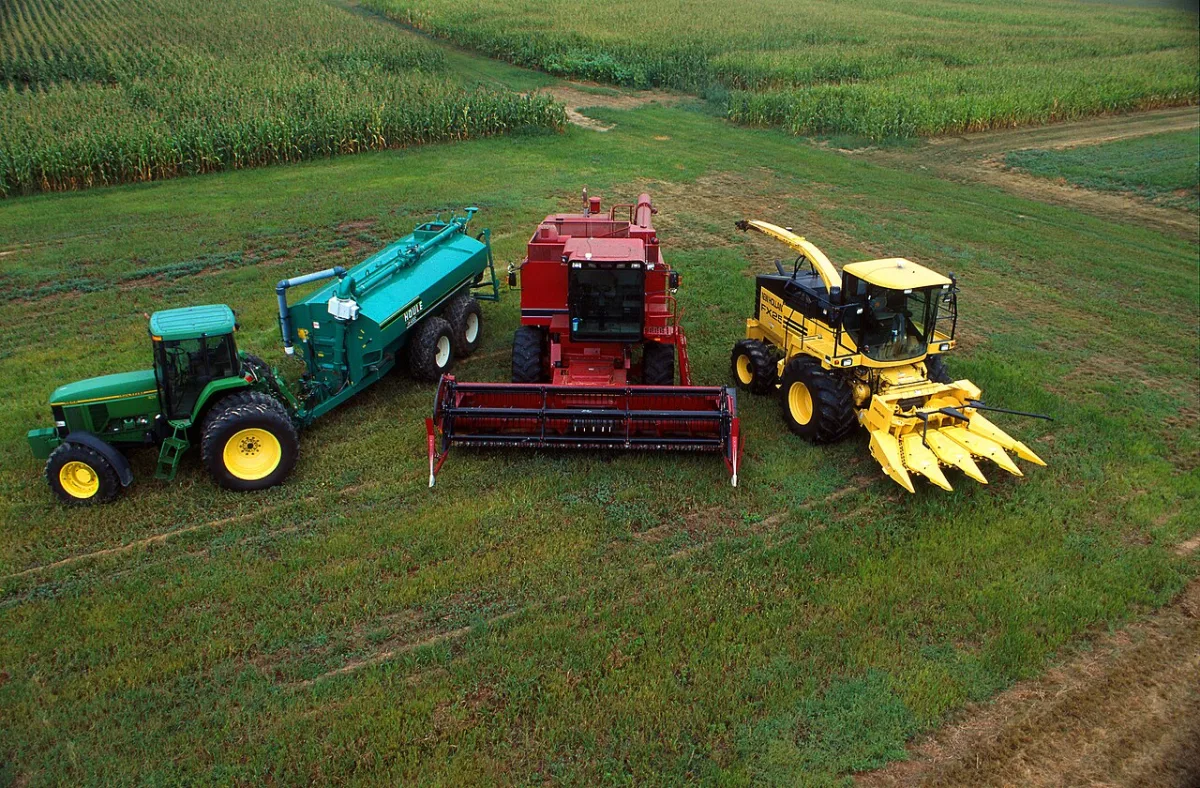
Commodity credit (on debt against the future harvest) is also used to form the material-technical resources of enterprises. However, experience has shown that it is cheaper and more reliable to use machinery on a cooperative basis, where cooperative machine-technological stations provide services for mechanization, land reclamation, equipment repair, transportation, etc. This allows for a fuller utilization of the limited fleet of tractors, automobiles, and other machinery, as well as a reduction in unit costs (i.e., the cost price of mechanized and transport works). The availability of machinery (at the end of the year) can be judged by the data in Table 2.1.
Material and technical resources are tangible elements of productive forces. Some resources are currently in production and functioning, while others are held in stock as reserve or potential resources. Together, they constitute the resource potential.
Resources can be viewed as technical factors of production, the quality of which is continuously improving under the influence of scientific and technological progress. This allows providing agricultural producers with technological developments and the recommended set of technical means for them. The aggregate of resources is classified according to various criteria. Resources can be: productive and non-productive, i.e., those used in the social sphere; created by nature (water, forest, land, and other environmental resources) and economic (material, labor, financial).
T a b l e 2.1. Availability of tractors and combines in the agriculture of the Russian Federation
2004 2005 2006 2007 2008 2009 machinery Tractors 580 644 523 194 478 543 405 661 364 356 329980 Grain harvesters 143 495 129 243 117 577 107 657 95 911 86 122 forage harvesters 38 731 33 397 29 522 26 550 24 022 21 443 beet harvesters 8513 7172 6204 5261 4246 3606
Composition and classification of resources of an agricultural enterprise
Basic material resources include the entire variety of objects and tools of labor used by an agricultural enterprise: land and water for the production of agricultural products, buildings, structures, and machinery, fuel, electricity, and lubricants, agrochemicals, feed and fodder, seed, plantations, and nursery plants, livestock animals, and poultry. However, they do not function without labor and the financial component.
Financial resources are used to ensure expanded reproduction at the enterprise and to meet the material needs for the development of social infrastructure. Sources of financial resources include: profit, depreciation funds, and credit. Financial (monetary funds) and labor resources (the aggregate of people possessing the ability to work) are not part of material and technical resources, as they are neither tangible nor material resources.
In the process of using economic resources, it is necessary to consider their characteristics:
- complementarity, where one resource is not used without another, for example, machinery and fuel with lubricants;
- substitutability, where one resource can be replaced by another to fulfill the same objective (machinery and labor resources) or different options and sequences of resource use exist (finding the optimal variant).
Causes of deficit and the current state of the technical base
In Russia, since 1991, there has been a trend of declining availability of material and technical resources for agricultural enterprises, which in turn leads to a decrease in the volume of production and an increase in losses of already produced products. The main reasons for the reduction in resource consumption by agricultural enterprises are:
- insufficient preparation and justification of the ongoing economic and agrarian reforms;
- lack of funds for the acquisition of resources by enterprises due to their unprofitability or low margins;
- high prices for industrial goods, energy, and other services, a multi-fold price disparity (the gap in growth rates between industrial goods and agricultural products);
- monopolism of industrial goods manufacturers and the absence of a competitive market for resources;
- lack of a guaranteed market for agricultural products;
- insufficient state support for the material and technical equipment of agricultural enterprises;
- reduction in domestic production of technical means due to low demand and lack of competitiveness.
The intensification of the deficit of material and technical resources in agriculture is confirmed by the following figures. In Russia, the provision of agricultural machinery per 100 hectares of sown area is 12–15 times lower than in Western European countries. Average loads on a tractor, grain combine, and forage harvester significantly exceed standard levels. More than half of the machine and tractor fleet has exceeded its standard service life (tractors — 53%, grain harvesters — 60%). The dynamics of the availability of tractors and combines are shown in Table 2.2.
T a b l e 2.2. Availability of tractors and combines in agricultural enterprises
| Indicator | 2004 | 2005 | 2006 | 2007 | 2008 | 2009 |
| Tractors, units per 1000 ha of arable land | 5.9 | 5.5 | 5.3 | 5.1 | 4.8 | 4.0 |
| Grain harvesters, units per 1000 ha of grain crop area | 4.2 | 3.9 | 3.7 | 3.4 | 3.2 | 3.0 |
Today, there is some improvement in the production of material and technical resources for agriculture, as the profitability of agricultural enterprises is increasing, contributions to the leasing fund are rising, and other state support measures are being implemented. This increases the purchasing power of enterprises and stimulates the supply of machinery to the market.
Energy resources occupy a special place among the material and technical resources of agricultural enterprises. This most active part of resources is extremely necessary for modern production. Energy capacities include the power of mechanical and electrical engines and installations (tractors, combines, other mechanical and electrical engines) and livestock animals in terms of mechanical power. For a summary assessment, all energy sources are estimated in unified power units — horsepower (hp) or kilowatts (kW). In the total structure of energy sources, tractor, automobile, and combine engines account for more than 75%, electrical sources for about 23%, and the rest consists of livestock, wind installations, and other sources.
The total amount of energy capacity provides an understanding of the development of productive forces. The energy supply of agriculture and its enterprises is calculated based on the energy equipment of agricultural land or cropland and energy availability per worker:
E x a m p l e 2.1. The energy capacity of an enterprise is 4749 hp, with an agricultural land area of 1643 ha and cropland of 56.8 ha.
In this case, energy equipment is equal to 2.89 hp per 1 ha of agricultural land and 8.36 hp per 1 ha of cropland. If the average annual number of employees at this enterprise is 70, then their labor energy availability will be 67.8 hp (4749/70).
In 2009, energy equipment in Russian agriculture was 227 hp per 100 ha of cropland (364 hp in 1990), and energy availability per worker was 61.4 hp per average annual employee (50.5 hp in 1990).
Energy equipment is a crucial factor in labor productivity, including the availability of electrical energy.
Indicators of electricity consumption are determined separately: kilowatts calculated per area of agricultural land and cropland, and per average annual employee. The process of equipping the sector with electrical energy is called electrification. The efficiency of this direction of intensive production development is due to the following: ◊ the use of electricity, including computerization, increases labor productivity; ◊ the use of electricity is cheaper for farms than other types of energy: with an increase in the tariff for this energy resource, the state provides compensation, and the use of electricity allows for savings on other types of energy; ◊ the use of electricity allows for the automation of production processes, mainly stationary ones (electricity has not yet found significant application in mobile means); ◊ electricity is used in progressive technologies for the storage of agricultural products, ensuring microclimate, regulating the duration of daylight, and in product processing processes;
◊ the use of electricity improves working conditions, allows solving other social problems (lighting, television, computerization, etc.), and contributes to environmental protection.
The role of mechanization in the intensification of agricultural production
Mechanization is the execution of technological processes and work operations by machines using mechanical and electrical energy sources. This process ensures production efficiency and the replacement of manual labor with mechanized labor, and is based on the use of material and technical resources, in particular agricultural machinery, which increases productivity and lightens labor, releasing workers for other production lines and sectors. Mechanization (along with electrification) is a direction of scientific and technical progress and intensification.
Special requirements are imposed on agricultural mechanization means. They must:
- not damage plants and not injure livestock animals and poultry;
- correspond to soil and climatic conditions, relief, i.e., the principle of zonality;
- be reliable and resistant to the aggressive environment of use;
- be as universal as possible.
The process of developing mechanization includes the following stages:
- partial mechanization (of individual processes or work operations);
- complex mechanization without the use of manual labor; its material-physical basis is a system of machines, but the latter are controlled by a person;
- automation, where control is carried out by special devices according to a set program.
The level of mechanization is determined by the ratio of the volume of mechanized work (ha, m3, t, heads) to the total volume of work (ha, m3, t, heads), expressed as a percentage, and is calculated not only for individual types of work but also as a whole for crop production and livestock farming by converting the volume of work into conditional reference hectares (ref. ha) or conditional livestock numbers. It depends on the availability of machinery and the effect of mechanization means, determined by a system of physical, relative, and cost indicators.
Indicators of the efficiency of machine and tractor fleet utilization
Some indicators are factor-based, affecting the final economic results. Thus, the following occupy the main place in the system of indicators for the efficiency of machine and tractor fleet utilization:
- the number of machine-days and machine-shifts worked per year and their ratio to the number of days the machinery is present at the enterprise during the year;
- shift coefficient;
- seasonal output per tractor, ref. ha;
- seasonal output per combine, ha, t;
- hourly output, ha, t;
- production per shift, t, rubles;
- operating expenses per unit of production or work, rubles;
- savings in labor costs, man-hours, and their reduction level, %;
- payback period for capital investments in the acquisition of a specific technical means, years (as the ratio of capital investments to savings in costs or net income from the use of the technical means);
- cost price of a conditional reference hectare of mechanized work, determined by the ratio of annual costs to the annual volume of mechanized work in conditional reference hectares.
The accounting and summation of mechanized tractor operations are carried out in standard reference hectares. The conversion of the physical volume of tractor operations into standard reference hectares is performed by multiplying the physical volume.
The shift coefficient Ks determines the ratio of the number of machine-shifts worked Mc to the number of machines worked.
Operating expenses are the costs of operating machinery (labor costs with deductions, depreciation, routine maintenance, fuels and lubricants, electricity), characterizing only those costs associated with the use of machinery. To assess the efficiency of new machinery, an indicator of the reduction in operating expenses is calculated:
where Es — operating expenses, RUB per 1 ha, 1 centner, etc., when using old machinery or an old machine complex; En — operating expenses when using new machinery or a new machine complex.
Savings in labor costs due to their reduction are determined by the formula where Tc — labor costs when performing work with an old machine complex (or machine), man-hours per unit of completed work, 1 ha, 1 centner, 1 ton; Tn — labor costs when using a new machine or a new machine complex, man-hours per unit of completed work; Tc— Tn — absolute value of savings.
Transport vehicles are as necessary for agricultural enterprises as means of mechanization. Transport supports technological processes within the enterprise and beyond, linking agriculture with industry, processing, and the market. Production results at enterprises depend on the availability of transport, its reliability, and the efficiency of its use. The efficiency of transport services is expressed in the prevention of direct harvest losses, the timely delivery of goods to the market and industrial products to enterprises (compound feed, mineral fertilizer, spare parts, fuel, etc.), as well as seed, organic fertilizer, and feed to fields and farms. Agricultural enterprises use road, tractor, horse-drawn, and pipeline transport. At the same time, road transport accounts for 80% of the total volume of transportation, and tractors for 15%.
The efficiency of using transport vehicles as part of material and technical resources depends on the general condition of paved roads, the technical condition of transport vehicles and the ratio of their different types in specific conditions, the availability of fuel and spare parts, trailers and containers, the presence of loading and unloading facilities, staff availability, and the state of transport organization. When sales of petroleum products to agricultural enterprises are reduced, the rhythm of transport operations is disrupted, and its full load capacity is not achieved.
The main indicator of efficiency is the cost price per ton-kilometer of road transport work, calculated as the ratio of the sum of material and monetary costs of road transport to the sum of actually completed work in ton-kilometers. This final indicator is influenced by:
Let us consider the calculation of these indicators using specific examples.
E x a m p l e 2.2. Given: vehicle-days in operation 23,570; vehicle-days present 33,580 (calculated as the product of the average number of trucks and 360 days); total mileage of machines
3,650 thousand km, including 1,934 thousand km with cargo. Calculate the indicators
1) coefficient of vehicle utilization in operation = 23570/33580 = 0.70.
This means that trucks were in operation only 70% of the time they were at the enterprise, and 30% of the time they were idle for various reasons; 2) coefficient of mileage utilization = 1934/3650 = 0.53. This shows that only 53% of the total mileage was traveled by trucks with a load; 3) average daily mileage = 3650000/23570 = 154 km. E x a m p l e 2.3. During grain hauling from combines using 5 trucks (dump trucks), 19 tons were actually loaded, while their total nominal (calculated) load capacity is 22.5 tons. We will determine the load capacity utilization coefficient: 19 t/22.5 t=0.84. Consequently, the trucks are loaded to only 84% of their technically justified load capacity, and the underloading amounted to 16%.
Read next
Economics For students
Resource conservation and economic efficiency of Russian agricultural production
Ecology For students
Legal framework for licensing and leasing of natural resources in Russia
Economics For students