
Adsorption theory of mineral nutrient uptake by plant root systems
3 min read
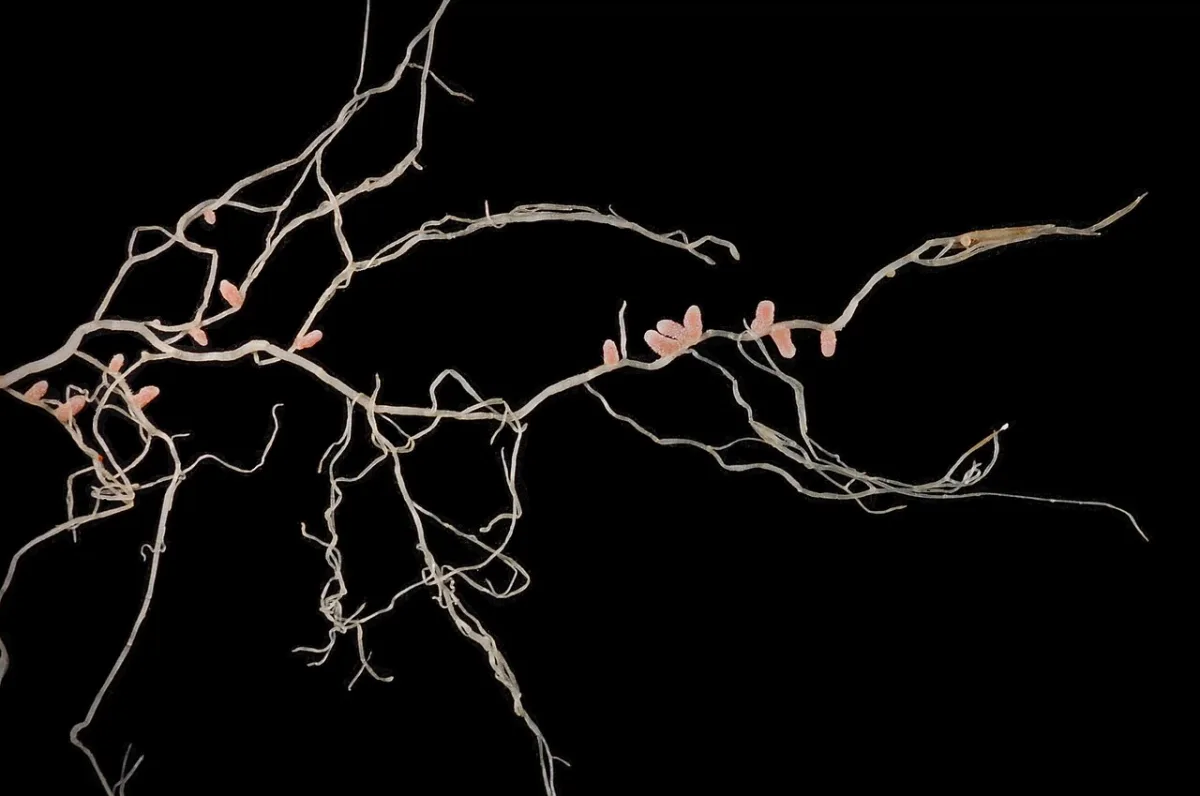
Absorption of mineral substances by the root system is an active physico-chemical process based on adsorption. Roots absorb nutrients via ion exchange between the soil solution and the outer surface of cell membranes. Understanding this mechanism allows for more precise management of plant nutrition, as the assimilation of mineral substances depends directly on the physiological activity of the root.
The cell membrane consists of two layers of phospholipids, where polar hydrophilic "heads" face outward and nonpolar fatty acid "tails" face each other. Embedded in this layer are integral, semi-integral, and peripheral proteins responsible for substance transport and signal perception. Due to the mosaic structure of the membrane, its individual sections carry negative and positive charges. This allows the root to simultaneously adsorb cations and anions from the external environment.
The transport of substances across the membrane depends on their concentration, particle size, and chemical nature. Small hydrophobic molecules enter the cell without energy expenditure via simple or facilitated diffusion along the concentration gradient. Ions and larger particles are transported actively — against the concentration gradient with the help of carriers and ion pumps. This process requires direct energy expenditure from the plant organism.
- Number of lipid layers in the membrane — 2
- Main exchange ions — H+, OH-, HCO3-
- Major organic acids of root exudates — citric, oxalic, malic
Mechanism of ion exchange absorption
For the adsorption of nutrients from the soil, the plant uses its own exchange pool of ions. It consists of hydrogen cations H+ and anions OH-, as well as bicarbonate HCO3-, which is formed during the dissociation of carbonic acid from CO2 released during respiration. Citric, oxalic, and malic acids, secreted by the roots into the soil solution, also play an important role in the exchange. These compounds partially dissociate into hydrogen cations and organic anions, which also participate in exchange reactions.
If root system respiration is suppressed, the release of carbon dioxide and organic acids decreases sharply. This reduces the volume of hydrogen ions and organic anions available for exchange, which halts the process of nutrient adsorption from the soil.
After adsorption on the membrane, the ions come into contact with the acidic and basic parts of the cell protoplasm. Here, they are either involved in the synthesis of organic compounds or begin moving toward the conductive system of the root. The transfer of ions from cell to cell follows the principle of sequential adsorption-desorption from one protein molecule to another. The path of nutrient movement in plant tissues is as follows:
- Exchange of soil solution ions for H+, OH- or organic acid anions on the membrane surface.
- Interaction of the absorbed elements with the acidoid (acidic) and basoid (basic) parts of the cell protoplasm.
- Transfer of ions from cell to cell via adsorption-desorption on protoplasm proteins or with the help of carrier proteins.
- Movement of nutrients into the conductive vascular system of the root for transport to leaves and stems.
Read next
Agrochemistry For students
Classical physicochemical theories of plant nutrient uptake
Agrochemistry For students
Mechanisms of ion transport across plant cell biological membranes
Agrochemistry For students